

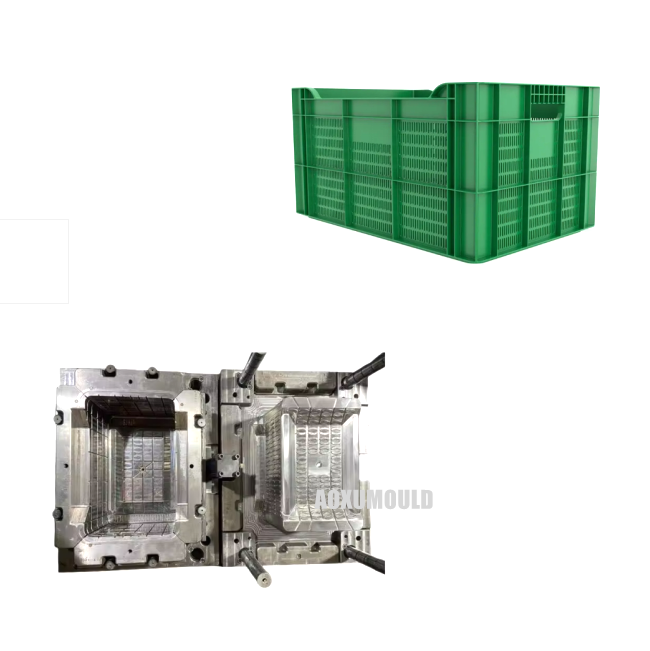

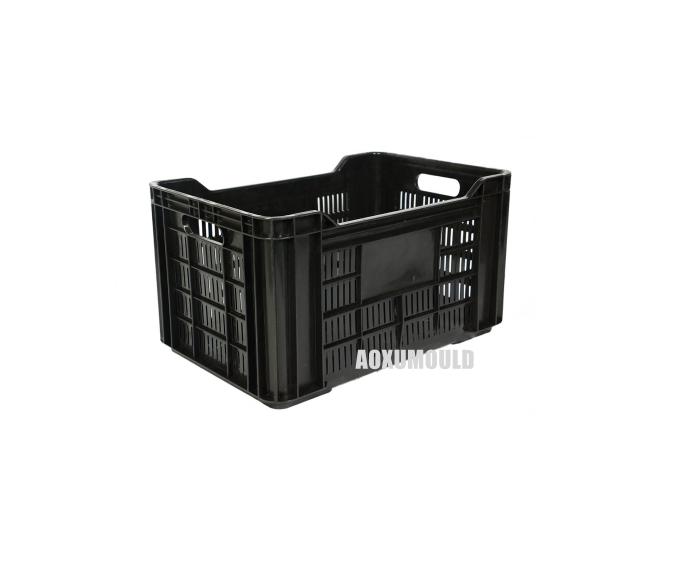
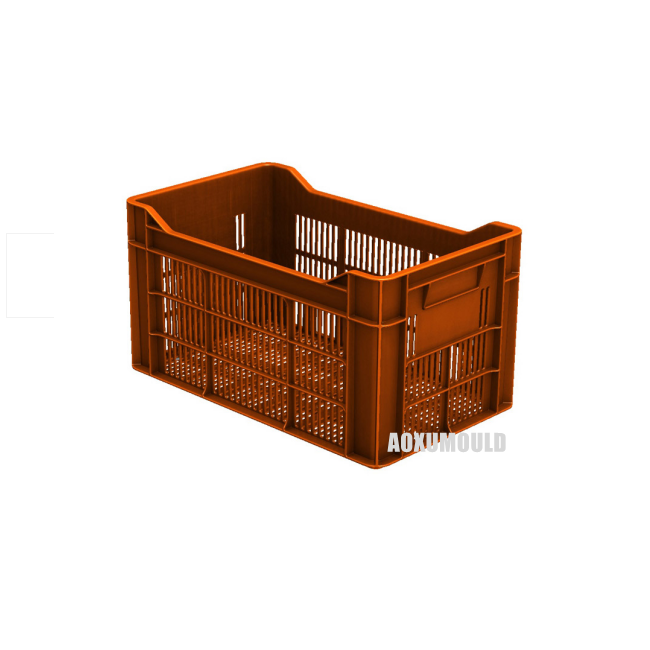
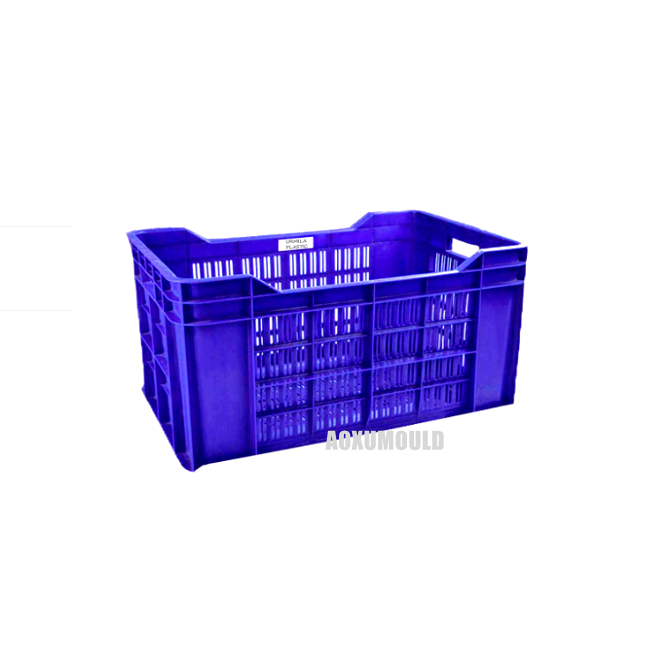
Mould Specifications
|
Mould name |
HDPE crate mould |
|
Product material |
HDPE/PP |
|
Product Size |
600 x 400 x 320 mm |
|
Product weight |
2.3kg |
|
Mould material for cavity &. Core |
P20/718H/2738 |
|
NOs of cavity |
1 cavity |
|
Injection system |
Hot runner |
|
Suitable injection machine |
650T |
|
Mould size |
850X580X900mm |
|
Mould weight |
3500KG |
|
Mould lifetime |
more than 500,000pcs |
|
Delivery Time |
55 days |
How is Plastic Crate Manufacturing Done?

Plastic crate manufacturing is a fascinating and essential process that ensures that crates are manufactured at high quality, durability, and environmental sustainability.
The first step in the manufacturing process is selecting the right type of plastic for the crates. Manufacturers use high-density polyethylene (HDPE) or polypropylene (PP) plastic, which are strong, lightweight, and easy to mold into the desired shape.
After the plastic has been selected, it is melted down to a liquid state and poured into a mold that has been designed to create the needed shape and size of the crate. The mold is then placed in a machine that applies heat and pressure to the plastic. This process is called injection molding, and it allows the plastic to conform to the shape of the mould.
Once the plastic has cooled and solidified, the mold is opened, and the newly formed crate is removed. Then, the crate is sent through various quality checks to ensure that it has been manufactured to meet the required standards and specifications.
Finally, the crates are made ready for packaging, which involves cleaning and trimming any rough edges to make the crate look neat and professional. The crates are then stacked and prepared for shipping to different locations for their intended purpose.
In conclusion, plastic crate manufacturing is a crucial process that involves careful selection of the right plastic material, mold design, and injection molding. It is an essential process that ensures that durable, strong, and environmentally friendly crates are produced. By following high-quality manufacturing practices, manufacturers can create products that help meet the specific needs of consumers while reducing negative environmental impacts.
Manufacturing Process of HDPE Crate Mould
1. Design stage: First of all, crate mould design is carried out according to product requirements. The design process needs to consider various factors, such as the nature of the material, the molding process, etc. Designers need to work closely with production departments, engineers and materials experts to ensure that the mold design can meet production needs and reduce costs.
2. Material selection: plastic crate mould is usually made of steel with high hardness, corrosion resistance and wear resistance. The choice of these materials is critical to the life and performance of the mould.
3. Processing and manufacturing: Mould manufacturing including milling, drilling, tapping and a series of processes. In the manufacturing process, precision control and surface quality are key. This requires specialized machines and skilled technicians.
4. Mould trial and debugging: After the completion of manufacturing, mould trial and debugging is an essential step. In the process of mould testing, it is necessary to check the accuracy, strength, rigidity, etc. of the mould, and adjust it according to the actual situation.
5. Production preparation: When the mould debugging is completed and the production requirements are met, the production stage can be entered.
How To Make The Plastic Crate Mould With High-Speed Injection?

A good plastic material filling system requires a special hot runner system to assist the molding, because the production of durable turnover crates requires a low melt index of HDPE materials, such as a melt index of 4 or 6 and so on.
Ensure that the cooling system achieves the best results. In order to produce durable crate moulds, it is necessary to optimize the cooling water design on the largest molding surface of the mould. And the production of one-time mould, must use tempered steel material with excellent cooling water design.
Choose high-speed injection molding machine to run the mould, injection screw speed (RPM) must be greater than 350. Most container manufacturers in the world use accumulators to increase melt injection speed.
The design of plastic HDPE Crate mould is also very important. The ejection mode of the crate mould is best designed as the automatic ejection of the mechanical system, so that the ejection action can be completed when the mould is opened. Of course, if the injection molding machine can be equipped with two hydraulic drive machines with the automatic ejection of the machine, the ejection action when the mould is opened can be more smooth.
For different types of moulds, to achieve high-speed operation. The mould must be high-precision, and the accessories must have accurate guiding functions, otherwise the mould is impossible to have high-speed operation performance.
Design For Mould &. Product

7 Tips To Improve The Service Life of Plastic Crate Moulds
Improving the service life of plastic molds is essential to ensure production efficiency and reduce costs. Here are seven key tips that can help you extend the life of your plastic moulds:
1. Regular maintenance and inspection:
- Regular maintenance and inspection of the mould is essential. This includes cleaning the surface of the mould, checking for cracks or wear, and repairing it in time. Regular maintenance can prevent small problems from becoming big problems, thus extending the service life of the mold.
2. Use high quality raw materials:
- The use of high-quality plastic raw materials is essential to protect the mould. Low-quality raw materials may contain impurities that will accelerate mold wear during processing.
3. Optimize processing parameters:
- The correct setting of the processing parameters of the injection molding machine, such as temperature, pressure and injection speed, is essential to protect the mold from unnecessary pressure. Excessive pressure or improper temperature can cause mold damage.
4. Use proper cooling systems:
Mold cooling is the key to ensure the life of plastic mold. An effective cooling system can prevent the mould from overheating, reduce thermal stress, and thus extend the service life of the mold.
5. Take anti-corrosion measures:
- Molds are susceptible to corrosion during long-term use. Taking appropriate anti-corrosion measures, such as the use of anti-corrosion coatings and regular cleaning, can significantly extend the service life of the mold.
6. Control the production cycle:
- Control the production cycle to avoid running the mold continuously for a long time. Giving the mould a proper rest time after a long run can reduce wear and thermal stress.
7. Train operators:
- Ensure that operators receive proper training on how to properly use and maintain molds. The wrong operation method is one of the common causes of mould damage.
Video For Mould Trail
Package &. Delivery

Mould Components
Mould Steel

Hot Runner System

Standard Parts

Customers' Feedback

Why Choose Us To Manufacture Crate Moulds?
1.Creative design: Our crate mould design not only meets the size, weight and special requirements of the goods, but also pays attention to convenient stacking, transportation and handling. We have designed a variety of types of plastic crate moulds, such as collapsible, stackable, layered, etc., to meet the needs of different industries and scenes, make the turnover box more intelligent, convenient, improve logistics efficiency.
2.Material selection: We try to use new materials, such as high-strength plastics, fiber composite materials, etc. These materials not only have good durability and impact resistance, but also can reduce weight, improve the service life of the turnover box, and have the characteristics of recycling, in line with the environmental protection concept.
3.Manufacturing process: by introducing advanced manufacturing technology and equipment, we make the manufacturing of crate injection mould more accurate and efficient. Improve the process, improve production efficiency, reduce manufacturing costs, to provide customers with better quality products and services.
4.Technical advantage : Zhejiang's plastic crate injection mould manufacturing technology is unique in the world, with rich resources of plastic and metal raw materials, and a solid manufacturing foundation. Zhejiang is located in the Yangtze River Delta area, convenient logistics, can quickly sell moulds to all parts of the country.
5.Maintenance: The mould needs regular maintenance and maintenance during use, including checking the sealing, lubrication and wear degree of the mold, and timely repair and replacement. At the same time, keep the working environment clean and avoid foreign matter entering the mould, affecting its use effect.
6. Future development trend: with the development of science and technology, mold manufacturing will usher in more development opportunities. Intelligent, digital and green will become an important trend of mould manufacturing in the future.


