

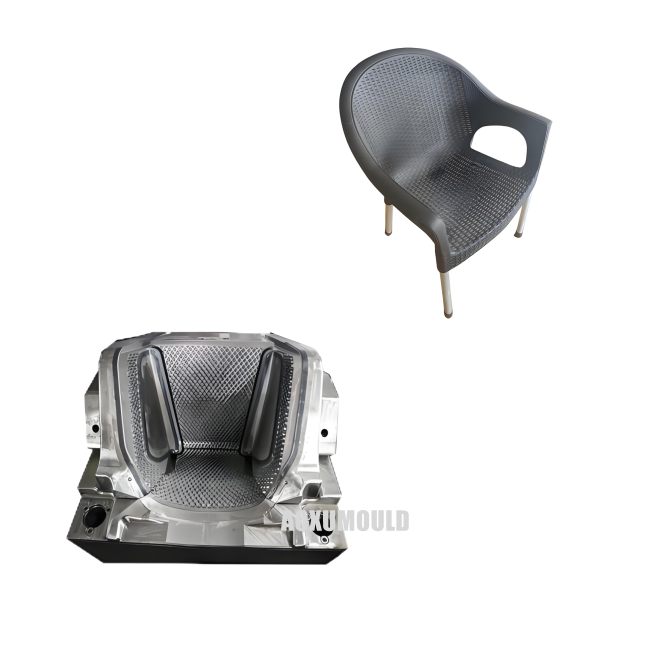
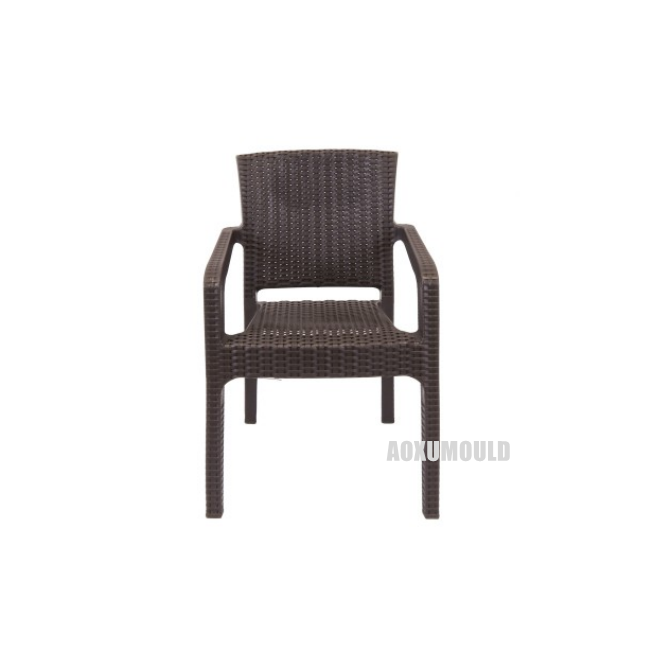
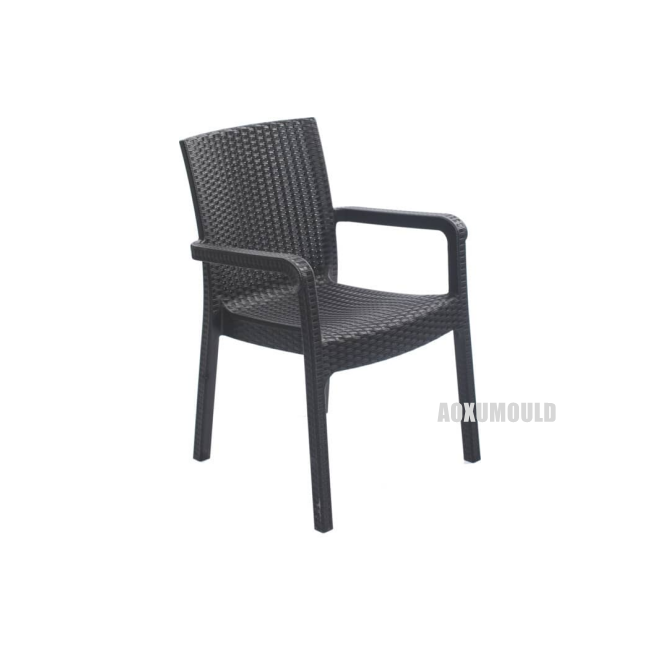
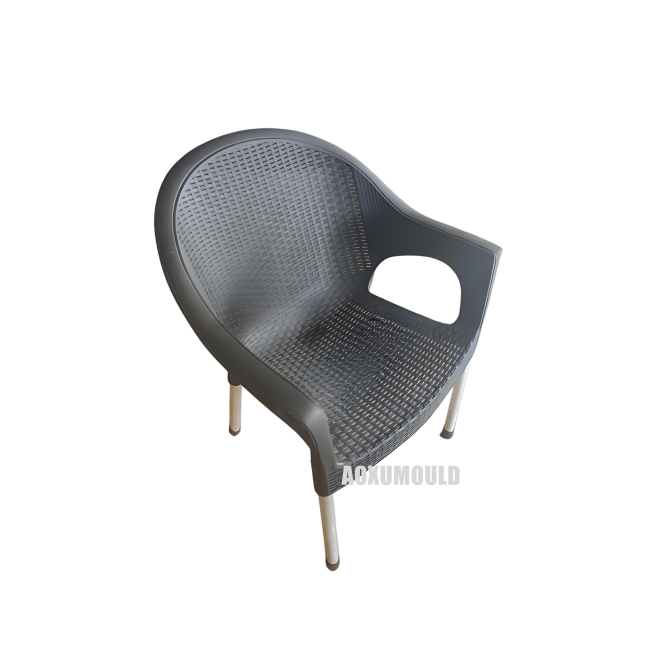
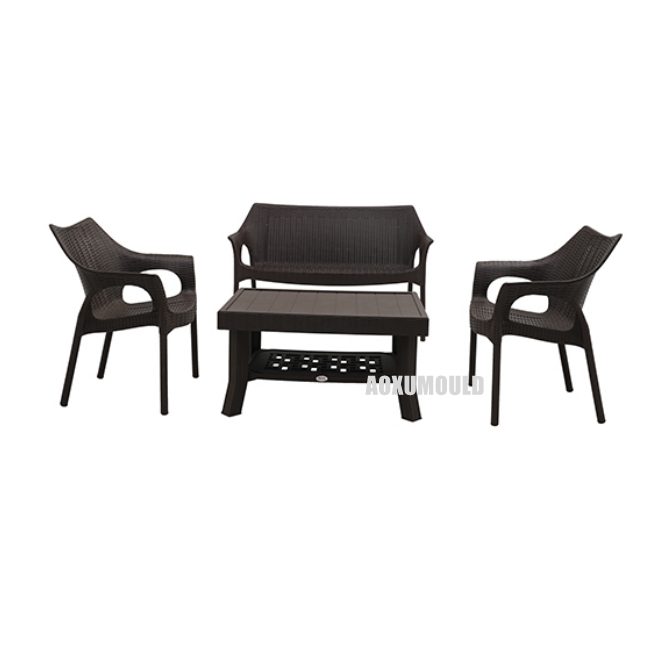
Mould Specifications
|
Mould name |
Plastic Rattan chair mould |
|
Product material |
Plastic, PP |
|
Product Size |
630x630x530mm |
| Product Weight | 2.55kg |
|
Mould material for cavity &. Core |
718 |
|
NOs of cavity |
1 cavity |
|
Injection system |
Hot runner, big gate |
|
Suitable injection machine |
1000T |
|
Mould size |
1000x960x1235mm |
| Mould Weight | 8000kg |
|
Mould lifetime |
more than 500,000pcs |
|
Delivery Time |
50 days |
Video of Molding Plastic Chairs
How To Make Design of A Rattan Plastic Chair Mould?

Designing a mould for a rattan-style plastic chair involves a detailed process to replicate the intricate woven texture while ensuring functionality and durability. Here's a structured approach:
1. Chair Design &. 3D Modeling
- CAD Modeling: Use CAD software to create a detailed 3D model of the chair, incorporating the rattan weave pattern. Apply texture mapping or surface modeling to simulate the woven effect.
- Draft Angles: Integrate slight draft angles (1-2°) to facilitate ejection without distorting the texture.
- Shrinkage Allowance: Scale the model to account for plastic shrinkage (e.g., 1.5-3% depending on material).
Mould Type & Structure
-Two-Plate Mould: Suitable for simple designs. For complex undercuts, consider side sliders or collapsible cores.
- Parting Line: Position to minimize visibility, often along edges or non-textured areas.
3. Core &. Cavity Design
-Texture Application: Use laser engraving or chemical etching on the cavity surface to replicate the rattan pattern. Ensure alignment between mould halves.
-Material Selection: Opt for hardened steel (e.g., P20 or H13) for high-volume production; aluminum for prototypes.
4. Gating System
- Gate Placement: Position gates to ensure even flow into thin sections (e.g., near thick areas or multiple gates for large chairs).
- Gate Type: Use submarine or edge gates to minimize visible marks.
5. Cooling &. Venting
- Cooling Channels: Design conformal channels near high-mass areas to ensure uniform cooling and reduce warping.
- Vents: Place along parting lines or ejector pins to prevent air traps, especially in textured regions.
6. Ejection System
- Ejector Pin: Position on non-visible surfaces (e.g., chair underside) to avoid marring the texture.
- Alternative Methods: Consider air ejection or stripper plates for complex geometries.
Which Steel Is The Most Suitable For Making Rattan Chair Moulds?

The most suitable steel for making rattan chair moulds depends on various factors. Here is an analysis for different scenarios:
High - volume production with high - quality requirements
S136 steel is an excellent choice. It has outstanding corrosion resistance and polishing performance, which can ensure the mould's surface quality and dimensional accuracy during long - term use. This is crucial for producing a large number of rattan chairs with high - gloss and high - precision surface requirements.
2.Medium - volume production with certain quality requirements
718 steel is suitable. It has good hardness uniformity and better corrosion resistance than ordinary steel. It can meet the requirements of medium - sized production volumes and can maintain the stability of the mould and the quality of the molded parts.
3.General - purpose production with lower cost considerations
P20 steel can be used. It has acceptable machinability and polishing properties, which can meet the basic requirements of rattan chair injection moulds. It is a more cost - effective option for small - to - medium - sized production volumes where the quality requirements are not extremely high.
In conclusion, there is no one - size - fits - all answer. The most suitable steel needs to be determined based on specific production requirements, quality standards, and cost constraints.
Package &. Delivery

How To Maintain Plastic Rattan Chair Mould?
1. Cleaning the Mould
Daily Post-Use Cleaning:
After each production cycle, remove residual plastic and debris from the mould using a soft brush or compressed air. Avoid sharp tools to prevent scratches.
Tip: Use a non-abrasive cleaner (e.g., soapy water) for stubborn residue. Rinse with water and dry thoroughly.
Deep Cleaning:
Every 1–2 weeks, disassemble the mould (if possible) and clean all components with a degreaser. Pay attention to intricate areas like cavities and vents to prevent buildup.
2. Lubrication
Moving Parts:
Apply a food-grade lubricant (e.g., silicone spray) to hinges, slides, and pins to ensure smooth operation. Avoid over-lubrication to prevent contamination.
Hydraulic Systems:
If the mould has hydraulic components, check and replace hydraulic fluid as needed to maintain pressure and prevent leaks.
3. Rust and Corrosion Prevention
Rust Inhibitors:
Coat the mould's metal surfaces with a rust-preventive spray (e.g., CRC 336 or WD-40 Specialist Rust Remover) after cleaning. This protects against moisture and oxidation.
Dry Storage:
Store the mould in a dry, climate-controlled environment to minimize humidity exposure. Use desiccant packs in storage areas if necessary.
4. Cooling System Maintenance
Check Water Channels:
Regularly inspect cooling channels for blockages (e.g., mineral deposits or debris). Use a mild acidic cleaner (e.g., vinegar) to dissolve buildup.
5. Structural Inspections
Visual Checks:
Perform daily visual inspections for cracks, dents, or warping. Address minor damage immediately to prevent further issues.
Alignment and Fit:
Ensure all parts align correctly. Misalignment can cause uneven wear or product defects. Adjust or replace misaligned components as needed.

6. Preventive Maintenance Schedule
|
Frequency |
Tasks |
|
Daily |
Clean residual plastic, inspect for damage, lubricate moving parts. |
|
Weekly |
Deep clean with degreaser, check cooling channels, test hydraulic systems. |
|
Monthly |
Flush cooling system, inspect alignment, replace worn parts. |
|
Quarterly |
Full disassembly, thorough cleaning, and rust-prevention treatment. |
7. Handling and Storage
Gentle Handling:
Avoid dropping or mishandling the mould to prevent physical damage. Use lifting equipment if the mould is heavy.
Protective Covering:
When not in use, cover the mould with a breathable fabric or plastic sheet to protect it from dust and moisture.
8. Documentation
Keep a log of maintenance activities, including dates, tasks performed, and any issues encountered. This helps track patterns and ensures consistency.
9. Professional Servicing
Schedule annual inspections by a qualified 模具 technician (mould technician) to identify hidden issues and perform advanced repairs.
By following these steps, you'll prolong the lifespan of your plastic rattan chair mould and ensure consistent, high-quality production. If you need further clarification or have specific questions, feel free to ask!
Mould Components
Mould Steel

Hot Runner System

Standard Parts

FAQ
1. What is a Plastic Rattan Chair Injection Mould?
A specialized tool used in manufacturing to shape molten plastic into rattan-style chair components via injection moulding. It creates intricate designs mimicking natural rattan, offering durability and weather resistance.
2. What materials are used for these moulds?
Typically, hardened steel or aluminum for durability and precision. The plastic used is often polypropylene (PP) or polyethylene (PE) due to their UV resistance, flexibility, and suitability for outdoor use.
3. How is the mould designed?
Using CAD software to ensure precision. Prototyping (e.g., 3D printing) tests design feasibility. Key considerations include material flow, cooling channels, and ejection mechanisms to avoid defects.
4. How is the mould manufactured?
CNC machining and Electrical Discharge Machining (EDM) create precise cavities and textures. Surface treatments like polishing or non-stick coatings enhance finish and longevity.
5. What is the typical cycle time?
Ranges from 30 seconds to several minutes, depending on part size, material, and cooling efficiency. Optimized cooling systems reduce cycle time, boosting production rates.
6. What affects the mould cost?
Size, complexity, material, and surface finish. Simpler designs with standard finishes are more economical.
7. How to maintain the mould?
Regular cleaning, lubrication of moving parts, and inspection for wear. Proper storage in controlled environments prevents corrosion. Annual professional servicing is recommended.
8. Common defects and solutions?
- Warping/Sink Marks: Adjust cooling rates or injection pressure.
- Short Shots: Increase material temperature or injection speed.
- Flash: Tighten mould clamping force or repair worn edges.
9. Can moulds be customized?
Yes. Customization includes chair design, texture, color integration (via masterbatch), and branding. Collaborate with designers for tailored solutions.
10. What's the lead time for production?
4–12 weeks, depending on complexity, material availability, and supplier workload. Prototyping may add 1–2 weeks.
11. How to choose a reliable supplier?
Evaluate experience, and communication responsiveness. Request samples and client references.
12. Sustainability considerations?
- Use recyclable plastics (PP/PE).
- Energy-efficient machines reduce carbon footprint.
- Durable moulds minimize waste from frequent replacements.
13. How do these moulds differ from others?
They require intricate details to replicate rattan weaves, demanding high-precision tooling and advanced cooling systems to handle complex geometries.
14. Safety and compliance standards?
Moulds must ensure material safety (non-toxic, BPA-free), structural integrity, and compliance with regional regulations (e.g., EU REACH, US CPSC).
15. Post-processing steps?
Parts may undergo trimming, assembly (e.g., attaching metal frames), or surface treatments (UV coating) post-moulding for enhanced aesthetics and functionality.
16. Advantages over traditional rattan?
- Lower maintenance, weather-resistant, and lightweight.
- Consistent quality and scalability via injection moulding.
- Eco-friendly options with recycled plastics.
Customers' Feedback


