

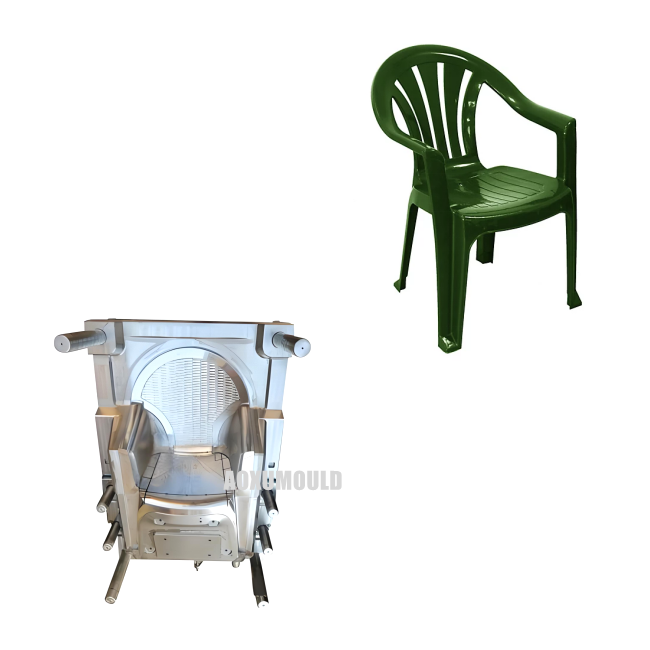
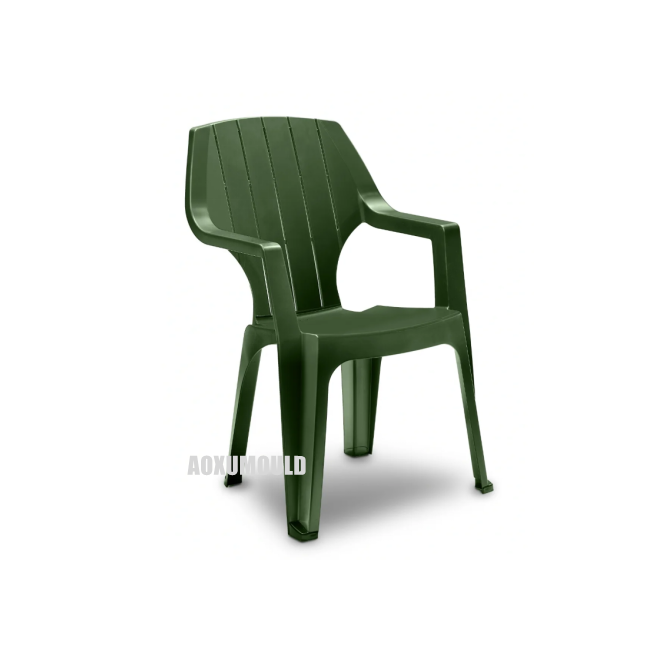
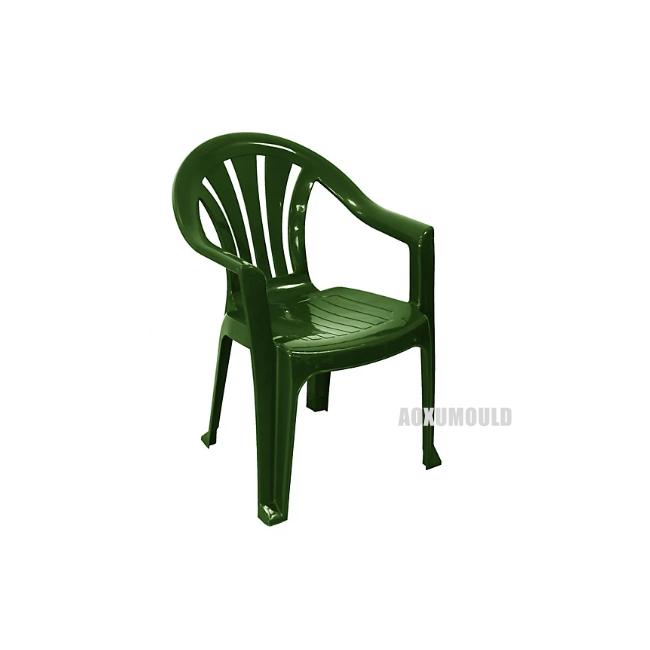
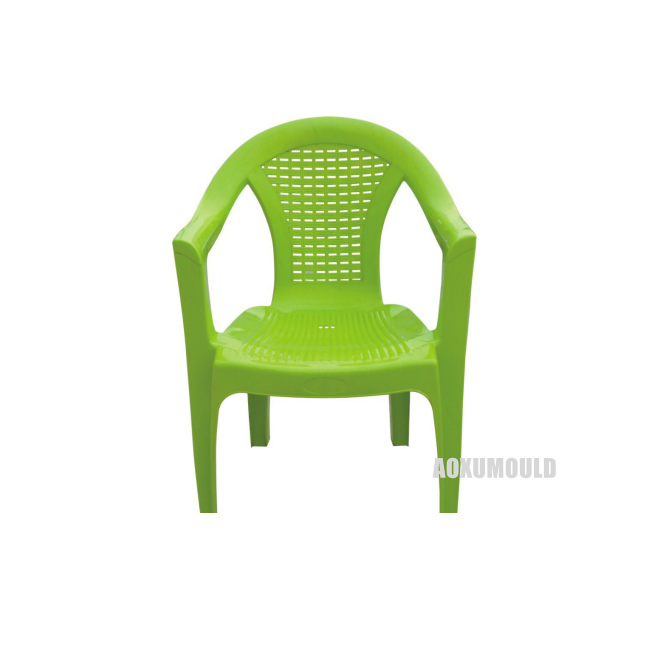
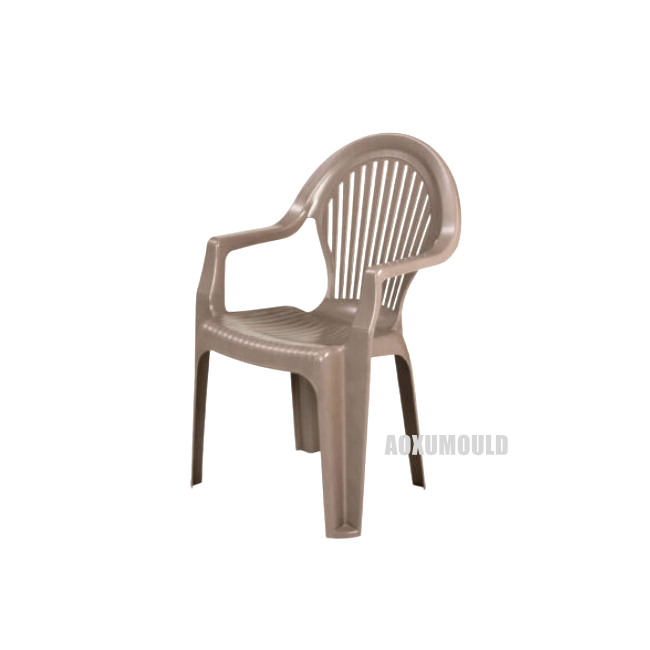
Mould Specifications
|
Mould name |
Plastic Garden chair mould |
|
Product material |
Plastic, PP |
|
Product Size |
540x560x800mm |
| Product Weight | 2.55kg |
|
Mould material for cavity &. Core |
718 |
|
NOs of cavity |
1 cavity |
|
Injection system |
Hot runner, big gate |
|
Suitable injection machine |
1000T |
|
Mould size |
1000x960x1235mm |
| Mould Weight | 8000kg |
|
Mould lifetime |
more than 500,000pcs |
|
Delivery Time |
50 days |
Plastic Garden Chair Styles &. Features

1. Low-Back Stacking Chair
Lightweight and stackable plastic garden chairs perfect for outdoor gatherings. Durable, weather-resistant design with a low-back seat for easy storage. Ideal for camping, picnics, or patio parties!
2. Rattan-Look Chair with Cushion
Elevate your outdoor space with stylish rattan-look plastic chairs. Includes detachable polyester cushions for extra comfort. Weather-resistant and easy to clean-perfect for gardens, terraces, or balconies!"
3. Arm Chair with Cushioned Seat
Relax in comfort with our cushioned arm chairs. Featuring a sturdy plastic frame and marine-friendly materials, these chairs blend ergonomic support with a sleek rattan aesthetic. Easy assembly for indoor or outdoor lounging!
4. Teak-Effect Plastic Chair
Classic teak-effect plastic chairs for a natural touch. Durable and versatile, these chairs suit gardens, patios, or even indoor dining areas. Low maintenance and built to withstand all seasons!"
5. Multi-Purpose Chair for All Ages
Family-friendly plastic chairs designed for both kids and adults. Bright colors and compact size make them ideal for picnics, camping, or backyard BBQs. Stackable and easy to transport!
6. Bar Stool-Style Chair
Upgrade your outdoor bar with our plastic high stools. Lightweight yet sturdy, these chairs feature a contemporary design and are perfect for elevated seating in gardens or poolside areas!
How To Make Injection Mould Design For A Plastic Garden Chair?
To design an injection mould for a plastic garden chair, follow these structured steps, considering the chair's structural requirements, material properties, and manufacturing feasibility:
Product Design Analysis &. Requirements
>Functional Requirements:
Define the chair's geometry (seat, backrest, legs, armrests) with considerations for ergonomics, load-bearing capacity (e.g., weight rating ≥150kg), and outdoor durability (UV resistance, weathering).
Identify critical features: hollow sections, ribs for strength, surface textures (non-slip seat), and potential undercuts (e.g., leg sockets, interlocking parts).
>Material Selection:
Opt for outdoor-rated plastics like polypropylene (PP) (cost-effective, impact-resistant, UV-stabilized) or polyethylene (PE) (excellent weather resistance). Add UV stabilizers and antioxidants to prevent fading/cracking.
>Wall Thickness:
Maintain uniform thickness (2–4mm) to avoid sink marks and ensure even cooling. Use ribs (thickness 60–70% of wall thickness) for reinforcement in load-bearing areas (e.g., leg joints).
Mould Structure Design
Parting Line Selection
Choose a horizontal parting line along the chair's maximum contour (e.g., around the base of the seat/backrest) to simplify demoulding and avoid visible flash.
For complex shapes (curved backrests), use a stepped or curved parting line to match the geometry, ensuring easy ejection.
Cavity & Core Configuration
Cavity Number: Typically single-cavity for large parts (garden chairs are often bulky), but consider multi-cavity (2–4 cavities) for high-volume production (ensure balanced flow).
Core/Cavity Design:
Core: Forms the internal surfaces (e.g., hollow legs, ribbed undersides of the seat).
Cavity: Shapes the outer surfaces (smooth seat/backrest, texture patterns).
Gating System
Gate Type:
Submarine or edge gates for hidden gate marks (e.g., at the base of legs or under the seat).
Avoid direct gates (may cause surface defects on visible areas)
Runner System:
Use hot runners for large parts to reduce material waste and improve flow (especially for thick sections).
Balance runner dimensions (diameter 8–12mm) to ensure equal filling of all cavities (if multi-cavity).
Cooling System
Design (diameter 8–10mm) around the core and cavity to minimize cycle time (aim for 20–30% of total cycle time).
Place channels 2–3x the wall thickness away from the surface for uniform cooling, preventing warpage (common in large, flat parts like the seat).
Use copper inserts or beryllium-copper cores in thick sections (e.g., leg joints) for enhanced heat dissipation.
Ejection & Undercut Handling
>Ejection System:
Use ejector pins (diameter 4–6mm) distributed evenly under the seat and backrest to avoid deformation.
For undercuts (e.g., hollow leg sockets with internal ribs), employ side core-pulling mechanisms (slides or lifters) actuated by cams or hydraulic cylinders.
Draft Angles: Apply 1–2° on vertical surfaces (seat/backrest sides) and 3–5° on textured areas to facilitate demoulding without scratches.
Venting System
Integrate vents (0.02–0.05mm depth) along the parting line and at flow front endpoints (e.g., top of the backrest) to prevent air traps and burn marks.
Mould Material Selection
Low to Medium Production (10k–50k cycles): Use pre-hardened steel (e.g., P20, 30–35 HRC) for cost-effective machining.
High Production (50k+ cycles): Heat-treated steel (e.g., H13, 48–52 HRC) for wear resistance, especially in areas with high friction (slides, ejector pins).
Surface Treatment: Polish visible surfaces (Ra ≤0.4μm) and texture non-visible areas (e.g., ejector pin marks) to meet aesthetic requirements.
Mold Flow Analysis (CAE)
>Simulate filling, packing, and cooling using software like Moldflow or Moldex3D to:
>Optimize gate location and runner design to avoid weld lines (common in multi-rib structures).
>Predict warpage due to uneven shrinkage (adjust cooling channels or wall thickness).
>Validate pressure distribution to ensure complete filling of thin sections (e.g., armrests).
Manufacturing Process for the Mould
>CNC Machining: Rough and finish machine core/cavity blocks, slides, and inserts.
>EDM: Precision machine complex geometries (undercuts, texturized surfaces).
>Heat Treatment: Hardened steel components (if required) to enhance durability.
>Assembly: Fit ejection system, cooling lines, and side cores; test slide movements for smooth operation.
Trial Molding & Optimization
>First Shot Inspection: Check for defects (flash, short shots, sink marks) and measure dimensional accuracy (using CMM).
>Adjustments:
Modify cooling lines if cycle time is too long or parts are warped.
Refine gate size/location if weld lines are visible or filling is unbalanced.
Durability Testing: Subject molded chairs to load, UV, and weathering tests to ensure the mould design meets performance requirements.
Designs For Product &. Mould

Key Considerations for Garden Chairs
1.Ergonomic Contours: Ensure the mould accurately replicates curved seat/backrest profiles for user comfort
2.Assembly Features: Design moulds to include snap-fit joints or screw bosses for easy chair assembly (if the chair has detachable parts).
3.Cost Efficiency: Balance material usage (hollow structures reduce weight/cost) with mould complexity (minimize side cores for simpler designs).
4.By following these steps, you'll create a robust injection mould that efficiently produces high-quality, durable plastic garden chairs while addressing structural, aesthetic, and manufacturing needs.
How To Molding A Plastic Garden Chair?
1.Clamp Mould: Close cavity and core halves tightly.
2.Inject Melt: Force molten plastic into the mould via the gating system.
3.Cool &. Solidify: Circulate coolant to solidify the part, ensuring uniform cooling to prevent warpage (check for sink marks on thick sections).
4.Eject Part: Open the mould; use ejector pins/slides to release the chair, ensuring no undercut damage.
Package &. Delivery

FAQ
1.What materials are commonly used for plastic garden chair injection moulds?
>Mould Materials:
Pre-hardened Steel (e.g., P20): Suitable for low-to-medium production (10k–50k cycles), offering cost-effective machining and moderate wear resistance.
Heat-treated Steel (e.g., H13): Ideal for high-volume production (50k+ cycles), with high hardness (48–52 HRC) to withstand abrasion from filled plastics (e.g., UV-stabilized PP/PE).
>Surface Treatments: Polished to Ra ≤0.4μm for visible surfaces; textured for non-critical areas (e.g., anti-slip seat patterns).
2.What key design features are critical for garden chair moulds?
>Draft Angles:
1–2° for smooth surfaces to facilitate demoulding; 3–5° for textured areas (e.g., non-slip seat surfaces) to prevent surface scratches.
>Reinforcing Ribs:
Thickness set to 60–70% of the wall thickness (e.g., 1.2–1.4mm for a 2mm wall) to avoid sink marks, placed at load-bearing points (leg joints, seat edges).
>Cooling System:
Serpentine or spiral channels (8–12mm diameter), positioned 2–3x the wall thickness from the surface, ensuring uniform cooling to minimize warpage.
3. How to resolve common moulding defects like warpage?
>Root Causes: Uneven cooling, wall thickness variations, or internal stress.
>Solutions:
Optimize cooling channel distribution for symmetrical heat dissipation.
Adjust injection parameters: Reduce pressure (80–150 MPa) and extend cooling time (50–70% of the cycle).
Ensure uniform wall thickness (tolerance ≤10%) and avoid localized thick sections.
4. What's the best material for outdoor-resistant garden chairs?
>Plastic Resins:
Polypropylene (PP): Cost-effective, impact-resistant, and UV-stabilizable (add 0.3–1% UV stabilizers for outdoor use).
High-Density Polyethylene (HDPE): Excellent weather resistance, ideal for hollow structures (e.g., lightweight chair legs).
>Additives: Antioxidants and light stabilizers to prevent fading, cracking, and embrittlement under UV exposure.
5. How to balance mould cost and production efficiency?
>Cavity Design:
Single-cavity for low volumes (<10k units, cost: $5k–$15k); multi-cavity (2–4 cavities) for high volumes (reduces cycle time by 30%, cost: $20k–$50k).
>Hot Runners: Higher upfront cost ($10k–$20k) but eliminates runner waste, ideal for long production runs (saves 15–20% material).
>Material Selection: Use P20 for moderate use; H13 for heavy-duty, high-wear applications.
6. Can a garden chair be moulded as a single piece?
>Feasibility:
Small Chairs (<500mm): Single-cavity moulds with integrated features (legs, seat, backrest) are common, using side cores for undercuts (e.g., hollow legs).
Large Chairs (>800mm): Often split into parts (seat, backrest, legs) for easier demoulding and lower clamping force requirements (e.g., 200-ton press for legs vs. 1,000 tons for a full chair).
>Assembly: Snap-fits or mechanical fasteners join parts, simplifying mould complexity.
7. How to enhance weather resistance through mould design?
Surface Texturing:
Textured mould surfaces (e.g., orange peel texture, Ra 1–3μm) reduce direct UV exposure, increasing lifespan by 20% compared to glossy finishes.
Structural Reinforcement:
Thickened sections at stress points (e.g., leg-root junctions) and integrated UV-stabilized layers via co-injection (outer layer: pure UV-resistant resin; inner layer: recycled material).
8. What maintenance is required for injection moulds?
Daily: Clean cavities with copper brushes to remove resin residue; inspect for flash or carbon buildup.
Weekly: Lubricate slides and ejector pins with high-temperature grease (e.g., molybdenum disulfide) to ensure smooth movement.
Monthly: Check cooling lines for scale (flush with 5% citric acid solution); verify ejector pin alignment (max wear tolerance: 0.5mm).
9. How to minimize sink marks in thick sections?
Solutions:
Thin wall thickness or add ribs to distribute material (e.g., convert a 4mm thick section to 3mm with a 2mm rib).
Enlarge gate size (e.g., from 5mm to 8mm) and extend packing pressure time (5–10 seconds) for better material compensation.
10. What sustainability considerations apply to mould design?
>Material Efficiency:
Hollow structures and optimized ribs reduce resin usage by 20–30%.
Recycled content: Moulds designed for 30–50% recycled PP/HDPE (smooth flow paths to avoid shear degradation).
>Energy Savings:
Servo-electric injection machines (30% more energy-efficient than hydraulic) paired with thermal-efficient moulds (e.g., beryllium-copper inserts for faster cooling).
11. How to validate mould performance during sampling?
Key Tests:
Dimensional Accuracy: Check critical dimensions (e.g., leg spacing ±0.5mm, seat height ±1mm) with CMM.
Mechanical Performance: Static load test (150kg for 24 hours, deformation ≤5mm); drop test (1m height, no fractures).
Demoulding Force: Ensure ejector force <5kN to confirm proper draft angles and surface finish (Ra ≤0.8μm).
Mould Components
Mould Steel

Hot Runner System

Standard Parts

Customers' Feedback
At AOXUMOULD, our injection moulds for plastic garden chairs blend precision engineering with innovation, earning us rave reviews from satisfied customers worldwide. We deliver high-quality, durable moulds designed for optimal performance, featuring seamless demoulding, uniform cooling, and robust structural integrity. Our tailored solutions meet diverse needs-from single-cavity prototypes to multi-cavity production tools-backed by expert CAD design, CAE analysis, and stringent quality control. Clients praise our fast turnaround, cost-efficiency, and dedication to resolving challenges like warpage and surface defects. Whether for PP, HDPE, or recycled materials, our moulds ensure consistent, premium-grade outputs. Partner with us for reliability that exceeds expectations.


