

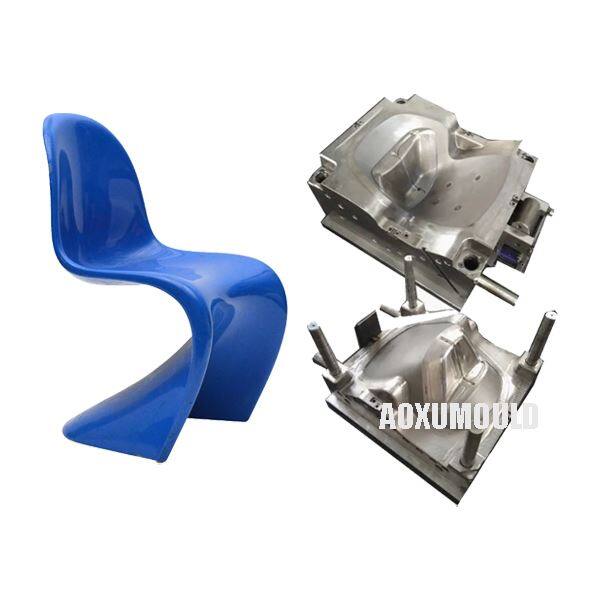
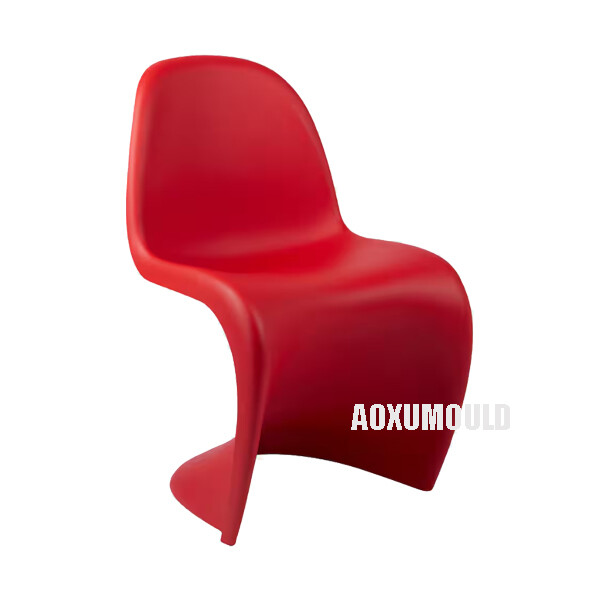
Mould Specifications
|
Mould name |
Panton Chair Mould |
|
Product material |
HDPE/PP, plastic |
|
Product Size |
490X580X840mm |
| Product Weight |
1.2kg |
|
Mould material for cavity &. Core |
P20, 718 |
| Mould Base | C45 |
|
NOs of cavity |
1 cavity |
|
Injection system |
Cold/Hot runner |
|
Suitable injection machine |
1200T |
|
Mould size |
720X800X1100mm |
|
Mould lifetime |
more than 300,000pcs |
|
Delivery Time |
55 days |
Characters of Panton Chairs

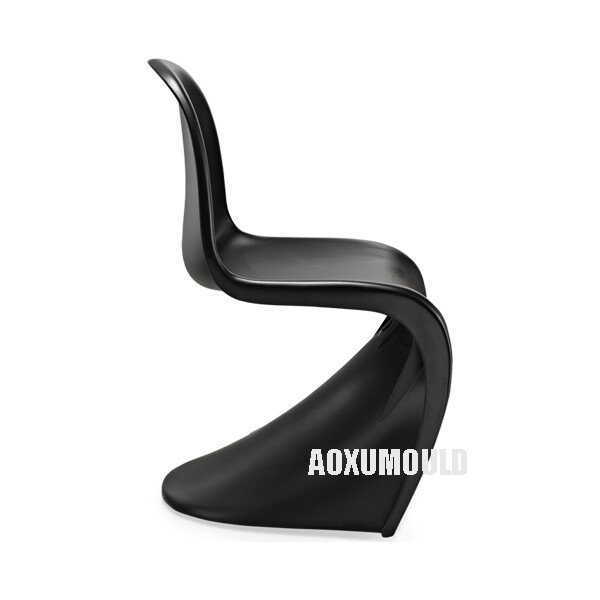
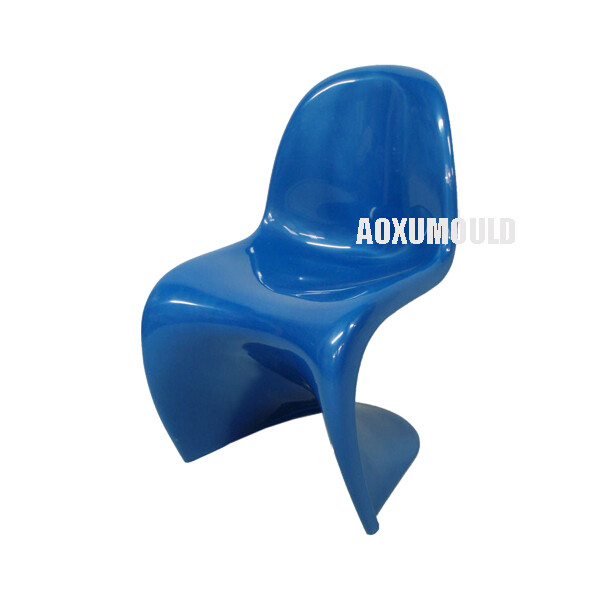
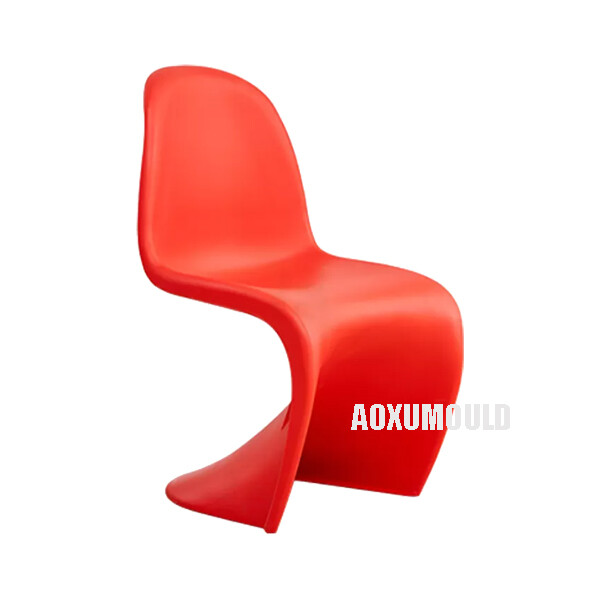
The Panton Chair is an iconic, S-shaped plastic chair designed by Danish designer Verner Panton in 1960. It was the first single-form, stackable plastic chair ever produced, revolutionizing furniture design with its futuristic, fluid shape.
Manufactured by Vitra since 1967, the Panton Chair became a symbol of 1960s pop culture and modernist design, appearing in films, advertisements, and art installations.
Key Characteristics of Plastic Panton Chairs
1. Sleek, Organic Form
Sinuous, S-shaped curve for ergonomic comfort.
No legs or separate parts-made from a single piece of molded plastic.
2. Material Evolution
Originally made from fiberglass-reinforced polyester, later versions used:
Polypropylene (lightweight, durable, recyclable).
Polyurethane (softer finish, used in limited editions).
3. Stackable & Space-Saving
Designed to nest neatly when stacked, making it ideal for modern interiors.
4. Vibrant Colors
Originally produced in bold, glossy hues like red, white, black, and pastels.
Later editions include matte and translucent finishes.
5. Durability & Flexibility
The plastic construction is lightweight yet sturdy.
Resistant to wear, though early fiberglass versions were more fragile.
6. Iconic Design Legacy
Featured in museums like MoMA and the Vitra Design Museum.
A staple in mid-century modern and contemporary interiors.
Dimensions of Panton Chair

How to Choose The Material of Panton Chair?
1. Original Version (1960s) – Fiberglass-Reinforced Polyester (FRP)
Characteristics:
Rigid, glossy finish.
Heavy compared to later versions.
Prone to cracking over time (less durable).
Used by: Herman Miller (early prototypes, limited production).
2. 1970s–1990s – Rigid Polyurethane Foam (PUR)
Characteristics:
Softer, slightly flexible feel.
Lightweight but less durable than modern versions.
Surface could chip or degrade with UV exposure.
Used by: Vitra (discontinued due to fragility).
3. Modern Production (Since 1999) – Polypropylene (PP)
Characteristics:
Lightweight, durable, and recyclable.
Semi-gloss or matte finish (available in multiple colors).
Resistant to impact and UV fading.
Stackable and suitable for indoor/outdoor use.
Used by: Vitra (current standard version).
Why Moldflow Analysis is Essential for Panton Chair Mould?

The Panton Chair's complex, curved design and single-piece injection molding process require precise engineering to avoid defects. Moldflow simulation (a CAE tool for plastic injection molding) is crucial for optimizing the mould design and manufacturing process. Here's why:
1. Predict & Prevent Manufacturing Defects
The Panton Chair's thin, flowing curves make it prone to:
Warping (uneven cooling causes distortion)
Sink marks (thick sections shrink differently)
Short shots (plastic doesn't fill the mould completely)
Weld lines (weak points where molten plastic meets)
Moldflow helps simulate these issues before cutting the mould, saving costly revisions.
2. Optimize Material Flow & Pressure
The chair's long, continuous shape requires uniform plastic flow.
Moldflow analyzes:
Injection pressure (too high = stress, too low = incomplete fill)
Gate locations (best entry points for plastic)
Flow front temperature (prevents premature cooling)
This ensures consistent quality in mass production.
3. Improve Cooling Efficiency
The Panton Chair's thick base & thin edges cool at different rates.
Moldflow simulates cooling channels to:
Reduce cycle time (faster production = lower cost)
Prevent warping (uniform cooling = better shape retention)
4. Test Different Materials
The Panton Chair has been made in:
Polypropylene (PP) – Standard version
Fiberglass-reinforced plastic – Early editions (more brittle)
Polyurethane (PUR) – Limited editions (softer feel)
Moldflow predicts how each material behaves, helping choose the best option.
5. Reduce Prototyping Costs
Traditional trial-and-error mould adjustments are expensive and time-consuming.
Moldflow virtually tests the design, reducing physical prototypes.
6. Ensure Structural Integrity
The cantilever design (no legs) must support weight without cracking.
Moldflow checks stress distribution to avoid weak spots.
Manufacturing Process of Panton Chair Mould

1. Design & Engineering
3D Modeling: The chair's S-shaped ergonomic design is converted into a CAD model.
Moldflow Analysis: Simulates plastic flow, cooling, and potential defects (warping, sink marks).
Mould Splitting: The mould is split into core & cavity (for demolding the curved shape).
2. Mould Material Selection
Hardened Steel (for high-volume production): P20, 718H, S136, H13, etc,.
Precision-machined to withstand high-pressure injection cycles.
3. CNC Machining & EDM
CNC Milling: Cuts the mould's core and cavity from steel/aluminum blocks.
Electrical Discharge Machining (EDM): Refines complex curves and fine details.
Polishing: Ensures a smooth surface finish for glossy plastic parts.
4. Cooling & Ejection System
Cooling Channels: Integrated to ensure uniform cooling and prevent warping.
Ejector Pins: Push the finished chair out of the mould after cooling.
5. Injection Molding Process
Plastic Pellet Melting: Polypropylene (PP) or other material is heated.
High-Pressure Injection: Molten plastic is forced into the mould cavity.
Cooling & Solidification: The chair hardens inside the mould.
Demolding: The mould opens, and ejector pins release the chair.
6. Quality Testing & Adjustments
First-Article Inspection: Checks for defects (warping, sink marks).
Mould Adjustments: Fine-tuning cooling/gate positions if needed.
7. Mass Production
Once approved, the mould is installed in an injection molding machine for large-scale production.
Package &. Delivery

Mould Components
Mould Steel

Hot Runner System

Standard Parts

FAQ
>1. What materials are used for Panton Chair moulds?
High-grade steel (e.g., P20, H13) for durability in mass production.
>2. What materials are used in the production of Panton chairs?
Panton chairs are typically made from a single piece of injection-molded plastic, such as polypropylene. This allows for a seamless and durable design.
>3. Can Panton chairs be customized in terms of color and finish?
Yes, Panton chairs can be customized in a variety of colors and finishes to suit different design aesthetics and preferences.
>4. Do you provide Moldflow analysis?
Yes, we simulate filling, cooling, and warpage before cutting the mould to prevent defects.
>5. Do you offer maintenance services?
Yes, including polishing, corrosion protection, and component replacement.
>6. How do you ensure quality control?
Trial shots with inspection reports (dimensions, surface finish).
CMM (Coordinate Measuring Machine) for precision verification.
>7. How can I order Panton chairs from your injection molding factory?
Please contact our sales team for more information on ordering Panton chairs from factory. We can provide you with pricing, lead times, and customization options for your specific needs.
Customers' Feedback


