

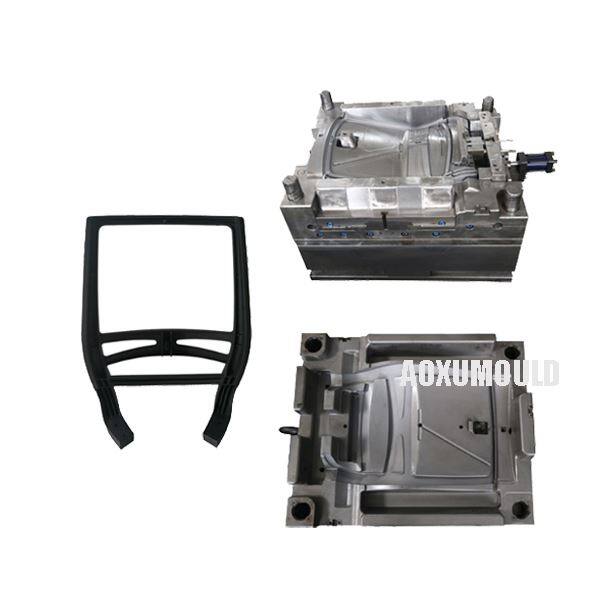
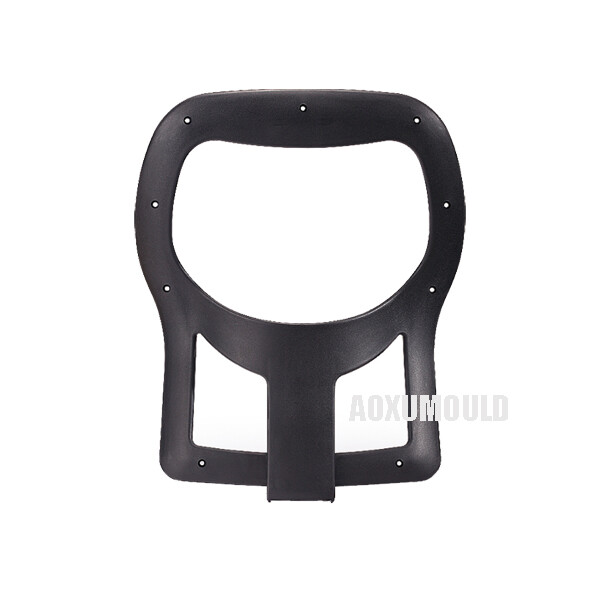
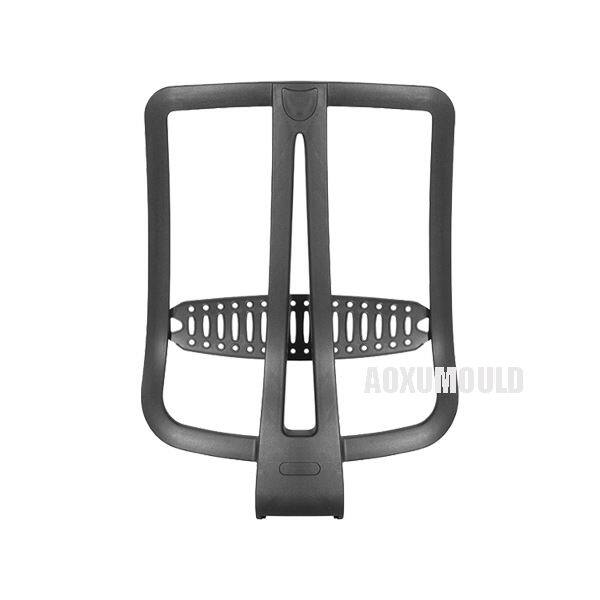
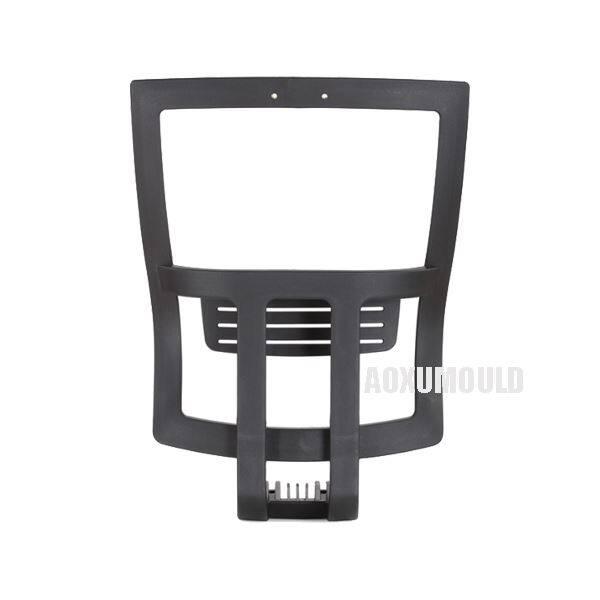
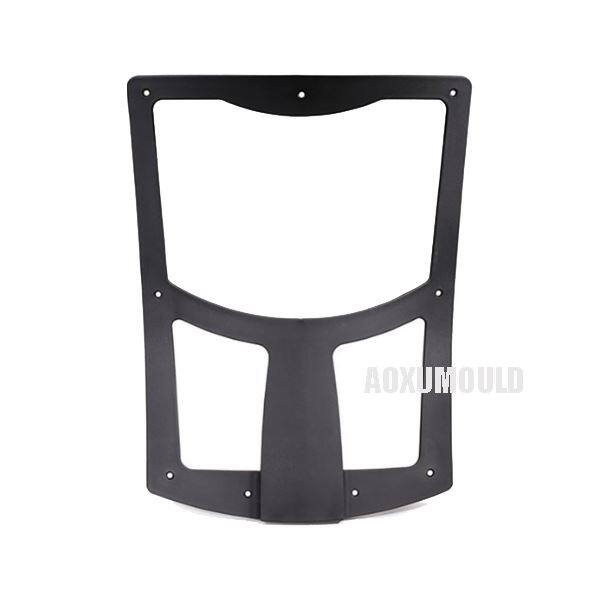
Mould Specifications
|
Mould name |
Office Chair Back Mould |
|
Product material |
HDPE/PP, plastic |
|
Product Size |
470X597X10mm |
| Product Weight |
1.2kg |
|
Mould material for cavity &. Core |
P20, 718 |
| Mould Base | C45 |
|
NOs of cavity |
1 cavity |
|
Injection system |
Cold/Hot runner |
|
Suitable injection machine |
680T |
|
Mould size |
680X820X550mm |
|
Mould lifetime |
more than 300,000pcs |
|
Delivery Time |
55 days |
Accessories of An Office Chair

1. Adjustability & Ergonomics Accessories
Armrest Pads – Cushioned or adjustable armrest covers for comfort.
Lumbar Support Cushions – Extra lower back support (attachable or built-in).
Headrests – Detachable or adjustable head support for neck comfort.
Seat Cushions – Memory foam or gel pads for added comfort.
Tilt Tension Knob – Adjusts chair recline resistance.
Height Adjustment Lever – For modifying seat height.
2. Mobility & Base Accessories
Caster Wheels – Standard (hard floor) or rollerblade-style (carpet) wheels.
Chair Glides – Floor protectors (for hard surfaces instead of wheels).
Gas Lift Cylinder – Adjustable height mechanism.
Five-Point Base – Typically made of nylon or metal for stability.
Designs For Product &. Mould

Design Considerations for Office Chair Back Mould
1. Ergonomics & User Comfort
Contoured Shape: The mould must replicate ergonomic curves to support the spine.
Lumbar Support: Built-in or adjustable lumbar zones may require special core inserts.
Breathability: If the design includes mesh or ventilation holes, the mould must account for proper airflow channels.
2. Material Selection
-Plastic Type:
PP (Polypropylene) – Durable, flexible, cost-effective.
ABS – Stronger, better finish, but more expensive.
PC (Polycarbonate) – High impact resistance (for premium chairs).
Glass-Fiber Reinforced Plastics – Extra stiffness for heavy-duty use.
-Wall Thickness (2.5–4mm typical):
Too thin → Weak structure.
Too thick → Sink marks, longer cooling time.
3. Mould Flow & Cooling Efficiency
Gate Location: Optimal placement to minimize weld lines & air traps.
Cooling Channels: Proper cooling design prevents warping & reduces cycle time.
Venting: Prevents gas buildup (burn marks on the product).
4. Structural Integrity & Durability
Ribs & Reinforcements: Strengthens thin sections without adding weight.
Draft Angles (1–3°): Ensures easy ejection from the mould.
Undercuts: May require side actions, lifters, or collapsible cores, increasing mould complexity.
5. Surface Finish & Aesthetics
-Texture Options:
Smooth (glossy/matte)
Grain (leather-like, anti-slip)
Custom logos/patterns (via EDM or laser engraving)
-Parting Lines: Should be minimized or strategically placed for aesthetics.
6. Mould Construction & Lifespan
Steel Grade Selection:
P20, 718, NAK80 – Standard for long production runs.
H13 (Hardened Steel) – For abrasive materials (e.g., fiber-filled plastics).
Corrosion Resistance: Chrome plating or special coatings for humid environments.
7. Ejection System Design
Ejector Pins: Must be positioned to avoid part deformation.
Stripper Plate or Air Ejection: For complex geometries.
8. Multi-Cavity vs. Single-Cavity Moulds
Single-Cavity: Lower cost, slower production.
Multi-Cavity (2–4+): Faster output but higher initial cost.
9. Tolerance & Precision
Standard Tolerances: ±0.1–0.3mm (tighter for critical features).
Mold Flow Simulation (CAE Analysis): Predicts filling, cooling, and warpage issues.
How to Make A Quality Office Chair Back Mould?

Step 1: Define Design Requirements
Ergonomic Shape: Ensure the mould follows human spine support principles.
Material Selection: Choose plastic (PP, ABS, PC) based on durability & flexibility needs.
Wall Thickness (2.5–4mm): Avoid uneven thickness to prevent warping.
Draft Angles (1–3°): Helps in smooth ejection.
Step 2: CAD & Mold Flow Analysis
3D Modeling (SolidWorks, AutoCAD, UG):
Optimize geometry for injection molding.
Check for undercuts (may require sliders or lifters).
Mold Flow Simulation (Moldflow, Moldex3D):
Predicts filling, cooling, and warpage issues.
Optimizes gate locations to avoid defects.
Step 3: Select the Right Steel
Standard Molds: P20, 718, NAK80 steel (good for 500K+ shots).
High-Wear Areas: H13 hardened steel (for fiber-reinforced plastics).
Prototypes: Aluminum (cheaper, but shorter lifespan).
Step 4: Precision Machining
CNC Milling: Creates the core & cavity with tight tolerances (±0.05mm).
EDM (Electrical Discharge Machining): For fine details & textures.
Grinding/Polishing: Ensures smooth surface finish.
Step 5: Cooling & Venting System
Conformal Cooling Channels: Follows part shape for even cooling.
Proper Venting: Prevents gas traps (burn marks).
Step 6: Ejection System Design
Ejector Pins: Strategically placed to avoid part damage.
Air Ejection/Stripper Plates: For complex geometries.
Step 7: Mold Assembly & Testing
Trial Shots (T1 Samples): Check for defects like sink marks, flash, or warping.
Adjustments: Fine-tune temperature, pressure, and cooling time.
Step 8: Mass Production & QC
Strict Inspection: Measures dimensions, surface finish, and strength.
Regular Maintenance: Prevents wear & extends mold life.
Mould Components
Mould Steel

Hot Runner System

Standard Parts

Why We Ask Customers to Provide Samples or Drawings for Office Chair Back?
1. Ensures Design Accuracy
Avoids Misinterpretation: Verbal descriptions can be ambiguous; samples/drawings provide exact dimensions, curves, and features.
Confirms Ergonomics: Validates lumbar support angles, ventilation holes, and other comfort-driven elements.
2. Optimizes Mould Functionality
Identifies Undercuts & Complex Features: Helps determine if sliders, lifters, or collapsible cores are needed.
Guides Gate & Ejection Design: Ensures proper material flow and easy part release.
3. Reduces Costs & Delays
Prevents Redesigns: Catching design flaws early avoids costly mould modifications later.
Accurate Quoting: Eliminates guesswork in material, machining time, and steel requirements.
4. Validates Material Suitability
Tests Plastic Behavior: Samples reveal how the material fills, cools, and shrinks in the mould.
Avoids Defects: Predicts warping, sink marks, or weak spots via mold flow analysis.
5. Accelerates Sampling & Approval
Faster T1 Samples: A clear reference reduces trial-and-error adjustments.
Streamlines Feedback: Lets you verify aesthetics (texture, logos) and functionality early.
FAQ
>1. What materials are used for the mould?
Mould Material: Typically hardened steel (P20, 718, NAK80) or aluminum for prototypes.
Injected Material: Common plastics include PP, ABS, PC, or fiberglass-reinforced polymers for strength and flexibility.
>2. Can you customize the mould design?
Yes, manufacturers can:
Adjust ergonomic curves, thickness, and ventilation holes.
Add brand logos, textures, or special finishes.
Modify for different chair mechanisms (e.g., reclining, fixed, or mesh backs).
>3. Do you provide sample parts before mass production?
Yes, T1 samples (first trial shots) are provided for approval before full production.
Adjustments can be made if needed.
>4. What's the minimum order quantity (MOQ)?
MOQ for mould: Usually 1 set (custom-made per design).
>5. How do you ensure quality control?
Precision machining (CNC, EDM, grinding).
Mold flow analysis to prevent defects.
Dimensional checks & durability testing.
>6. Do you offer mould maintenance/repair?
Yes, services include:
Polishing, coating, or re-machining.
Replacement of worn components (ejector pins, sliders).
>7. Can you ship moulds internationally?
Yes, via air freight (faster) or sea shipping (cost-effective).
Proper packaging to prevent damage.
>8. What file formats do you accept for mould design?
STEP, IGES, STL, or CAD files (SolidWorks, Pro/E, AutoCAD).
Customers' Feedback


