

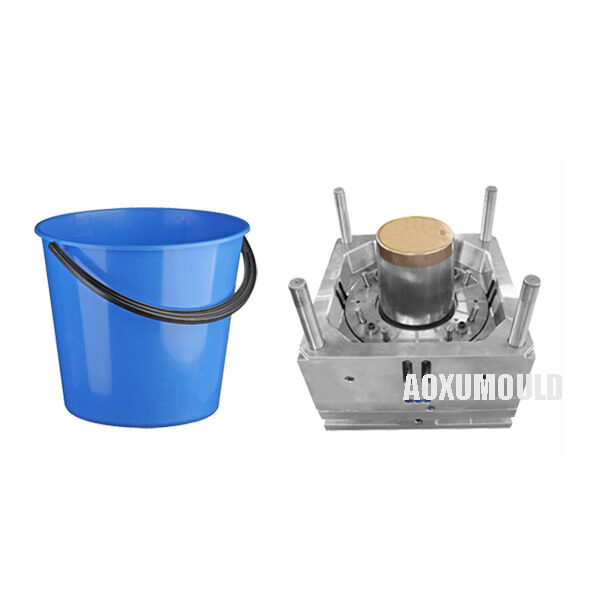
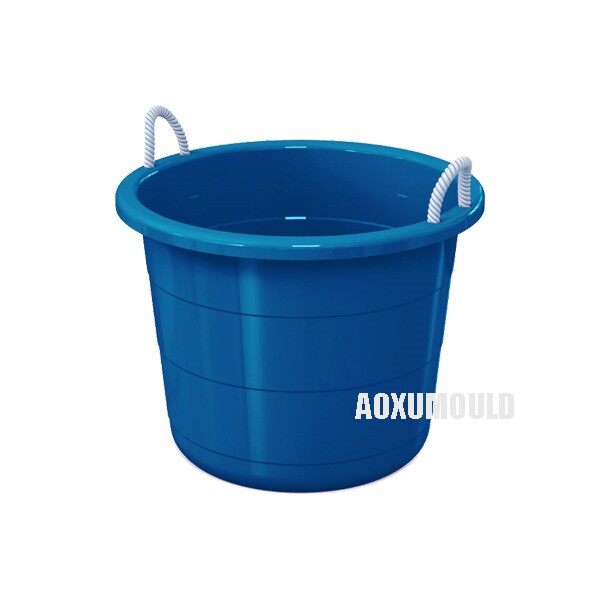
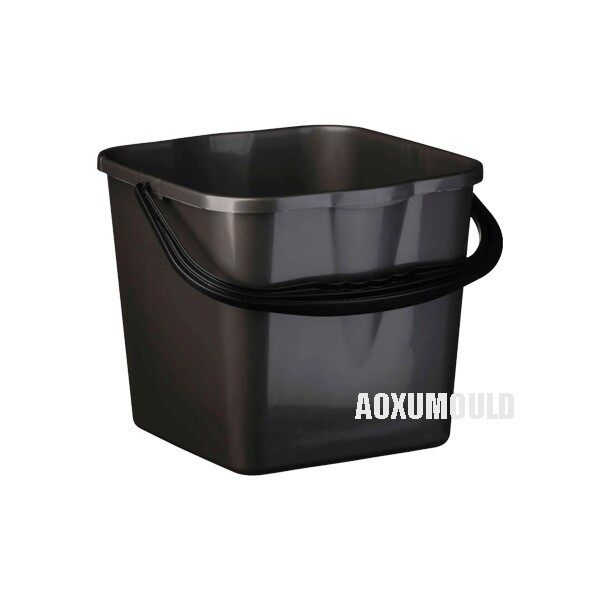
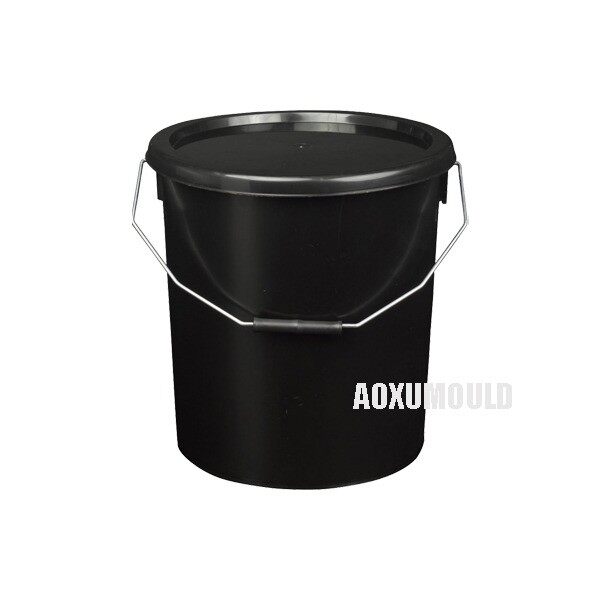
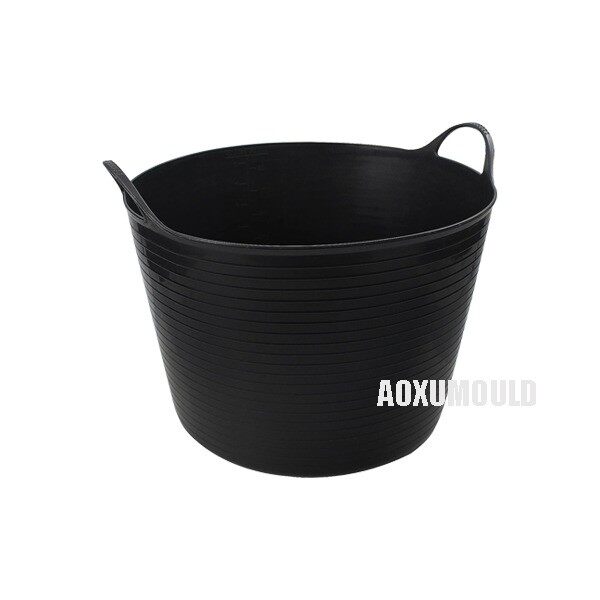
Mould Specifications
|
Mould name |
Garden Bucket Mould |
|
Product material |
PP, plastic |
|
Bucket Size |
D256 (top) x D227 (bottom) x 265mm |
|
Product weight |
1.6kg |
|
Mould material for cavity &. Core |
C45, P20, 718, 2738 |
|
Mould base |
P20 |
|
Injection system |
Hot runner |
|
Suitable injection machine |
450T |
|
Mould size |
560X550X530mm |
|
Mould lifetime |
more than 500,000pcs |
Common Plastic Material For Garden Buckets

When it comes to choosing the right material for your garden buckets, there are several options available. Each material has its own unique properties that make it ideal for specific gardening needs. Here are a few things to consider when choosing plastic material for garden buckets:
1. Durability: Look for plastic materials that are sturdy and long-lasting. You don't want a bucket that will easily crack or break when exposed to outdoor elements like rain, sun, or extreme temperatures.
2. UV Resistance: Since garden buckets will be exposed to the sun for extended periods, it's essential to choose a material that is resistant to UV damage. This will ensure that your buckets don't fade, become brittle, or crack easily.
3. Size: Consider the size and shape of the bucket you need. Plastic materials can be molded into a variety of shapes and sizes, so choose one that matches your gardening needs.
4. Cost: Plastic materials can vary in price, so consider your budget when choosing the right material for your garden buckets.
5. Recyclability: Look for materials that are recyclable. This way, you can minimize waste and contribute to a more sustainable environment.
Some of the recommended plastic materials for garden buckets include high-density polyethylene (HDPE), polypropylene (PP), and polycarbonate (PC). These materials are durable, UV-resistant, and easy to mold into a variety of shapes and sizes. Additionally, they are recyclable, making them an environmentally-friendly choice.
In summary, choosing the right plastic material for your garden buckets can be a tricky task. However, by considering the durability, UV resistance, size, cost, and recyclability of the material, you can make an informed decision that best suits your gardening needs.
How To Make A Quality Garden Bucket Injection Mould?
Step 1: Design the Mould
The first step is to design the mold. You can use software like SolidWorks or AutoCAD to create a 3D model of the garden bucket. This will help you to visualize the final product and ensure that everything fits together properly. You should also consider the material you will be using to inject into the mold. This will help you to determine the correct size and shape for the mold.
Step 2: Choose the Right Material
The material you choose for your garden bucket injection mould will determine the quality of the mould. The material should be strong, durable, and able to withstand high temperatures and pressure. Usually, injection moulds are made of steel. Commonly used mold steel P20, 718 'S136 and so on.
Step 3: Create the Mould Core &. Cavity
Once you have designed the mould, you can start creating the mould cavity. This is the part of the mould that will be filled with plastic and will produce the garden bucket. You can use a CNC machine or a 3D printer to create the mould cavity. Ensure that the mould cavity is accurate and has the right dimensions.
The next step is to create the mould core. This will ensure that the garden bucket has the right shape and size. The core should fit snugly inside the mould cavity. You can use a lathe or a CNC machine to create the mould core. Ensure that the core is smooth and has no protrusions that could damage the plastic.
Step 4: Assembly and Testing
Before you start producing the buckets, test the mould to ensure that it's working correctly and producing quality items. Make sure that the machine is set to the correct temperature and speed and that there are no defects in the mould.
The Basic Plastic Injection Molding Process

The plastic injection molding process is a highly efficient and versatile method of manufacturing plastic products. It is used to produce a wide range of consumer products as well as components for industrial and commercial applications.
To begin the process, plastic pellets are loaded into the hopper of the injection molding machine. The pellets are then melted and liquefied in the machine's barrel. Once melted, the liquid plastic is injected into the mold cavity under high pressure, filling the cavity completely.
Once the plastic has filled the mold, it is left to cool and solidify. The mold is then opened, and the finished product is removed. The mold can then be re-used to produce more products.
The plastic injection molding process offers many advantages over other manufacturing methods. It is highly repeatable, allowing for the production of hundreds or thousands of identical products. It is also a highly efficient process, with minimal waste generated in the production of each product.
Additionally, injection molding allows for the creation of complex shapes and designs, including parts with intricate details and tight tolerances. This makes it an ideal choice for producing parts for a wide variety of applications.
Overall, the plastic injection molding process is a reliable and efficient method of manufacturing plastic products. It has helped to revolutionize the production of consumer goods and industrial components, making it an essential part of modern manufacturing.
Design For Product &. Mould

Package &. Delivery

Mould Components
Mould Steel

Hot Runner System

Standard Parts

Why Choose Us?
Our mould company is committed to providing customers with high-quality mould products and services. We have a team of experienced and skilled engineers who can create customized mould solutions to meet our clients' specific needs. Our moulds are built with precision and accuracy, using innovative technology and high-quality materials.
Our clients trust us because we offer prompt and efficient services, fast turnaround times, and competitive pricing. Our goal is to provide moulds that are durable and can withstand repeated use, resulting in increased production efficiency and reduced downtime.
In addition, we value customer satisfaction and aim to build long-term relationships with our clients by providing exceptional customer service and ongoing support. Our team is dedicated to working closely with our clients to ensure that we meet their exact specifications and expectations.
We are always striving to improve and stay ahead of the competition by investing in new technology and expanding our product offerings. Our commitment to quality and innovation is what sets us apart from other mould companies.
In summary, our mould company offers superior products and services, exceptional customer service, and a commitment to quality and innovation. We are dedicated to meeting our clients' needs and exceeding their expectations. When you choose our mould company, you are choosing a partner who will help your business succeed.
FAQ
Customers' Feedback


