

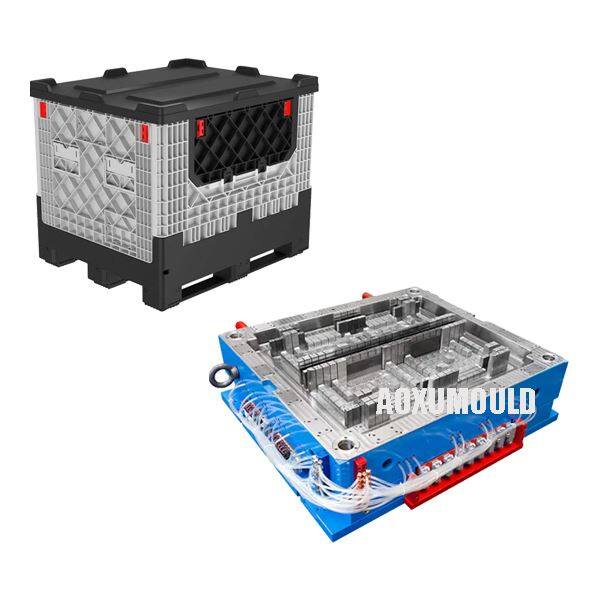
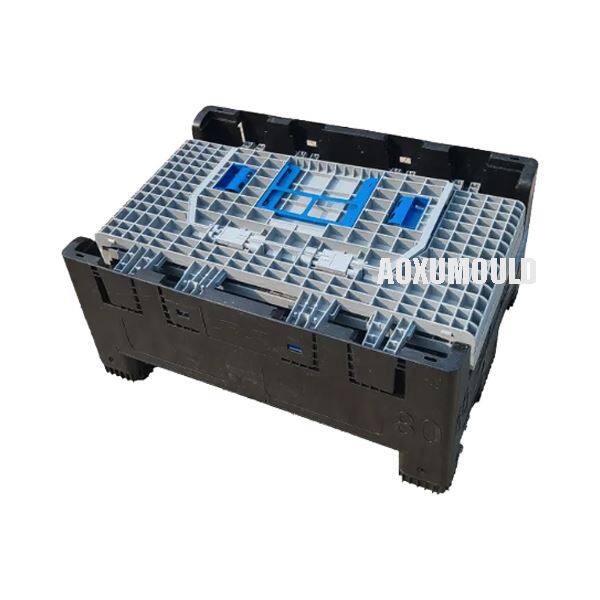
Mould Specifications
|
Mould name |
Magnum Container Mould |
|
Product material |
HDPE, plastic |
|
External size |
800X600X760mm |
|
Dynamic load |
1000kg |
|
Mould material for cavity &. Core |
P20, 718, 2738 |
|
Mould base |
C45 |
|
Injection system |
Hot runner |
|
Suitable injection machine |
3300T |
|
Mould size |
1200X980X1250mm |
|
Mould lifetime |
more than 300,000pcs |
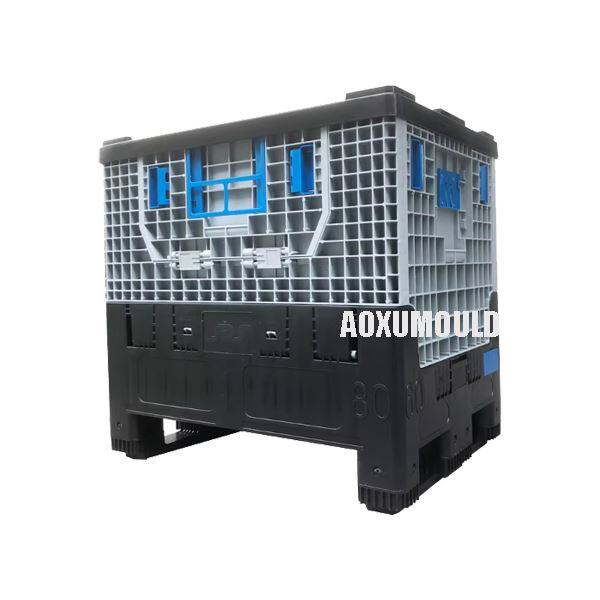
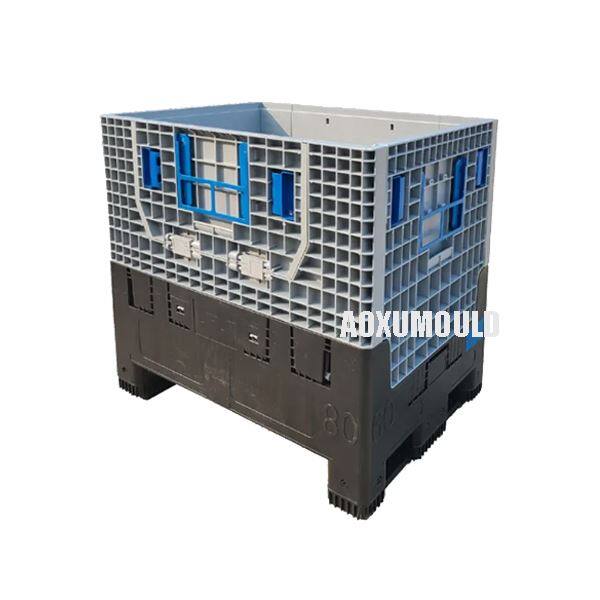
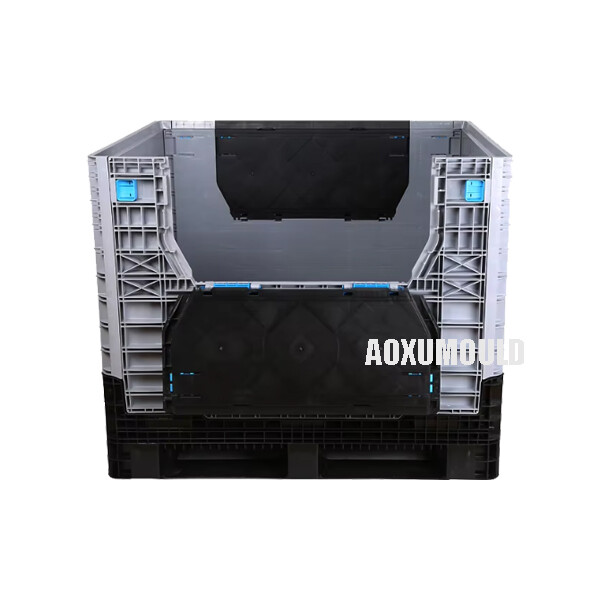
What Is A Magnum Container?

Magnum Containers, also referred to as Plastic Folding Pallet Boxes, are heavy-duty plastic storage containers designed for industrial use. These containers are commonly used in industries such as food and beverage, chemicals, agriculture, and household products due to their strength, capacity, and reusability.
Magnum Containers, fabricated from high-density polyethylene (HDPE), are engineered to last and to endure severe operating conditions. These containers are offered in diverse sizes and configurations to cater to varying industrial needs and applications.
Key Features of Plastic Magnum Containers:
Heavy-Duty Construction
Made from High-Density Polyethylene (HDPE) or Polypropylene (PP) for superior impact resistance.
Resistant to chemicals, moisture, UV rays, and extreme temperatures.
Space-Saving Foldable Design
Collapsible sides reduce volume by up to 80% when empty, saving storage and transport costs.
Quick assembly/disassembly without tools.
Optimized for Logistics
Stackable when full (with reinforced bases).
Compatible with pallets, forklifts, and conveyor systems (some models have integrated pallet bases).
Hygienic & Easy to Clean
Smooth surfaces prevent dirt buildup-ideal for food, pharmaceuticals, and agriculture.
Some are FDA-approved for direct food contact.
Customizable Options
Lids, dividers, vents, or drainage holes for specialized needs.
Anti-static or fire-retardant variants for hazardous materials.
Application Of Magnum Containers

Components of Magnum Containers
1. Main Body (Base & Sidewalls)
Material: High-Density Polyethylene (HDPE) or Polypropylene (PP).
Features:
Ribbed or reinforced walls for extra strength.
Smooth inner surfaces for easy cleaning (critical for food/pharma).
Stacking lips on top edges for secure stacking when loaded.
2. Folding Mechanism (Hinges & Locking System)
Hinges:
Made of heavy-duty PP or metal-reinforced plastic.
Allow sidewalls to fold inward when empty (saves 70-80% space).
Locking Clips/Latches:
Secure walls in upright position during use.
Some models have auto-locking for quick setup.
3. Pallet Base (Integrated or Separate)
Types:
Molded-in pallet base (single-piece design).
Detachable pallet (allows replacement if damaged).
Compatibility:
Fits EUR pallets (800×600mm) or ISO pallets (1200×1000mm).
Reinforced with steel rods for heavy loads (up to 1000 kg).
How To Choose The Mould Steel?

1.Production Volume
Low Volume (<100,000 cycles): Pre-hardened steel (e.g., P20, 718)
High Volume (500,000+ cycles): Hardened tool steel (e.g., H13, S7, NAK80).
2.Plastic Material Being Used
HDPE/PP (Non-abrasive): P20, 2738, or NAK80 (good polishability).
Glass-Filled/Reinforced Plastics (Abrasive): H13, S7, or hardened stainless steel (e.g., 420SS).
3.Mould Complexity & Surface Finish
High-Polish Requirements (Food/Grade): NAK80, S136 (Stainless Steel).
Textured Surfaces: P20, 2738 (easier machining).
4.Corrosion Resistance
For Food, Chemicals, or Humid Environments: Stainless steel (420SS, S136).
General Use: H13 or P20 (with protective coatings if needed).
5.Cost vs. Performance
Budget-Friendly: P20 (lower hardness but cost-effective).
Long-Lasting: H13 (heat-treated for extended life).
How To Molding A Magnum Container Mould?
Package &. Delivery

Mould Components
Mould Steel

Hot Runner System

Standard Parts

Key Factors to Consider When Selecting an Injection Machine
1. Shot Capacity (Injection Volume) -Rule of Thumb: The machine's shot capacity should be 20-80% of its maximum (optimal: 30-70%). -Calculation: Shot Size (oz or g) = Weight of 1 Container × Number of Cavities -Example: If a 5-gallon (20L) Magnum Container weighs 800g and you use a 4-cavity mould: 800g×4=3200g(Required shot capacity) Choose a machine with ≥ 3500g (e.g., 4000g for safety). 2. Clamping Force (Tonage) -Determined by: Projected Area (Length × Width of the mould cavity). Injection Pressure (Material-dependent, typically 2-5 tons per square inch). -Formula: Clamping Force (Tons)=Projected Area (in²)×Pressure (Tons/in²) -Example: If a folding pallet box mould has a projected area of 200 in² and requires 3 tons/in²: 200×3=600Tons (Minimum clamping force needed) -Safety Margin: Add 10-20% (e.g., 720 Tons). 3. Mold Size & Platen Compatibility -Check: Mould Width/Height ≤ Machine Platen Size. Mould Thickness fits between Min/Max Mold Height of the machine. -Example: If mould size is 800×600mm, ensure the machine's platen is ≥ 1000×800mm. 4. Plastic Material Requirements HDPE/PP needs lower pressure (~2-3 tons/in²) vs. engineering plastics (4-5+ tons/in²). Barrel Size: Must accommodate material melt volume (larger barrels for high-volume containers). 5. Cycle Time & Production Efficiency High-Volume Production: Choose machines with fast injection rates and auto-degating. Energy Efficiency: All-electric/hybrid machines save costs for long runs. |

FAQ
>1. What are Magnum Containers?
Magnum Containers are plastic folding pallet boxes used for storage and transportation of goods in various industries.
>2. What types of moulds do you produce for Magnum Containers?
We specialize in high-precision injection moulds for:
Folding/collapsible pallet boxes (HDPE/PP)
Nestable & stackable containers
Heavy-duty industrial crates (with reinforced bases)
Custom designs (lids, dividers, handles, etc.)
>3. What materials are used for your moulds?
Mould Material: Hardened steel (e.g., P20, H13) or aluminum for longevity.
Container Material: Compatible with HDPE, PP, or FDA-approved plastics for food safety.
>4. What is the lead time for ordering Magnum Containers?
The lead time for ordering Magnum Containers varies depending on the quantity and customization requirements. Please contact our sales team for more information.
>5. What after-sales support do you provide?
Mould maintenance (cleaning, lubrication guides).
Repair services for wear/damage.
Technical assistance for production optimization.
>6. Do you ship globally?
Yes, we export worldwide with FOB terms.
>7. How can I place an order for Magnum Container moulds?
You can place an order by contacting our sales team via phone or email. We will assist you with the ordering process and provide all necessary information.
>8. How do I request a quote?
Please submit your:
Container design (CAD files preferred).
Material & capacity requirements.
Annual volume estimate.
Customers' Feedback


