

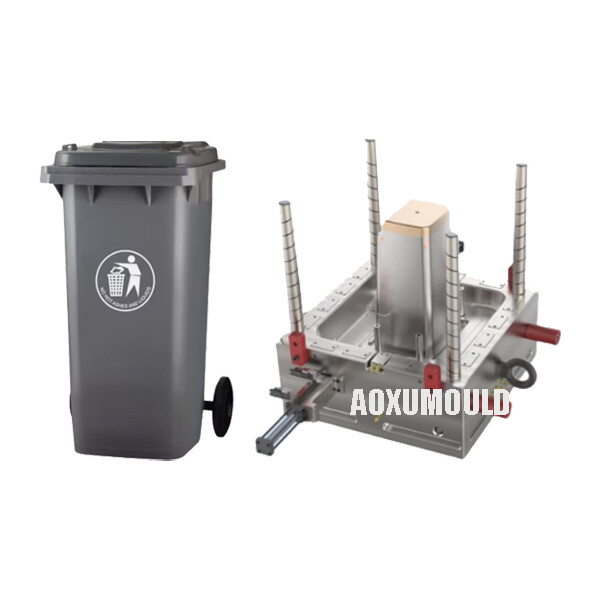
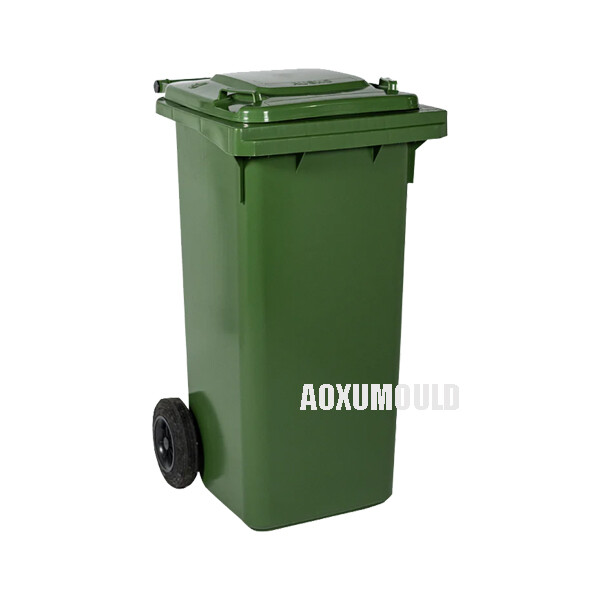
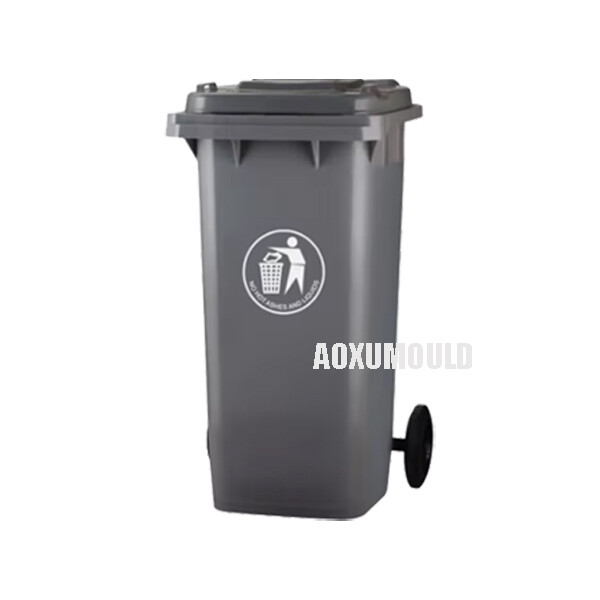
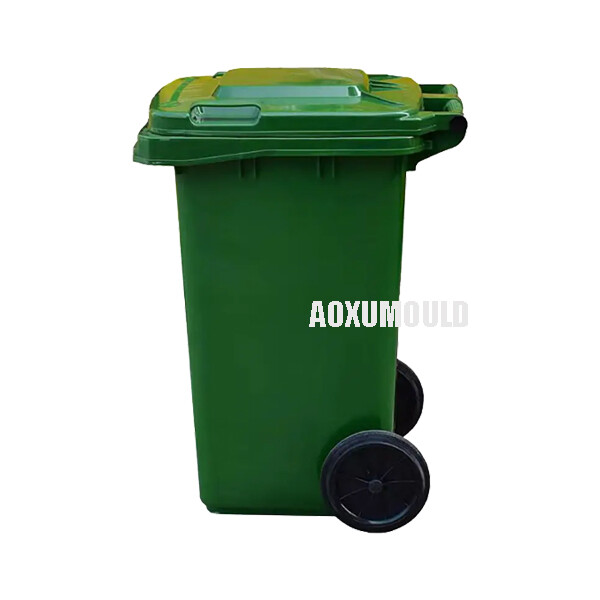
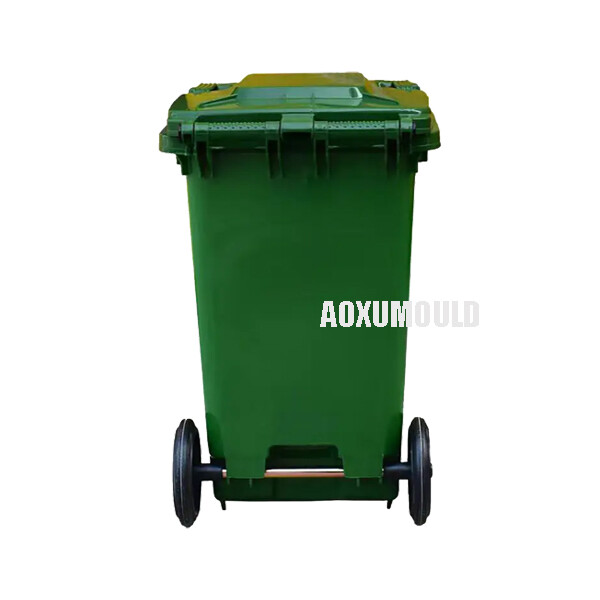
Mould Specifications
|
Mould name |
Waste Container Mold |
|
Product material |
HDPE+UV Stabilizer |
|
Product Size |
480X530X850mm |
|
Product capacity |
9.4kg |
|
Mould material for cavity &. Core |
P20, 718, 2738 |
|
NOs of cavity |
1 cavity |
|
Injection system |
Cold runner |
|
Suitable injection machine |
1000T |
|
Mould size |
680X750X1080mm |
|
Mould lifetime |
more than 300,000pcs |
|
T1 Time |
After design is finalized, 55 days |
Why Choose HDPE+UV Stabilizer Material to Produce Waste Containers?

1. Superior Durability & Impact Resistance
HDPE is inherently tough, resistant to cracks, and can withstand rough handling, drops, and harsh weather conditions.
UV stabilizers further enhance long-term durability by preventing brittleness from sun exposure.
2. UV Resistance (Prevents Fading & Degradation)
Without UV stabilizers, standard HDPE can degrade, fade, and become brittle when exposed to sunlight.
UV additives absorb or block harmful UV rays, extending the container's lifespan by 5–10+ years (depending on exposure).
3. Weather & Temperature Resistance
Performs well in extreme temperatures (-40°C to 60°C / -40°F to 140°F).
Resistant to rain, snow, and humidity without warping or corrosion (unlike metal alternatives).
4. Chemical & Corrosion Resistance
Ideal for harsh environments (industrial waste, cleaning chemicals, acids, and alkalis).
Unlike metal bins, HDPE won't rust or corrode.
5. Lightweight Yet Strong
Easier to transport and handle than steel or concrete bins.
Reinforced rib designs in molds ensure structural strength despite lightweight material.
6. Cost-Effective for Mass Production
HDPE is easy to injection mold, allowing high-speed production with low waste.
UV-stabilized versions cost slightly more than standard HDPE but save money long-term by reducing replacement frequency.
7. Eco-Friendly & Recyclable
HDPE is 100% recyclable, supporting sustainability initiatives.
UV-stabilized bins last longer, reducing plastic waste.
8. Customizable Colors & Finishes
UV inhibitors help maintain color vibrancy over time (no fading).
Mold textures can be adjusted for anti-slip surfaces or branding.
>Best Applications for HDPE+UV Waste Containers:
Outdoor trash & recycling bins (parks, streets, beaches)
Industrial & chemical waste containers
Coastal areas (saltwater-resistant)
Hot climates (sun exposure protection)
Designs For Product &. Mold

Gating Location for Waste Container Molds: Key Considerations

The gating system in an injection mold determines how molten plastic flows into the cavity, affecting the final product's quality, strength, and appearance. For waste container molds, proper gating is crucial due to their large size and structural demands.
1. Common Gating Types for Waste Containers
Depending on the design and production needs, the following gating systems are used:
A. Edge Gate (Side Gate)
-Location: Along the side of the container (usually near the top or bottom rim).
-Pros:
Simple and cost-effective.
Easy to trim (manual or automatic degating).
-Cons:
May leave a small witness mark.
Not ideal for very large containers (risk of flow hesitation).
B. Hot Runner Gate (Valve or Thermal Gate)
-Location: Center of the base or top (for even filling).
-Pros:
No gate vestige (better aesthetics).
Reduced material waste (no cold runner).
-Cons:
Higher mold cost.
Requires precise temperature control.
C. Direct Sprue Gate (For Thick-Walled Bins)
-Location: Directly into the center of the container base.
-Pros:
Excellent for thick-walled containers (prevents sink marks).
Strongest weld line (if any).
-Cons:
Leaves a large gate mark (requires post-processing).
Not suitable for multi-cavity molds.
D. Tunnel (Submarine) Gate
-Location: Auto-cut gate at the parting line.
-Pros: Automatic degating (good for high-speed production).
-Cons: Limited to smaller containers (not ideal for large bins).
2. Best Gating Locations for Waste Containers
A. Base Gating (Best for Structural Integrity)
Plastic flows upward, reducing weld lines.
Minimizes warping (uniform cooling from bottom up).
-Best for:
Heavy-duty bins (thick walls, high impact resistance).
Wheeled containers (needs strong base).
Side Gating (For Aesthetic or Thin-Wall Bins)
Less visible gate mark (if placed near the rim).
Good for multi-cavity molds.
-Best for:
Household trash bins.
Decorative or color-mixed containers.
Top Gating (For Large Openings)
Helps fill deep containers evenly.
-Best for:
Tall, narrow bins (like recycling containers).
Manufacturing Process of a Waste Container Mold

1. Design & Engineering
a. Concept & Requirements
Client provides specifications (size, capacity, material, special features like wheels, lids, or handles).
Engineers analyze structural integrity, draft angles, wall thickness, and ejection mechanisms.
b. 3D CAD Modeling & Simulation
Mold designers create a 3D model (using software like SolidWorks, AutoCAD, or UG NX).
Moldflow analysis checks for potential defects (warping, sink marks, air traps).
c. DFM (Design for Manufacturability) Review
Ensures the mold design is optimized for injection molding efficiency.
Adjustments made for ease of ejection, cooling channels, and gate placement.
2. Material Selection for the Mold
Hardened Steel (P20, H13, S136) – Best for long production runs (500,000+ cycles).
Aluminum (7075-T6) – Faster cooling, good for prototyping & short runs.
Beryllium Copper – Used in high-heat areas for better cooling.
3. CNC Machining (Core & Cavity Creation)
a. Rough Machining
Large blocks of steel/aluminum are cut into approximate shapes using CNC milling, EDM (Electrical Discharge Machining), or wire cutting.
b. Precision Machining
High-speed CNC machines refine the mold cores and cavities to micron-level accuracy.
EDM sinking creates fine details (textures, logos, undercuts).
c. Surface Finishing
Polishing & texturing (glossy, matte, or custom patterns like anti-slip surfaces).
TIG welding (if repairs or modifications are needed).
4. Mold Assembly & Fitting
Ejection system (pins, sleeves, lifters) is installed.
Cooling channels are integrated for efficient heat dissipation.
Guide pins, bushings, and sliders are assembled for smooth operation.
5. Testing & Trial Run (T0 Sample)
The mold is mounted on an injection molding machine.
>First-shot samples are checked for:
-Dimensional accuracy (using CMM machines).
-Surface defects (sink marks, flash, warping).
-Ejection performance (no sticking or deformation).
>Adjustments (if needed):
-Modify cooling channels for better heat control.
-Fine-tune gate size for optimal plastic flow.
Adjust ejection force to prevent part damage.
6. Mass Production & Quality Control
Once approved, the mold enters full-scale production.
>Quality checks include:
-Dimensional consistency (every 500–1000 cycles).
-Surface wear inspection (prevent flash or burrs).
-Periodic maintenance (cleaning, lubrication, polishing).
7. Post-Production Services
Mold storage (for future orders).
Repair & refurbishment (if damaged after long use).
Modifications (for design upgrades).
How to Molding A Waste Container?
Mould Components
Mould Steel

Hot Runner System

Standard Parts

Package &. Delivery

Customers' Feedback

FAQ
>1. What types of waste containers can your molds produce?
We design and manufacture molds for various waste containers, including:
Household trash bins
Recycling & sorting bins
Industrial waste containers
Medical waste bins
Wheeled & stackable bins
>2. What plastics can be used in your molds?
HDPE (High-Density Polyethylene) – Durable & impact-resistant
PP (Polypropylene) – Chemical & heat-resistant
ABS (Acrylonitrile Butadiene Styrene) – Sturdy & glossy finish
>3. Do you provide design & engineering support?
Absolutely! Our services include:
3D CAD modeling & simulation
DFM (Design for Manufacturability) analysis
Prototyping & testing
>4. How long does it typically take to manufacture a waste container injection mold?
The time it takes to manufacture a waste container mold can vary depending on the complexity of the design and the production capabilities of the manufacturer. Generally, it can take anywhere from 55-65days.
>5. How do I request a quote?
Simply provide:
Container dimensions & design files (if available)
Material preference
Estimated production volume
We'll respond with a detailed quote within 24 hours.


