

Introduction
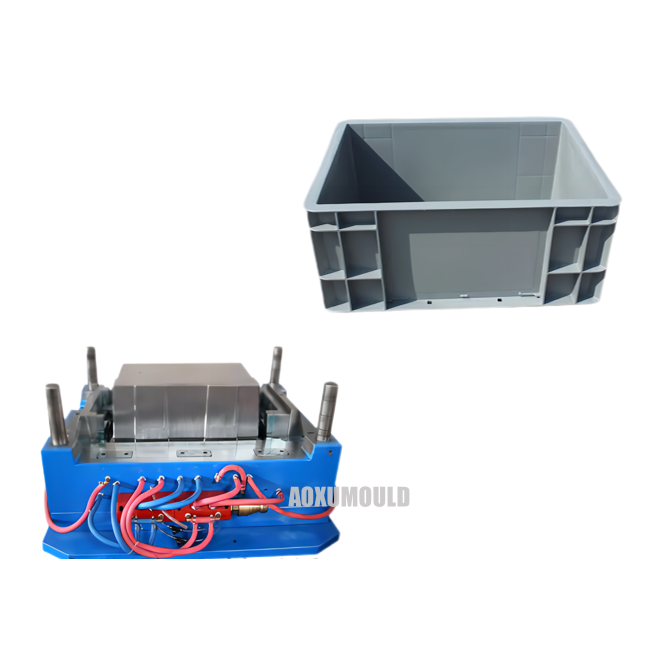
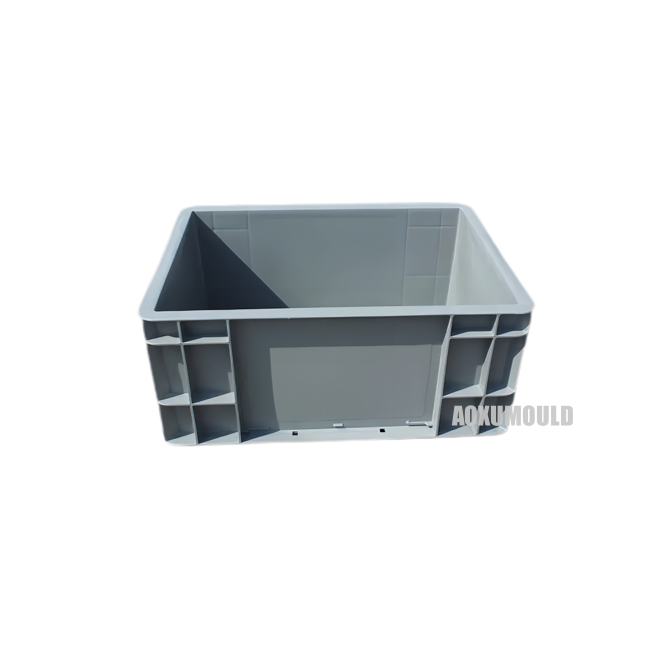
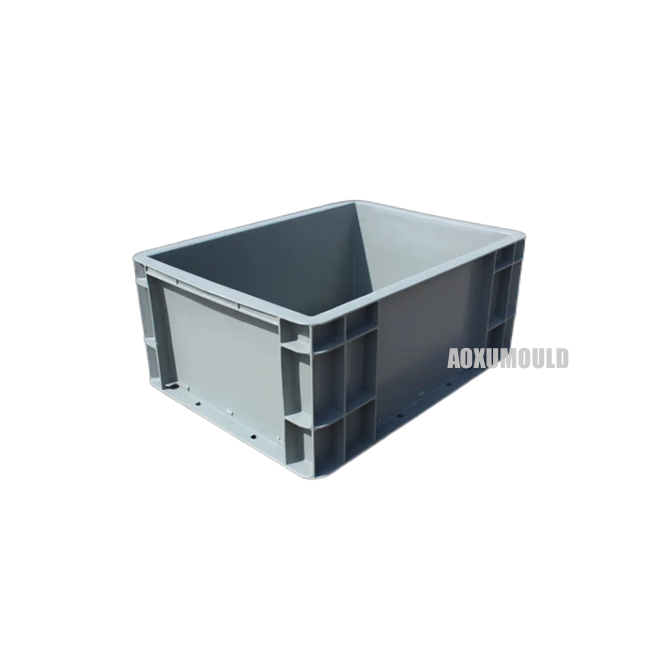
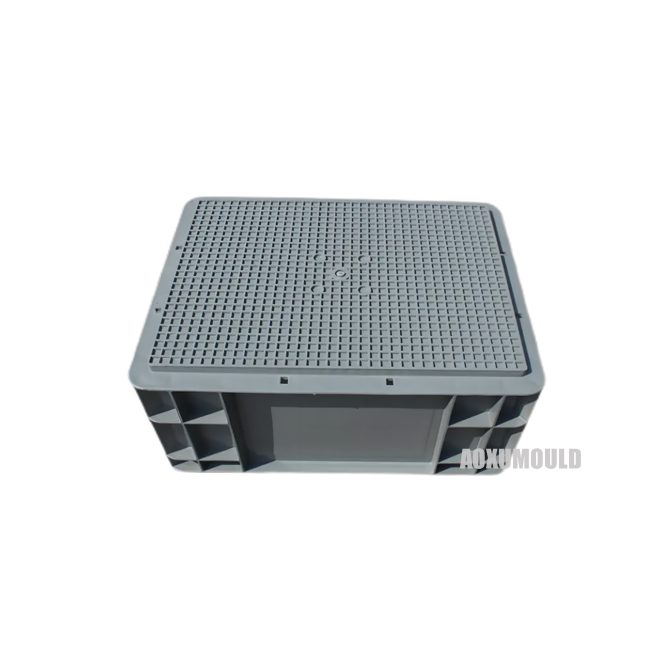
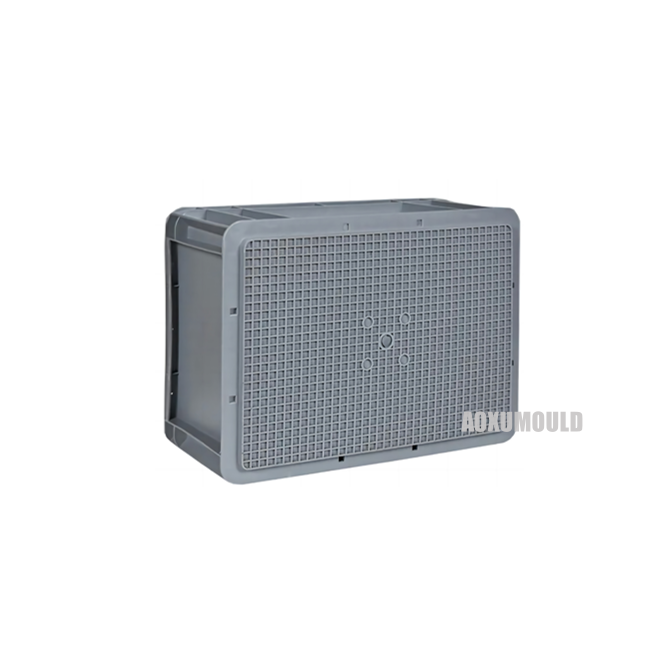
Turnover Crate Moulds are mold tools used to make turnover boxes (also known as logistics boxes or storage boxes). Turnover boxes are widely used in logistics, warehousing, transportation and other industries to facilitate the storage and handling of items.
1. Mold design and processing technology
Design the mold according to the product size (550x380x180 mm) and requirements, use computer-aided design (CAD) and computer-aided engineering (CAE) software for mold design and flow analysis to ensure that the plastic material flows evenly during the injection molding process to avoid defects.
2. Material selection and processing
The mold materials for the cavity and core are C45, P20, 718, 2738, etc., and the mold frame uses C45 steel.
3. Injection system
The mold uses hot runner open gate or valve gate. The hot runner system can ensure that the plastic flows evenly into the cavity in the molten state to reduce waste. According to the mold design, use a suitable gate shape (such as open or valve gate) to optimize the plastic flow during the injection molding process and ensure product quality.
4. Injection molding process
Choose a 650-ton injection molding machine to ensure sufficient injection pressure and injection speed. Use a precise cooling system to control the mold temperature to ensure uniform curing and cooling of the plastic during the injection molding process.
5. Surface treatment and finishing
The cavity surface is polished, chrome-plated or otherwise treated to improve the appearance and corrosion resistance of the plastic turnover box. In order to accurately process the complex shape of the mold, EDM technology is used to process fine grooves and shapes.
How to maintain
1. Regular cleaning
Keep the mold surface clean to prevent plastic residue or impurities from affecting product quality and mold precision. Use appropriate cleaners and tools regularly to remove residues on the cavity and core.
2. Check the lubrication system
The moving parts of the mold (such as guide components, sliders, etc.) need to be lubricated regularly to reduce wear and friction. Excessive lubricant may accumulate on the mold surface and affect the flow of plastic during injection molding.
3. Inspection
If the key parts of the mold (such as gates, nozzles, etc.) are found to be severely worn or damaged, they should be replaced as soon as possible.
4. Temperature control system maintenance
The temperature control equipment (such as heaters, cooling pipes) should be checked regularly to ensure that the mold maintains a stable temperature during the injection molding process.
Mould Specifications
|
Mould name |
Plastic turnover crate mould |
|
Product material |
HDPE, plastic |
|
Product Size |
550X380X180mm |
|
Product weight |
450g |
|
Mould material for cavity &. Core |
C45, P20, 718, 2738 |
|
Mould base |
C45 |
|
Injection system |
Hot runner open gates or valve gates |
|
Suitable injection machine |
650T |
|
Mould size |
780x520x360mm |
|
Mould lifetime |
More than 300,000pcs |
Design For Product &. Mould


Plastic Turnover Crate Mould Testing
Package &. Delivery

Mould Components
Mould Steel

Hot Runner System

Standard Parts

FAQ
Customers' Feedback


