

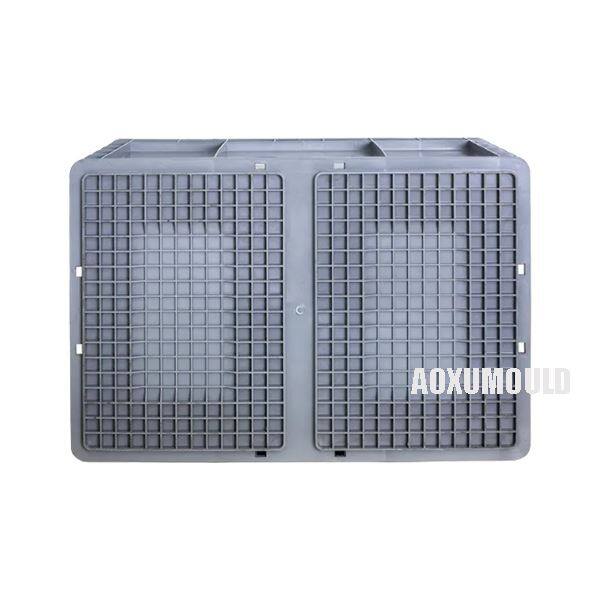
Mould Specifications
|
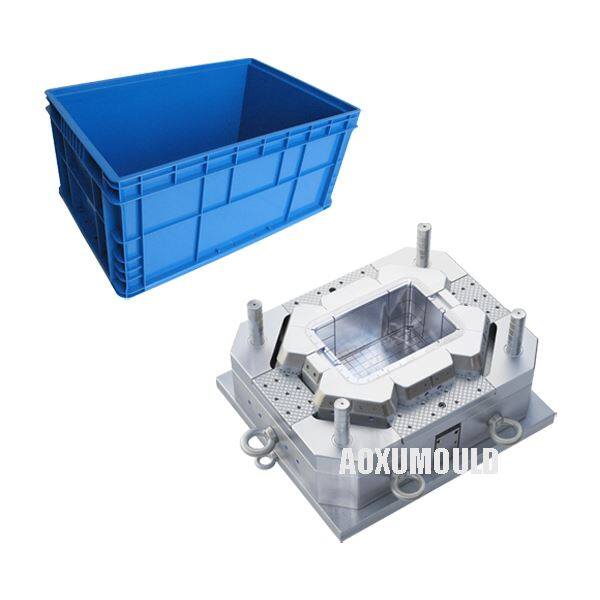
Mould name |
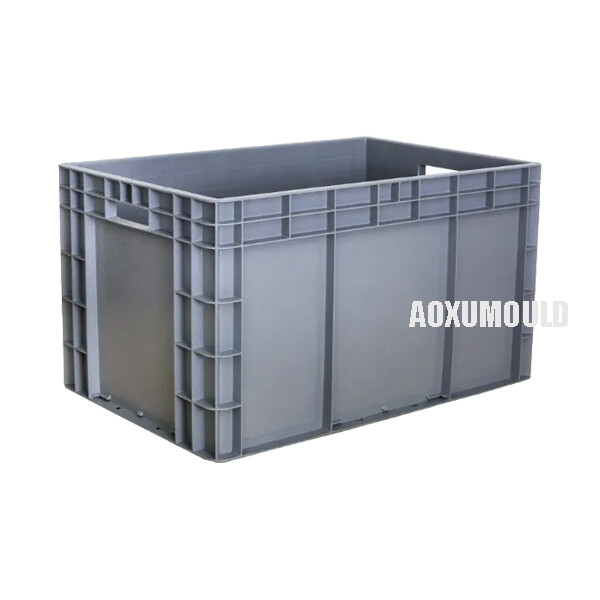
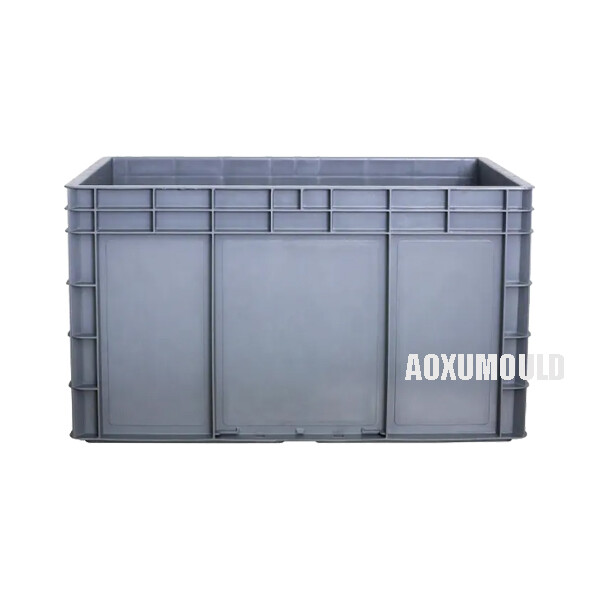
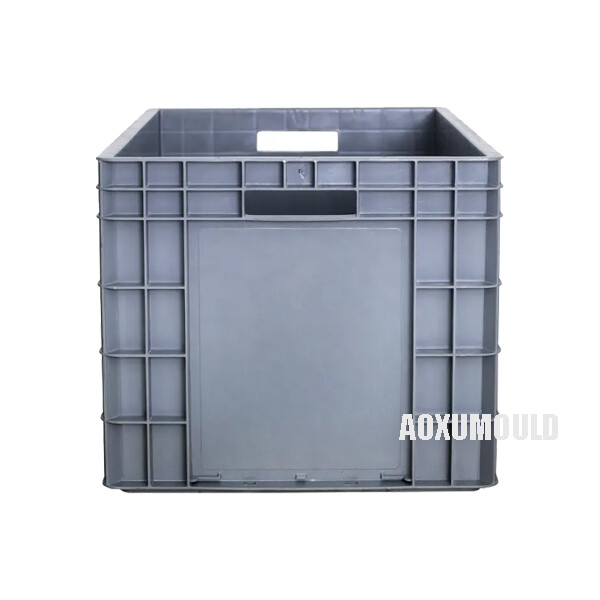
Euro Crate Mould |
|
Product material |
HDPE, plastic |
|
Product Size |
600X400X280mm |
| Product Weight | 1.1KG |
|
Mould material for cavity &. Core |
P20, 718, H13 |
|
NOs of cavity |
1 cavity |
|
Injection system |
Yudo Hot runner |
|
Suitable injection machine |
880T |
|
Mould size |
900X680X600mm |
|
Mould lifetime |
more than 500,000pcs |
Standardized Dimensions of Euro Crates

1. Full-Size Euro Crate (400mm × 600mm)
Dimensions: 600mm (L) × 400mm (W) × ~220-330mm (H)
Pallet Fit: 2 crates per EUR-pallet (1200×800mm) in a "long side" arrangement.
Common Uses: Beverage bottles, agricultural produce, dairy products.
2. Half-Size Euro Crate (300mm × 400mm)
Dimensions: 400mm (L) × 300mm (W) × ~220-280mm (H)
Pallet Fit: 4 crates per EUR-pallet (1200×800mm).
Common Uses: Smaller bottles, fruits, vegetables, retail packaging.
3. Quarter-Size Euro Crate (200mm × 300mm)
Dimensions: 300mm (L) × 200mm (W) × ~150-220mm (H)
Pallet Fit: 8 crates per EUR-pallet (1200×800mm).
Common Uses: Small parts, dairy cups, pharmaceuticals.
4. Euro XL Crate (400mm × 800mm)
Dimensions: 800mm (L) × 400mm (W) × ~300-400mm (H)
Pallet Fit: 1 crate per EUR-pallet (1200×800mm) (leaves some overhang).
Common Uses: Large agricultural produce, automotive parts.
5. Euro Bottle Crate (Standard Beverage)
Dimensions: ~360mm × 280mm × 300mm (varies by bottle size)
Bottle Capacity: Typically holds 12-24 bottles (e.g., beer, water).
Stacking & Nesting Heights
Stacked Height (loaded): ~5-10 crates high (depending on weight).
Nested Height (empty): ~30-50% reduction in space.
Why Standardization Matters For Euro Crates?
1. Pallet Compatibility &. Logistics Efficiency
Euro crates are designed to fit EUR-pallets (1200×800mm), the standard in Europe.
Optimized stacking allows full pallet loads without wasted space.
Reduces shipping costs by maximizing container/truck capacity.
2. Interchangeability Across Supply Chains
Standard sizes (e.g., 400×600mm, 300×400mm) ensure crates work seamlessly with:
Automated warehouses (robotic handling systems).
Retail displays (supermarket shelving).
Food &. beverage industries (bottle crates, dairy containers).
3. Nesting &. Stacking Safety
Standardized interlocking rims prevent toppling during transport.
Nesting design saves up to 50% space when crates are empty.
4. Cost Savings &. Sustainability
Reusable &. recyclable (HDPE/PP materials).
Reduces packaging waste vs. one-way cardboard/wooden crates.
Longer lifespan (5–10 years with proper use).
5. Compliance with Industry Regulations
Meets EU safety &. hygiene standards (e.g., food-grade PP for produce).
Aligns with EPR (Extended Producer Responsibility) recycling rules.
6. Faster Automation &. Handling
Forklift-friendly designs (compatible with standard pallet jacks).
RFID/barcode-ready for smart tracking in Industry 4.0 systems.
Designs For Product &. Mould

1. Advanced Stacking &. Nesting Mechanism
Interlocking Rim Design – Ensures secure stacking without slippage, even under heavy loads.
Tapered Walls – Allows smooth nesting when empty, saving up to 50% storage space.
Multi-Level Stacking Strength – Reinforced ribs and corner supports prevent deformation when stacked 5-10 crates high.
2. High-Precision Parting Line &. Ejection System
Zero-Draft Angle Design – Minimizes gaps for better sealing (critical for food/liquid storage).
Multi-Point Ejection – Uses ejector pins + air valves for smooth demolding without damage.
Self-Locking Core Mechanism – Prevents flash formation on complex geometries (e.g., handles, logos).
3. Reinforced Structural Integrity
Thickened Base &. Sidewalls – Withstands 100+ kg dynamic loads (tested via FEM analysis).
Honeycomb Rib Patterns – Enhances rigidity while reducing material usage.
Impact-Resistant Corners – Extra material at stress points for durability in rough handling.
4. Optimized Cooling for Fast Cycle Times
Conformal Cooling Channels – Follows crate contours for uniform cooling, reducing warpage.
Baffle &. Bubble Tubes – Cools thick sections (like base) 30% faster than standard molds.
Hot Runner Systems (Optional) – Eliminates sprue waste, ideal for multi-cavity production.
Mould Components
Mould Steel

Hot Runner System

Standard Parts

Package &. Delivery

Why Choose A Hot Runner System For Euro Crate Mould?

1. Eliminates Material Waste
Cold Runner Waste: Traditional molds waste 15-30% plastic in sprues and runners.
Hot Runner Benefit: Zero waste-plastic stays molten in heated nozzles, injecting directly into the cavity.
Savings: Reduces material costs, especially for high-volume production (e.g., millions of crates).
2. Faster Cycle Times & Higher Productivity
No Cooling/Waste Removal: Cold runners require time to solidify and eject.
Hot Runner Advantage: Continuous flow = 15-30% faster cycles (e.g., 25 sec vs. 35 sec per crate).
Output Boost: Produces more crates per hour, maximizing machine utilization.
3. Consistent Part Quality
Balanced Flow: Hot runners ensure uniform melt distribution, reducing warpage/sink marks.
No Gate Vestiges: Cleaner gate marks vs. cold runner break-off points.
Food-Safe Compliance: No runner contamination (critical for food/cosmetic crates).
4. Lower Energy & Labor Costs
Energy Efficient: No reheating/recycling of cold runner waste.
Reduced Labor: No need for manual runner separation or regrinding.
5. Ideal for Multi-Cavity Moulds
Syncs with Automation: Hot runners work seamlessly with robotic crate extraction.
Independent Control: Each nozzle's temperature/pressure can be adjusted for perfect fills
FAQ
>1. What is a Euro Crate Mould?
A Euro crate mould is a precision-engineered injection mould used to manufacture stackable, nestable plastic crates that comply with European pallet standards (typically 600×400mm or 400×300mm).
>2. What types of Euro crates can your moulds produce?
We produce moulds for:
Standard Euro crates (400×600mm, 300×400mm)
Beverage crates (for bottles, cans)
Agricultural crates (ventilated, heavy-duty)
Custom designs (with logos, handles, reinforced walls)
>3. What materials are used in Euro crate moulds?
Mould Steel: P20, H13, or stainless steel for durability.
Plastic Material: Typically HDPE or PP for impact resistance and UV stability.
>4. How long does it take to manufacture a mould?
It typically takes around 45-55days.
>5. Do you provide sample crates before mass production?
Yes, we offer 3D printed prototypes or test shots for approval.
>6. What after-sales support do you provide?
Mould maintenance guidance.
Troubleshooting assistance.
Spare parts supply (ejector pins, cores).
>7. Are your Euro crates compliant with EU standards?
Yes, our crates meet:
EUR-pallet compatibility (EN 13698-1).
Food safeyy (EU 10/2011 for food contact).
Recycling standards (EPBP for HDPE/PP).
Customers' Feedback


