

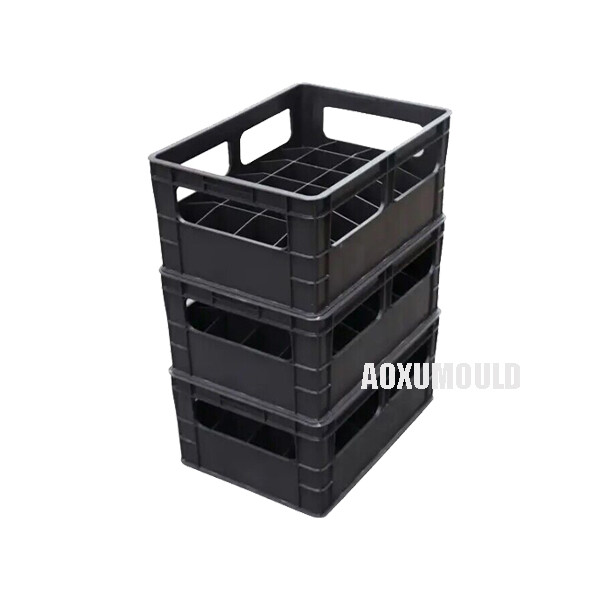
Introduction
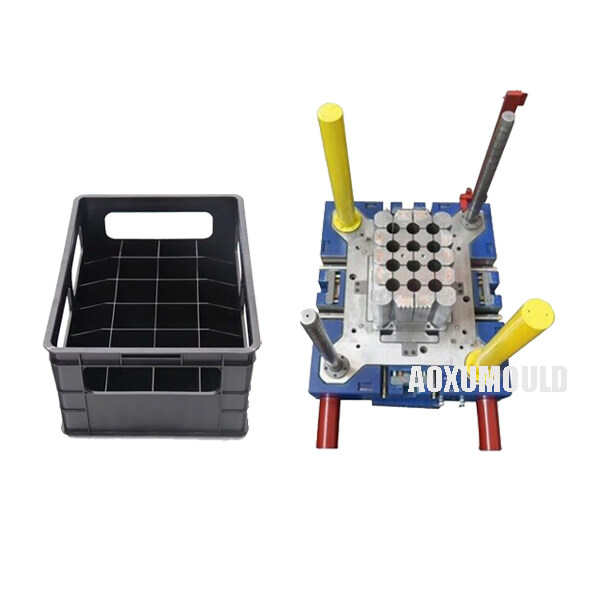
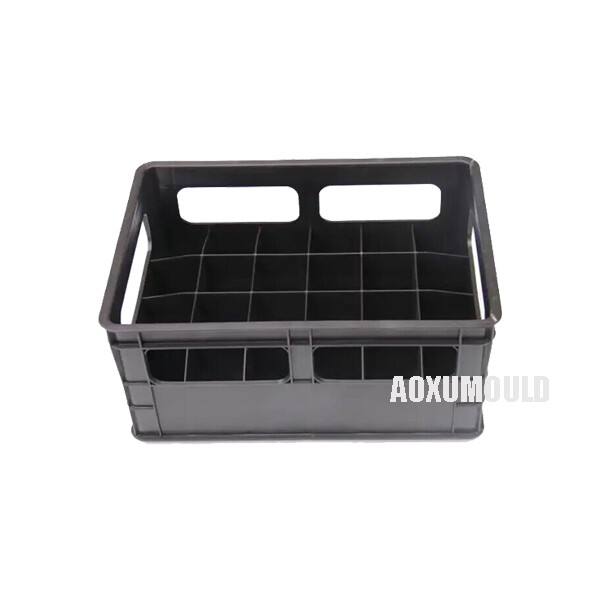
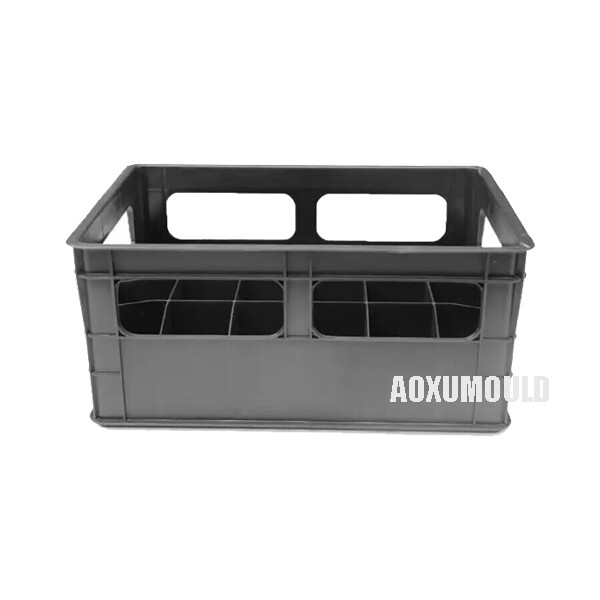
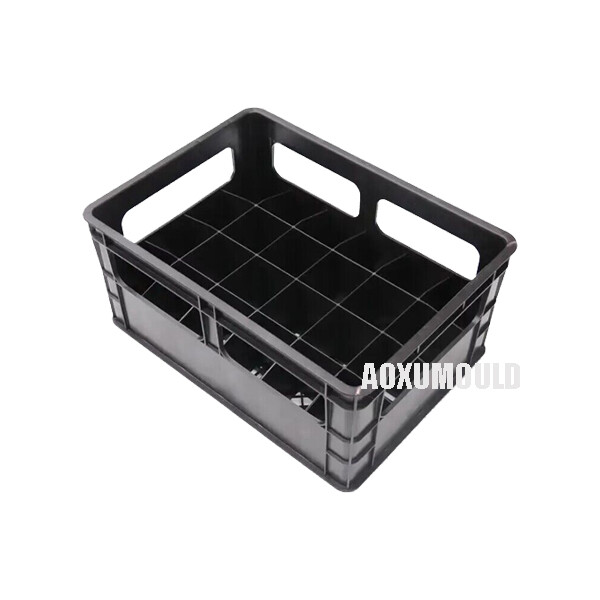
Plastic Bottle Crate Mould is a large mold used to produce plastic bottle boxes (i.e. plastic packaging boxes, containers). It accurately shapes plastic materials through injection molding, blow molding or compression molding to produce the shape, structure and size of the bottle box.
Manufacturing process
1. Mold design and material selection
Design the mold cavity and core according to the size (500×366×188 mm), weight (1.34 kg), and material (PP/HDPE plastic) of the plastic bottle box. The cavity and core are usually made of high-strength wear-resistant steel, such as C45, P20, 718 or 2738.
2. Injection molding process
Design the injection system, including the feed port, runner and nozzle, to ensure that the plastic melt can flow evenly into the cavity; select the appropriate injection molding machine according to the size of the mold and the requirements of the product, and the parameters such as the clamping force, injection volume and injection speed of the injection molding machine; in the injection molding machine, the plastic particles are heated to a molten state and injected into the mold cavity through the injection system.
3. Cooling and exhaust process
In order to improve production efficiency, a cooling channel is designed inside the mold to ensure that the plastic bottle box can be cooled quickly during the molding process; the exhaust system in the mold ensures that the gas can be discharged smoothly to avoid bubbles, depressions or other surface defects caused by the failure to discharge the gas during the molding process.
How to maintain
1. Regular cleaning
After each production or after a certain amount of products are produced, the mold must be thoroughly cleaned. When cleaning, plastic residues, oil stains and dust on the mold surface and cooling channels should be removed.
2. Regular inspection
Check the wear of the mold cavity, core and other key parts, especially the parts with high pressure of the injection molding machine, such as the runner and nozzle of the mold. After each production period (usually thousands of production cycles), the mold needs to be carefully inspected for wear.
3. Lubrication and rust prevention treatment
The moving parts of the mold, such as push plates, sliders, guide columns, etc., should be lubricated regularly.
4. Check mold accessories
Check the various accessories of the mold, such as screws, fixings, clamping mechanisms, etc., to ensure their tightness. Loose accessories may cause the mold to deform, leak or malfunction.
5. Storage
During non-production periods, the mold storage environment should be dry, clean and avoid direct sunlight.
Mould Specifications
|
Mould name |
Plastic Bottle Crate Mould |
|
Crate material |
PP/HDPE, plastic |
|
Product Size |
500x366x188mm |
|
Product weight |
1.34kg |
|
Mould material for cavity &. Core |
C45, P20, 718, 2738 |
|
Mould base |
P20 |
|
Injection system |
Hot runner |
|
Suitable injection machine |
650T |
|
Mould size |
860X720X530mm |
|
Mould lifetime |
More than 500,000pcs |
What Kind of Plastics Are Used To Make Bottle Crate?

Design For Product &. Mould

Video Of Bottle Crate Mould Try Out
Package &. Delivery

Mould Components
Mould Steel

Hot Runner System

Standard Parts

FAQ
Customers' Feedback


