

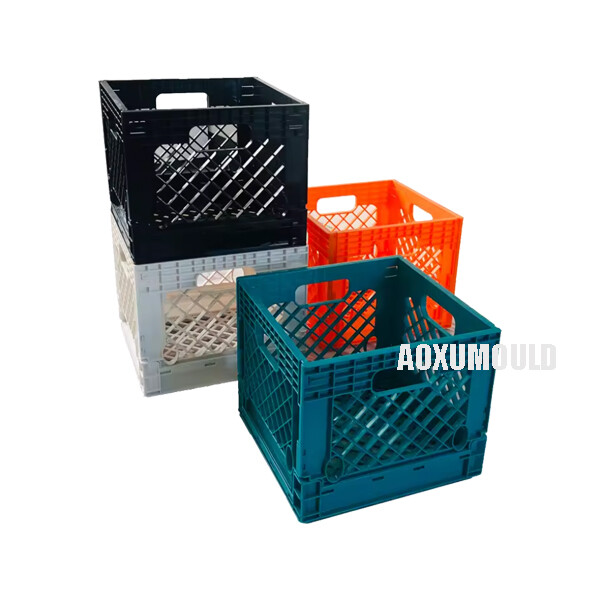
Mould Specifications
|
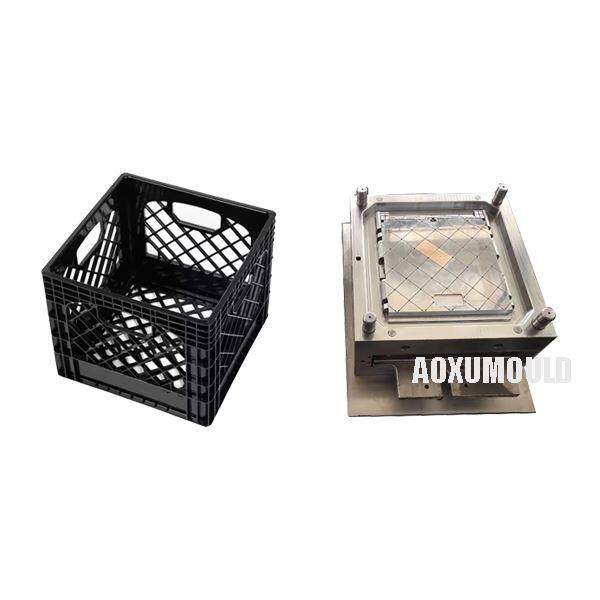
Mould name |
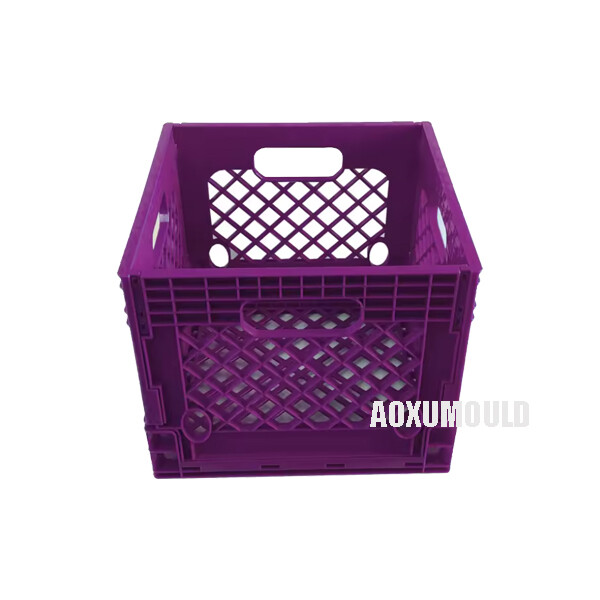
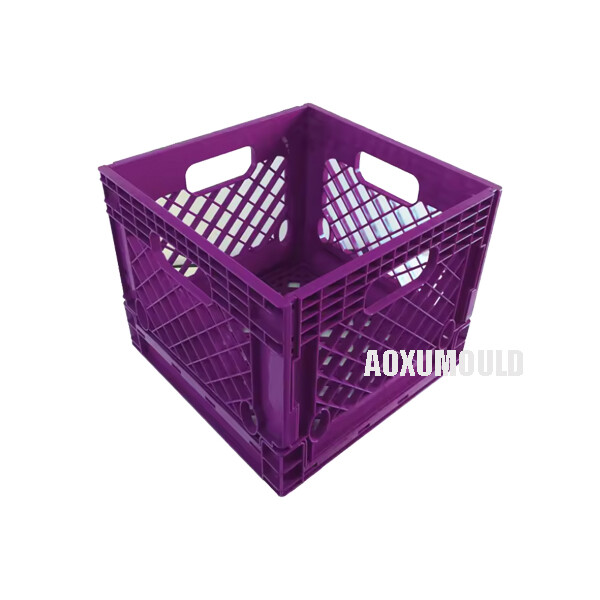
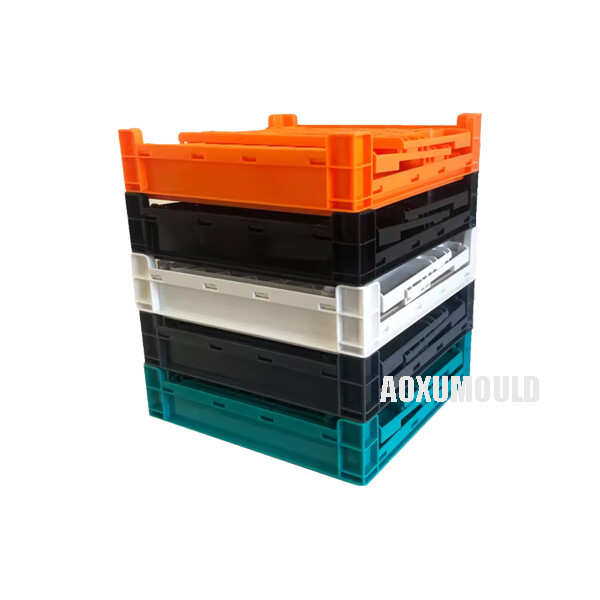
Milk Crate Mould |
|
Crate material |
PP/HDPE, plastic |
|
Product Size |
330x330x285mm |
|
Product weight |
1.75kg |
|
Mould material for cavity &. Core |
C45, P20, 718, 2738 |
|
Mould base |
P20 |
|
Injection system |
Hot runner |
|
Suitable injection machine |
650T |
|
Mould size |
720X720X585mm |
|
Mould lifetime |
More than 500,000pcs |
How To Choose The Material Of Milk Crates?
Choosing the right plastic material for milk crates is an important decision that can impact the overall quality and durability of the product. Here are some key factors to consider when selecting the ideal plastic material for your milk crates:
Strength and Durability: Milk crates are expected to carry a significant amount of weight and bear the load of numerous items. Therefore, the strength and durability of the plastic material should be a top priority. High-density polyethylene (HDPE) is a popular choice for milk crates due to its strength and ability to withstand wear and tear.
Ease of Cleaning: Milk crates should be easy to clean and maintain, especially in the food and beverage industry where hygiene is crucial. HDPE is again a preferred choice as it is easy to clean and resists stains, making it ideal for reuse after a quick wash.
Safety: The plastic material should be safe for the product, environment, and people handling the crates. High-quality materials that are food-grade and BPA-free are essential to maintain the safety standards required for milk crates.
Recyclability: Choosing a plastic material that is easily recyclable is not only environmentally friendly but can also be a cost-effective option in the long run. HDPE is again a favorable choice here as it can be easily recycled into new products.
Overall, HDPE is a popular and reliable choice for milk crates due to its strength, durability, ease of cleaning, safety, and recyclability. By considering these crucial factors when choosing a plastic material, you can ensure that your milk crates are of superior quality and will provide long-lasting use.
Recommendations For Milk Crates Mould Steel Materials

When it comes to choosing the suitable plastic milk crates mould steel material, there are many factors to consider. You want to make sure that you are using a high-quality steel material that will give you the best results possible. Here are some recommendations for plastic milk crates mould steel materials:
1. P20 Steel Material - This is a low-alloy steel that is commonly used for plastic injection moulds. P20 steel has good toughness and wear resistance properties, making it a great option for plastic milk crate moulds.
2. S136 Steel Material - S136 steel is a high-quality steel material that has excellent corrosion resistance and hardness properties. It is often used in moulds that require high precision and long lifespan.
3. NAK80 Steel Material - This is a high-performance steel material that is commonly used for moulds that require high precision and uniformity. NAK80 steel has excellent wear resistance and toughness properties, making it a great option for plastic milk crate moulds.
4. 718 Steel Material - 718 steel is a high-strength steel material that is commonly used in plastic injection moulds. It has excellent resistance to corrosion and erosion, making it a great choice for plastic milk crate moulds.
When selecting the suitable plastic milk crate mould steel material, it is important to work with a reputable manufacturer and supplier. They can provide you with the guidance and expertise needed to choose the right steel material for your specific needs. With the right steel material and proper design, you can create plastic milk crates that are durable, reliable, and long-lasting.
How To Keep Our Injection Mould Well?
As an important tool in the manufacturing industry, injection mould plays a crucial role in producing high-quality products. Therefore, it is essential to keep our injection mould well to ensure its longevity and efficient operation. Here are some tips on how to maintain injection mould:
1. Clean the mould regularly: Keeping the mould clean is critical in preventing rust and corrosion. Regular cleaning removes dirt, debris, and other contaminants from the mould surface, which can cause defects in the product and affect the mould's performance. Use a soft cloth or brush to clean the mould after use and store it in a dry and safe place.
2. Lubricate the mould: Proper lubrication is necessary for the mould to function smoothly. Lubricate the mould's moving parts, such as guide pins, ejector pins, and slides, with a suitable lubricant to reduce friction. However, avoid over-lubrication, as excess lubricant can attract dust and debris, causing damage to the mould.
3. Handle with care: Avoid dropping or mishandling the mould, as it can cause cracks and deformities. Always use proper lifting equipment and techniques when transporting the mould, and never overload it with excessive weight.
4. Perform regular maintenance: Regular maintenance can help to identify any issues with the mould before they become major problems. Check the mould's condition and performance regularly, and replace any worn or damaged parts immediately.
5. Store the mould properly: Proper storage is essential to prevent damage to the mould. Store the mould in a dry and clean environment, away from direct sunlight, heat, and moisture.
By following these tips, we can keep our injection mould well-maintained and ensure its efficient operation. Proper maintenance can also save us money by reducing the frequency of repair and replacement and prolonging the mould's lifespan.
Design For Product &. Mould

Package &. Delivery

Mould Components
Mould Steel

Hot Runner System

Standard Parts

FAQ
Customers' Feedback


