

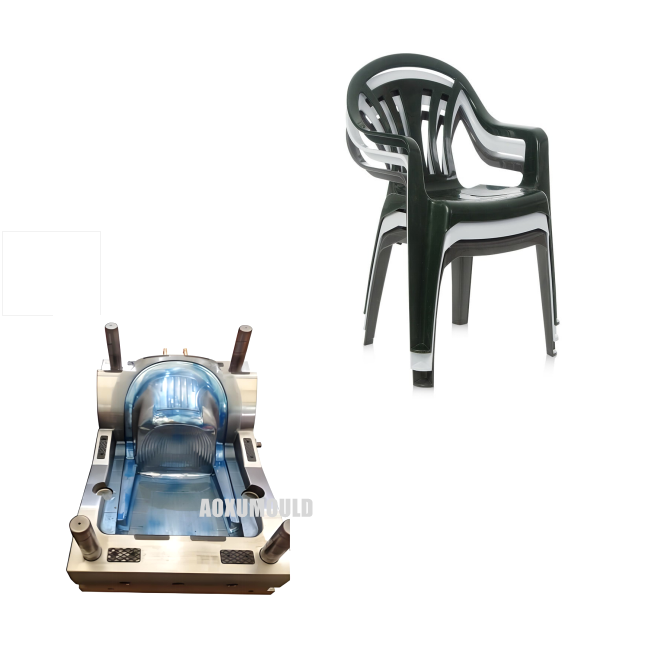
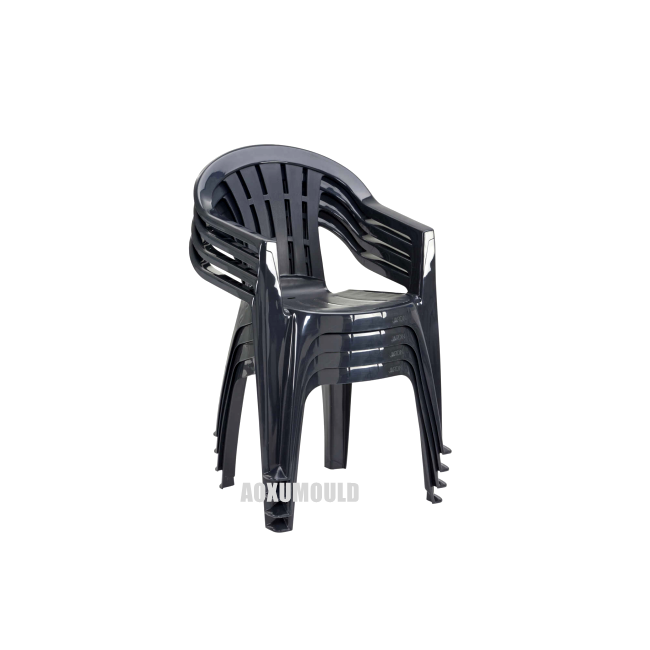
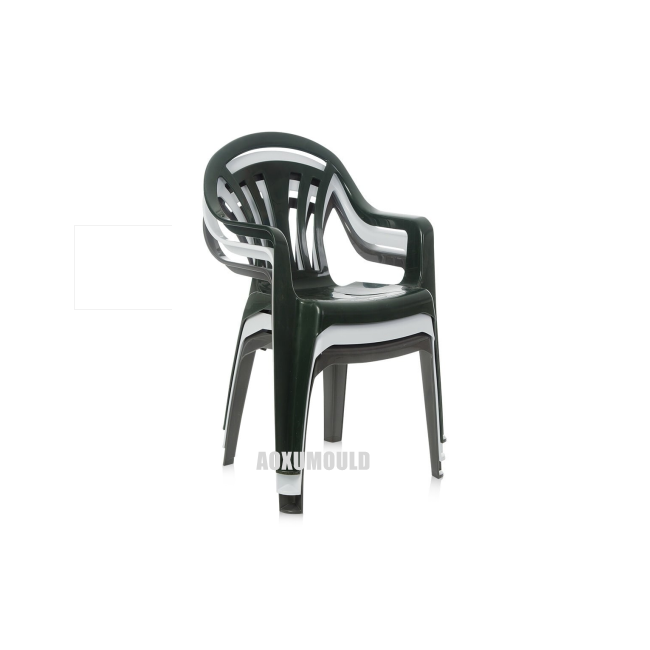
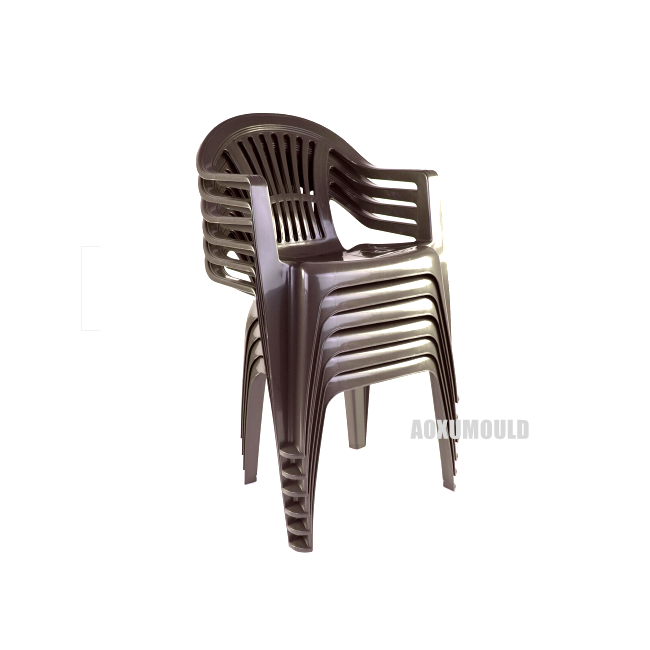
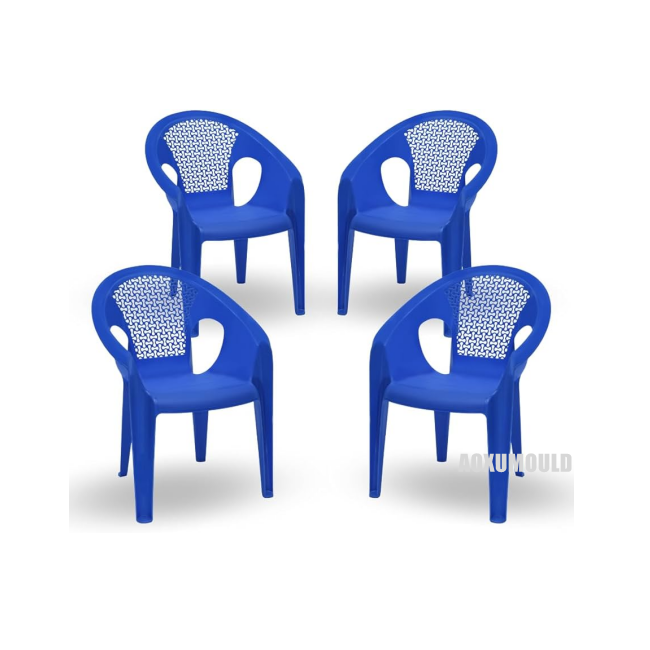
Mould Specifications
|
Mould name |
stacking chair mould |
|
Product material |
PP |
|
Product Size |
55.5x53x82cm |
|
Mould material for cavity &. Core |
P20/718/H13 |
|
NOs of cavity |
1 cavity |
|
Injection system |
Cold runner |
|
Suitable injection machine |
1200T |
|
Mould size |
850X780X1200mm |
|
Mould lifetime |
more than 500,000pcs |
|
Delivery Time |
55 days |
Advantage of Our Stacking Chair Mould
1. Qualified steel with high hardness.
2. Nice machining with high precision.
3. Customized designs are accepted.
4. One-year after-sale service.
5. Nice polish with high brightness or surface texture according to customer requirement.
How To Customize Stacking Plastic Chairs?
Stacking plastic chairs are a popular choice for many different environments, from offices to schools, to outdoor events. They are sturdy, easy to clean, and lightweight, making them a practical choice for any seating situation. If you are looking to customize your stacking plastic chairs, there are a few things to consider to make sure you get the most out of your investment.

- Consider the design of the chair itself. There are many different styles of stacking plastic chairs available, so think about what will work best for your needs. Some chairs are designed specifically for outdoor use and may have a UV-resistant coating, while others are more suited for indoor use. You may also want to consider the shape of the chair, as some designs may be more comfortable for extended periods of sitting.
- Once you have chosen the perfect chair design, it's time to customize it to fit your brand or aesthetic. This can be achieved through a variety of methods, such as adding a logo or design to the backrest or seat of the chair. This can be done through a process called hot stamping, where a heated metal die is pressed onto the plastic to create a permanent imprint. Another option is to use a vinyl decal, which can be easily applied to the chair and removed if needed.
- When considering customization, it's important to choose high-quality materials to ensure that your chairs will last for many years. This includes the plastic used to make the chair, which should be durable and resistant to cracks and breaks. Additionally, any added logos or designs should be made with high-quality materials to ensure that they do not fade or peel over time.
- Customizing stacking plastic chairs is a great way to make them stand out and promote your brand. By choosing the right chair design and high-quality materials, you can create a product that will last for many years and provide comfortable seating for all of your customers or guests.
What Is Chair Mould?

A chair mould is a tool used in the manufacturing process of chairs, which involves the injection of molten plastic into a mould cavity. This mould contains the desired design and shape of the chair that needs to be produced. The injection mould is made from high-quality steel that is durable, long-lasting and is designed to withstand the high temperatures and pressures involved in the injection process.
Using a mould is an efficient and cost-effective way of producing large quantities of chairs quickly and consistently. The moulding process is automated, and once the mould has been set up, the machine can work continuously to produce a high volume of chairs in a short period of time.
The chair injection moulding process is an important part of the manufacturing industry and has revolutionized the way chairs are produced. It makes it possible to produce chairs in a variety of shapes, sizes, and colours, allowing for more customization and personalization of chairs. The use of moulds also reduces the amount of waste material produced during the manufacturing process, making it more environmentally friendly.
A chair mould is an essential tool used in the manufacturing process of chairs, making it possible to produce large quantities of chairs quickly, efficiently, and cost-effectively. Its use has revolutionized the industry and has made it possible to produce chairs in a variety of shapes, sizes, and colors, allowing for more customization and personalization of chairs. Overall, the chair injection mould is a valuable technological advancement in the manufacturing industry.
Key Points of Quality Stacking Chair Mould
1.Mould Running Cycle Time: Usually the cycle time should be 35s to 55s.
2.Chair Mould Life Guarantee: The key factors of good quality mould is mould steel and mould structure. We will adopt the best suitable steel material accordingly the mould design and customers' needs. Usually uses HRC33 steel to make plastic chair moulds.
3.Make the chair with less weight but strong enough: Normally, we will study the chair design and structure carefully to find the lowest workable wall thickness. In the meantime, we will analyze the force of each area and add ribs on the bottom area and other bearing parts in order to make the chair stronger.
Mould Production Process

The process of manufacturing plastic chairs injection moulds mainly includes the following steps:
1.Design phase
-Product drawing: According to the drawings and samples provided by customers, detailed analysis and design.
-Confirm the plastic variety: Select the right plastic material to ensure the durability of the mould and product quality.
-Confirm the mould material: Select the appropriate mould material to ensure the strength and durability of the mould.
- The design drawings are converted into engineering drawings, including the detailed drawings of die kernel, insert, die embryo and other parts.
-3D parting: Use 3D software to part the mould and determine the design of cavity and pouring system.
proofreading: proofreading and reviewing the design drawings to ensure the accuracy and feasibility of the design.
2. Material preparation stage
-Material preparation: Determine the type, form, size and related technical requirements of the blank of the injection mould parts.
-Material quote: set the usage and consumption of materials to ensure cost control.
3.Processing stage
-Roughing: The use of machine tools to each part of the mould for preliminary processing, including milling, planing, grinding and other processes.
-Finishing:The use of EDM, CNC milling and other high-precision machining methods to ensure the accuracy of the mould and surface finish.
-Runner surface polishing: the runner surface is polished to improve the finish and service life of the mould.
4.Assembly and commissioning phase
- Mould assembly: each part is assembled according to the design drawings to ensure the coordination accuracy of each part.
- Mould trial(Test): carry out mould trial test to check whether the functions of the mold are normal, adjust and repair the mould.
5. Surface treatment stage
- Polish, coating, painting: the surface of the mould is coated or painted to improve the corrosion resistance and beauty of the mould.
Design For Product &. Mould

Package &. Delivery

Mould Components
Mould Steel

Hot Runner System

Standard Parts

How To Maintain Plastic Chair Mould?
1. Daily cleaning and maintenance
A. Regularly clean the mould: After each stacking chair mould is used, it should be cleaned immediately to avoid plastic residue in the mould. It can be cleaned with a special cleaner and a soft brush, taking care not to scratch the surface of the mould.
B. Keep the mould dry: dry the mould thoroughly after cleaning to avoid water retention in the mould, resulting in rust and corrosion.
C. Regular lubrication of the mould: use special lubricants to lubricate the sliding parts of the mould to maintain the flexibility and normal operation of the mould.
1. Avoid excessive wear
A. Control injection pressure and speed: excessive injection pressure and speed will lead to excessive wear of the mould. Reasonably adjust the parameters of the injection molding machine to avoid excessive pressure and speed causing damage to the mould.
B. Use the right plastic material: choose the right plastic material for the mold and avoid using too hard or too sticky materials to reduce the wear of the mould.
C. Avoid excessive opening and closing mould: Excessive opening and closing mould will lead to mould wear and deformation. Control the opening and closing strength of the mold to avoid excessive opening and closing.

3.Regular inspection and maintenance
A. Regularly check the wear of the mould: every once in a while, carry out a comprehensive inspection of the mould, especially the sliding part of the mould and the core and other vulnerable parts. If there is wear or damage, it should be repaired or replaced in time.
B. Timely repair of the damaged mould: If the mould is found to be damaged or cracked, it should be stopped immediately and repaired in time. Using a damaged mould will lead to unstable product quality and further damage to the mould.
C. Regular mould maintenance: According to the use of the mould, develop a reasonable maintenance plan, regular mould maintenance. Including cleaning, lubrication, fastening screws, etc.
4. Correct use and operation
A. Avoid excessive cooling or heating of the mould: excessive cooling or heating will lead to deformation and damage of the mould. Reasonable control of the temperature of the cooling and heating system to avoid unnecessary stress on the mould.
B. Correct installation and debugging of the mold: When using a new mold or replacing the mold, the correct installation and debugging should be carried out. Ensure the correct installation and adjustment of the mould to avoid mold damage due to wrong operation.
C. Avoid excessive impact: Avoid applying excessive impact force on the mould, so as not to cause rupture and damage to the mould.
5. Reasonable storage and custody
A. Dry storage: Store the mould in a dry and ventilated place to avoid moisture and high temperature environment. Special moisture-proof boxes or moisture-proof materials can be used to keep the mould dry.
B. Avoid stacking and extrusion: the mould should be stored separately to avoid stacking and extrusion, so as not to cause deformation and damage to the mould.
C. Check the storage status regularly: check the storage status of the mould regularly, especially the mould that is not used for a long time. If deformation or damage is found, it should be repaired or replaced in time.
Customers' Feedback

FAQ
Q: 1. What materials are needed to make a plastic stacking chair mould?
A: To make a chair mould, you will need a variety of materials. The most important ones include high-quality steel for the mould, plastic pellets for the chair material, and tools such as a lathe, mill, and drill.
Q: 2. Can the mould be customized to create unique chair designs?
A: Yes, moulds can be customized to create unique and innovative chair designs. Mould designers and manufacturers often work closely with clients to create custom moulds that meet their specific design requirements.
Q: 3. What is the mould-making process for a plastic chair?
A: The mould-making process for a plastic chair generally involves several steps, including design, prototype creation, mould creation, and product testing. Each step is essential for ensuring that the final product meets the required specifications and quality standards.
Q: 4. What factors should be considered?
A: When designing a chair mould, several important factors must be considered, including the type of plastic used, the mould materials, the shape and size of the chair, and the desired production output.
Q: 5. How long does it take ?
A: The time it takes to create a mould can vary depending on the complexity of the design and the level of customization required. However, the average time for mould creation can range from several weeks to several months.
Q: 6. What is the typical lifespan of a mould?
A: The lifespan of plastic mould can vary depending on its quality, maintenance, and usage. However, a well-designed and maintained mould can last for several years and produce thousands of high-quality chairs.
Q: 7. Can the same mould be used to produce different chair designs?
A: It is possible to use the same mould to produce different chair designs if they are similar in size and shape. However, if the designs are significantly different, a new mould may be necessary to achieve the desired results.
Making a plastic chair injection mould is a complex but rewarding process that requires careful planning, design, and execution. By working with experienced professionals and using high-quality materials, you can create a mould that produces durable and attractive chairs for years to come.


