

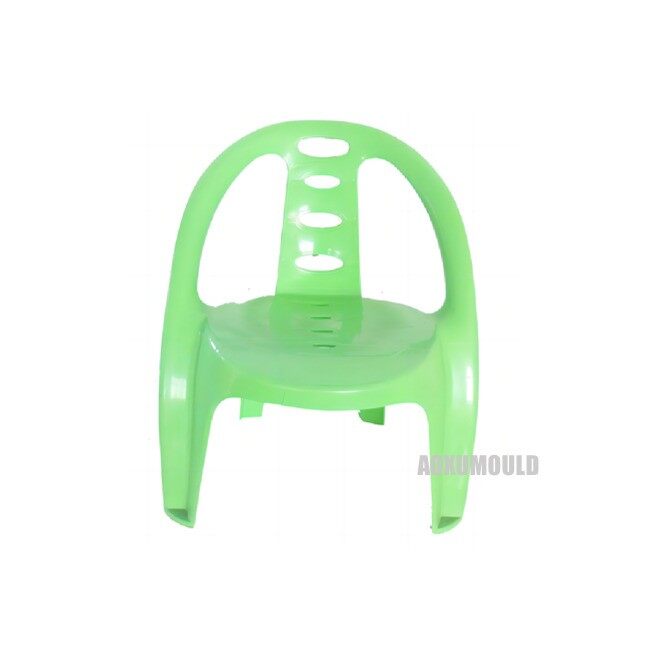
Mould Specifications
|
Mould name |
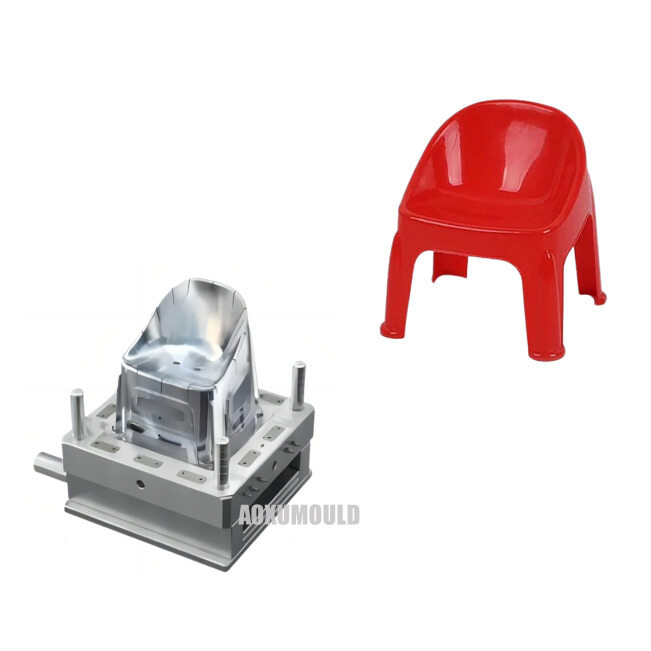
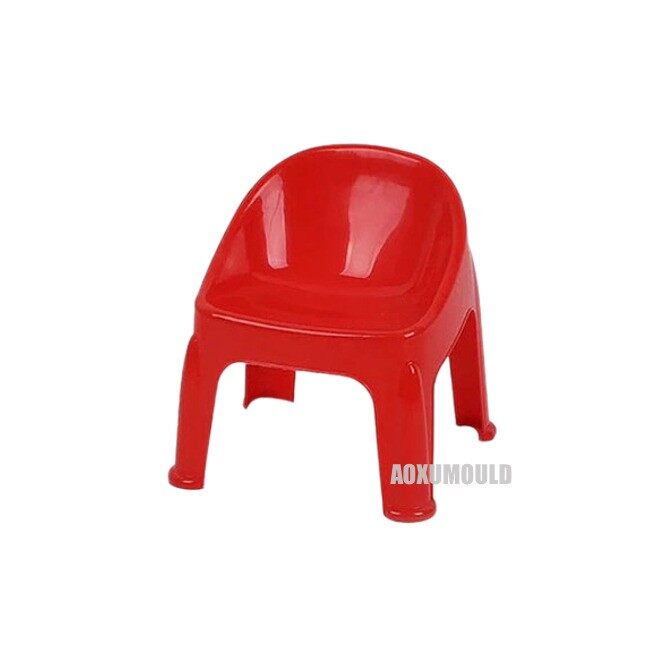
Modern Colorful Plastic Kids Chair Mould |
|
Product material |
PP |
|
Product Size |
130X140X210mm |
|
Product weight |
1.5kg |
|
Mould material for cavity &. Core |
C45, P20, 718, 2738 |
|
Mould base |
C45 |
|
Injection system |
Hot runner open gates or valve gates |
|
Suitable injection machine |
550T |
|
Mould size |
260x320x430mm |
|
Mould lifetime |
More than 300,000pcs |
What Are The Styles of Plastic Chairs For Child?
Child plastic chair is a type of furniture made primarily of plastic. This type of chair has unique features such as simple structure, easy cleaning, and economic practicality. Here are several common styles of plastic chairs for children:
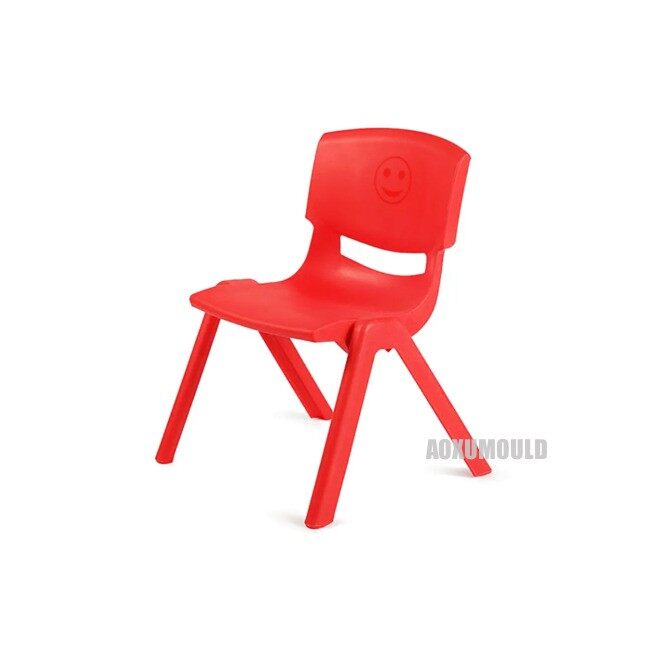
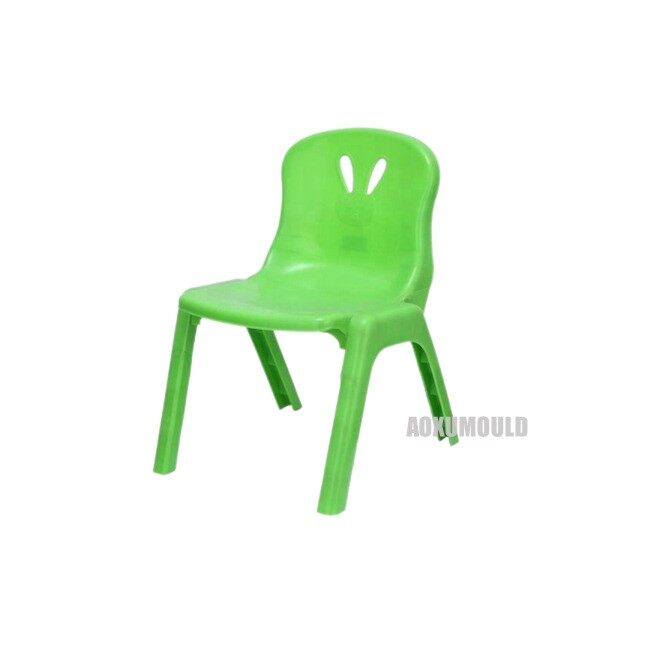
1. Single seat: This chair is the most common plastic children's chair, with a simple design that is suitable for children of different ages, from infants to toddlers. The color and pattern of the single seat are also very diverse, which is very suitable for adding color to children's rooms.
2. Armrest chair: Compared to a single seat, this chair has an additional armrest section, which makes it more stable and less prone to tipping over. Armchairs provide better support for children and enhance their sense of security. At the same time, the appearance of armchairs often has many cute patterns and colors, which is a great choice if your child likes a life of details.
3. Learning chair: This chair is designed for slightly older children and is mainly used for learning purposes. The seat surface of this chair is relatively wide, which makes it more comfortable for children to study. The integrated design of the table and chair also makes it convenient for children to store books and stationery.
4. Swinging chair: This chair looks very interesting because it adopts a rocking form. Children can sway on it and enjoy a relaxed and enjoyable time. This type of chair is usually very helpful for children's cognitive and balance abilities, and can also cultivate their imagination.
In short, there are various styles and shapes to choose from for children's plastic chairs, which not only look cute, but also have high practicality. By purchasing chairs in different styles, you can create a variety of styles for your child's room, allowing them to experience different emotions and visual effects while using them.
Design For Product &. Mould

The Importance of Three Coordinate Measuring Points For Child Chair Mould
Accurate measurement is crucial in the process of manufacturing child chairs. Three coordinate measuring point technology is a high-precision measurement method that can provide accurate data and precise dimensions for the manufacturing of children's chair molds.
Three coordinate point measurement technology can measure the three coordinate axes of an object, including their distance, angle, and curvature. This measurement method has high accuracy, reaching the level of 0.001 millimeters, so it can ensure the quality and accuracy of the mold.
For the manufacturing of children's chair molds, the three coordinate measuring point technology can also improve production efficiency. Using this technology can save a lot of time and cost, as it can help workers quickly check the size and correctness of molds during the production process.
In addition, the three coordinate measuring point technology can also improve the safety of children's chairs. Children's chairs must have the correct size and comply with ergonomic principles to ensure the health and safety of children. By using three coordinate measuring point technology, the accuracy and precision of the mold can be ensured, thereby manufacturing safer and more ergonomically designed children's chairs.
The Steps of Rrocessing Child Chair Mould


Child chairs are essential furniture for children's growth process, and the production of such chairs cannot be separated from mold processing. The following are the steps for processing children's chair molds:
1. According to the design drawings, create mold processing drawings.
2. Select appropriate raw materials and carry out cutting, drilling, punching and other processing according to the mold drawings.
3. Perform rough machining to thicken and widen the workpiece, forming a preliminary product contour.
4. Carry out precision machining, using professional equipment such as grinding machines and drilling machines to perform detailed machining, ensuring that every detail of the mold meets the design requirements.
5. Conduct heat treatment to increase the strength and toughness of the mold.
6. Perform cooling treatment to lower the temperature of the mold to room temperature.
7. Perform polishing treatment to make the surface of the mold smooth and polished, in order to enhance the appearance of the finished product.
8. Conduct testing to check if the quality of the mold meets the requirements, involving dimensions, weight, hardness, appearance, and other aspects.
9. Conduct a trial mold to check the quality of the final product for any defects, and then send samples to the customer for confirmation.
10. Connect the water and oil circuits of the mold, spray paint the surface of the mold, package and ship it.
Key Points For Polishing Plastic Child Chair Mould
The child chair mould is one of the most basic equipment for producing child chairs, and polishing is an essential step in the mold making process. Polishing is to enhance the sealing and gloss of the mold, make the appearance of the children's chair more beautiful, and also improve the service life of the mold. So, how to polish the children's chair mold?
Firstly, before operation, it is necessary to prepare tools such as polishing powder, polishing machine, and velvet cloth. Next, add the polishing powder to the polishing machine and adjust the speed of the polishing machine. Then, wrap the velvet cloth around the polishing machine, adjust the working angle of the polishing machine, place the mold on the polishing machine, and start the polishing operation.
During the polishing process, the following points should be noted:
Firstly, it is necessary to maintain the cleanliness of the mold surface. If there is too much dust or dirt on the surface, it will affect the polishing effect. Therefore, before polishing, the surface of the mold should be cleaned with a brush or soft cloth.
Secondly, apply force evenly. During the polishing process, it is important to apply force evenly, without applying too much or too little force, as this can easily lead to uneven surfaces on the mold.
Finally, pay attention to the temperature of the mold surface. Polishing generates heat, and excessive temperature can cause cracks on the surface of the mold. Therefore, during the polishing process, it is important to always pay attention to the temperature of the mold surface to avoid excessive temperature.
Mould Try-out of Child Chair Mould
Package &. Delivery

Mould Components
Mould Steel

Hot Runner System

Standard Parts

FAQ
Customers' Feedback


