

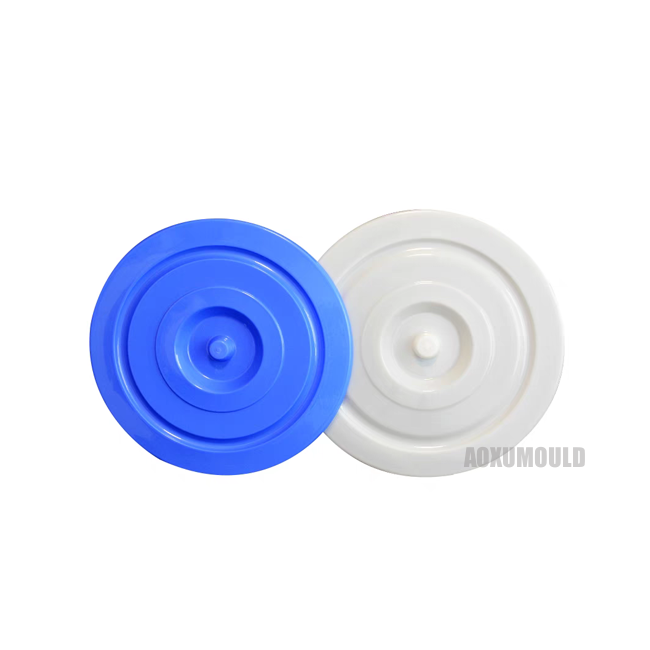
Mould Specifications
|
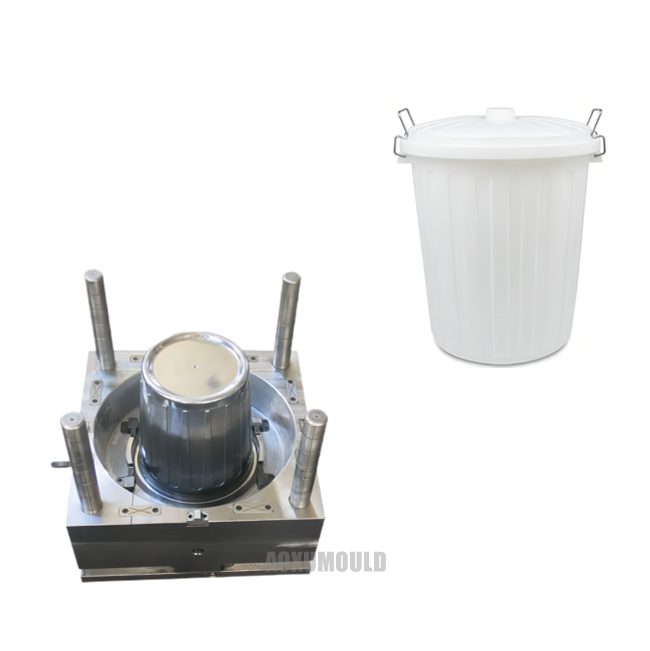
Mould name |
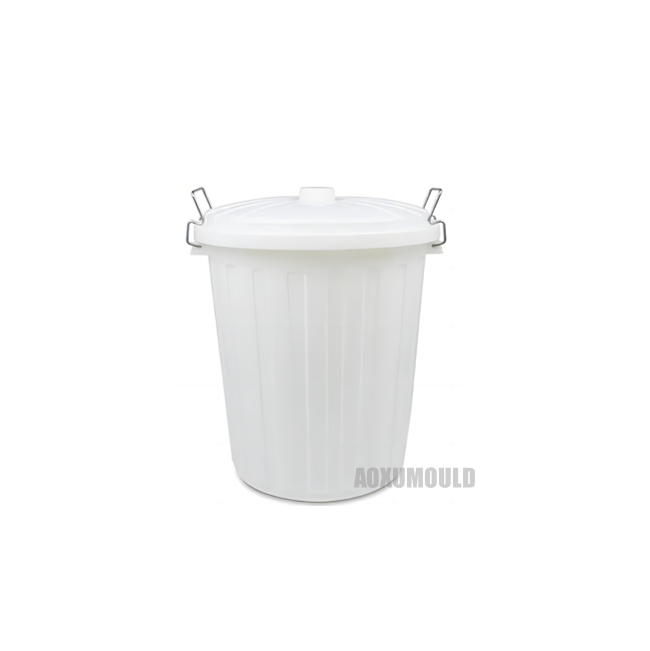
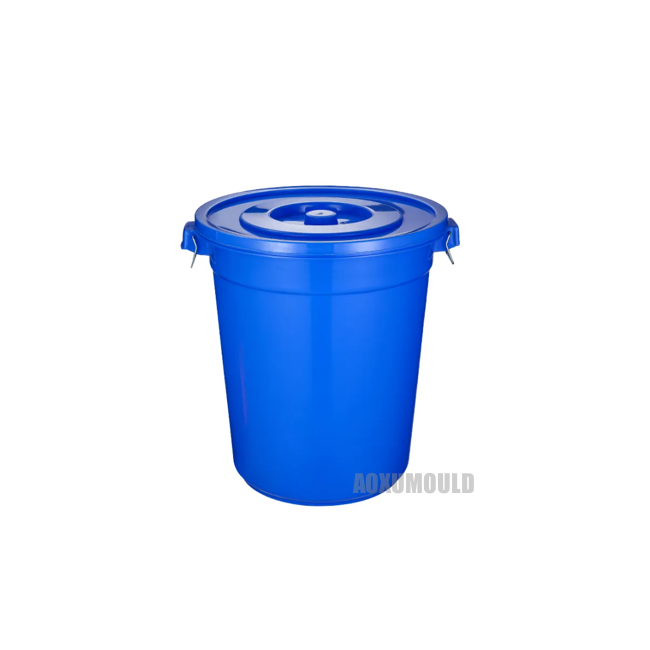
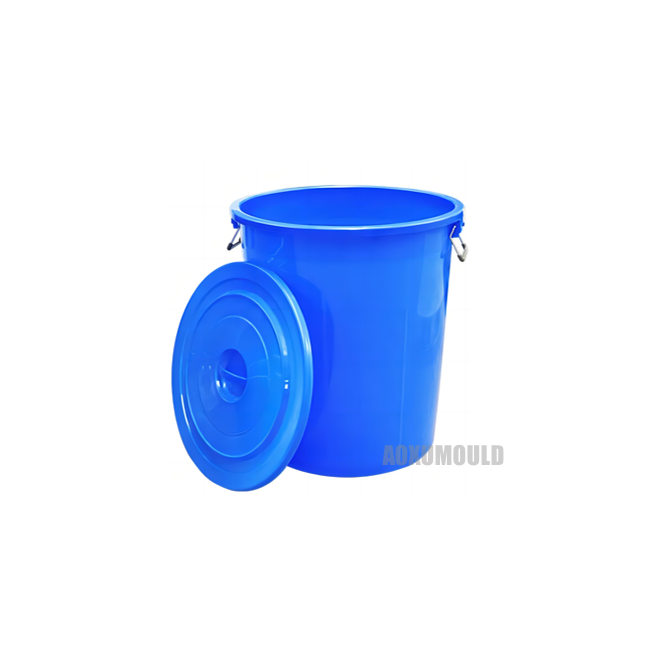
Plastic Storage bucket mould |
|
Product material |
HDPE, plastic |
|
Product Size |
1350X1035X1290mm(Include wheels) |
|
Product weight |
51kg |
|
Mould material for cavity &. Core |
C45, P20, 718, 2738 |
|
Mould base |
C45 |
|
Injection system |
Hot runner open gates or valve gates |
|
Suitable injection machine |
3300T |
|
Mould size |
1750x1550x1550mm |
|
Mould lifetime |
more than 300,000pcs |
What Are The Advantages of Large-Sized Plastic Circular Storage Bucket?

Large plastic circular storage buckets are a very practical and convenient household item, with many advantages. Firstly, the large-sized design can store items in a larger capacity, providing more storage space for families and solving the problem of household storage.
Secondly, plastic storage buckets have the characteristics of moisture and mold resistance, which can effectively protect stored items. Plastic material is also an environmentally friendly material, non-toxic and harmless, making it more reassuring to use.
In addition, plastic storage buckets are lightweight, easy to transport and clean, and do not impose any additional burden on families. It also has the characteristics of high durability, long service life, and is not easily worn or damaged.
Finally, the appearance design of large-sized plastic circular storage buckets is diverse and colorful, which can be well matched with home decoration styles and add a sense of beauty to the home. Meanwhile, the circular design has no sharp corners, making it safer and less likely to cause accidental injuries.
Design For Product &. Mould

What Are The Difficulties In Manufacturing Plastic Storage Bucket Mould?
1. Difficulties in mould structure design
(1) Demoulding slope and parting surface design
Demoulding slope: Deep cavity structures (with a large ratio of depth to diameter) can easily increase demoulding resistance, so it is necessary to design the demoulding slope reasonably. A too small slope may cause mold jamming, while a too large slope can affect the dimensional accuracy and appearance of the product.
Selection of parting surface: The parting surface should be avoided from being located at the bottom of the deep cavity, otherwise it is easy to produce burrs or misalignment when closing the mold. The use of stepped or lateral parting surfaces is common, but it can increase the complexity of the mold.
(2) Injection system design
Uniformity of melt flow: Large sized deep cavities can easily lead to long melt flow paths, fast cooling at the front end, resulting in short shots or uneven filling. It is necessary to optimize the gate position (such as multi-point gate or hot runner), but the cost of the hot runner system is high and maintenance is difficult.
Pressure loss: The long flow path leads to a decrease in melt pressure, requiring an increase in injection pressure or adjustment of channel cross-sectional dimensions (such as variable cross-section channels).
(3) Cavity deformation compensation
Shrinkage and deformation prediction: Uneven wall thickness or uneven cooling of deep cavity plastic drums can easily lead to shrinkage deformation, and it is necessary to use mold flow analysis (such as Moldflow) to predict the deformation amount and compensate for the cavity size in reverse.
2. Mould materials and processing difficulties
(1) Material selection and heat treatment
Steel requirements: High hardness (HRC 48-52) and high wear resistance (such as pre hardened steel P20, H13) are required, but large-sized mold steel is prone to internal defects (such as pores and inclusions) and requires strict testing.
Heat treatment deformation: Large molds are prone to warping during heat treatment, and require segmented quenching or vacuum heat treatment to reduce stress.
(2) Deep cavity processing technology
Tool limitations: Deep cavity machining requires tools with a large aspect ratio, which can lead to vibration and poor surface roughness (Ra>0.8 μ m) due to insufficient rigidity. Layered processing or the use of specialized deep hole drills is required.
Electrode loss: If electrical discharge machining (EDM) is required at the bottom of a deep cavity, the electrode loss is severe and needs to be replaced multiple times, making accuracy control difficult.
3. Difficulties in cooling system design
(1) Cooling uniformity
Insufficient cooling at the bottom of the deep cavity: Traditional linear cooling pipes cannot effectively cool the bottom of the deep cavity, which can easily lead to local overheating, prolong the cycle, and cause shrinkage deformation.
Solution: Adopting conformal cooling (3D printed irregular waterway) or layered spiral waterway, but with high processing costs.
(2) Thermal balance control
Wall thickness difference: There is a large difference in thickness between the deep cavity bucket body and the mouth, which requires zone cooling (such as independent waterway control), otherwise it will cause internal stress concentration or warping.
4. Demoulding mechanism and exhaust design
(1) Demoulding mechanism
Top out system: The demolding of deep cavity products requires a large top out force, but traditional top pins are prone to piercing through thin-walled areas. Multiple sets of top rods, pneumatic assisted demolding, or segmented ejection structures are required.
Lateral core pulling: If the barrel has a concave structure, a complex inclined top or hydraulic core pulling mechanism needs to be designed, which occupies a large space and is prone to wear and tear.
(2) Exhaust design
Poor exhaust: Gas is easily trapped at the bottom of the deep chamber, causing burning or bubbles. Multiple levels of exhaust (with a depth of 0.02-0.04mm) need to be installed on the parting surface, top needle hole, or specialized exhaust groove, but the exhaust groove is prone to blockage by the melt.
Mould Try-out of Plastic Storage Bucket Mould
Package &. Delivery

Mould Components
Mould Steel

Hot Runner System

Standard Parts

FAQ
Q: What is injection mould?
A: An injection mould is a tool used to produce plastic parts by injecting plastic into the mould cavity.
Q: What materials are used to make Waste Container injection moulds?
A: The most common materials used to make injection moulds are high-quality steel, such as P20, 718, 2738, etc.
Q: What is the process of making an dustbin injection mould?
A: The process of making a mould includes design engineering, machine programming, tooling fabrication, mould testing and validation.
Q: Can moulds be customized to specific product requirements?
A: Yes, moulds can be customized to specific product requirements depending on the design and specifications of the project.
Q: What are some factors to consider when making our plastic moulds?
A: Some factors to consider when making plastic moulds include product design, plastic material selection, mould material selection, injection moulding machine capacity, cooling time, and mould maintenance requirements.
Q: How long does it take to make one set of mould?
A: The time it takes to make mould can vary depending on the complexity and size of the mould.
However, it usually takes between 6 and 8 weeks.
Q: What can be done to ensure the mould quality?
A: To ensure mould quality, proper design and engineering, high-quality materials, and strict quality control procedures should be employed during the entire process of making the mould.
Q: How long can a mould last?
A: The lifespan of a mould can vary depending on the quality of the mould, maintenance practices, and operating conditions. A well-maintained mould can last for hundreds of thousands of cycles.
Q: What are the benefits of making plastic injection moulds?
A: Some benefits of making plastic moulds include faster production times, lower costs per unit, high accuracy, and the ability to produce complex shapes and designs.
Q: Can our 1100L dustbin mould be repaired and maintained?
A: Yes, our 1100L dustbin mould can be repaired and maintained to extend their lifespan. Regular maintenance can prevent breakdowns and ensure consistent quality.
Customers' Feedback


