

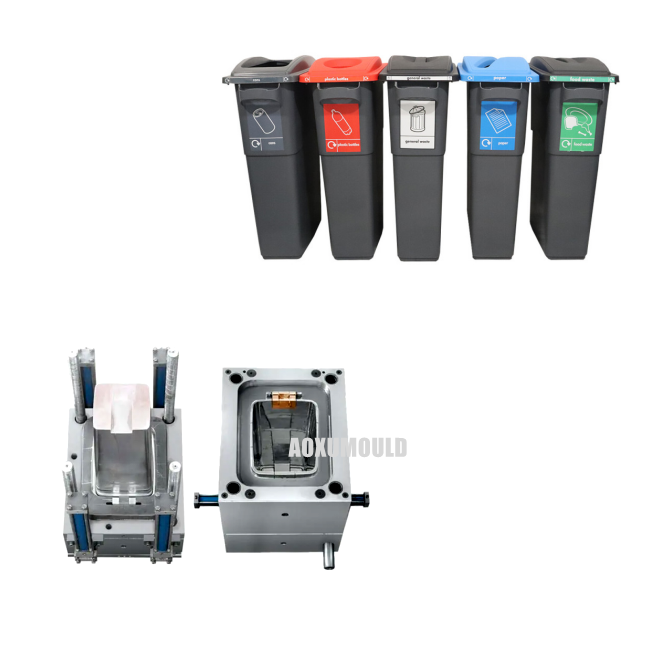
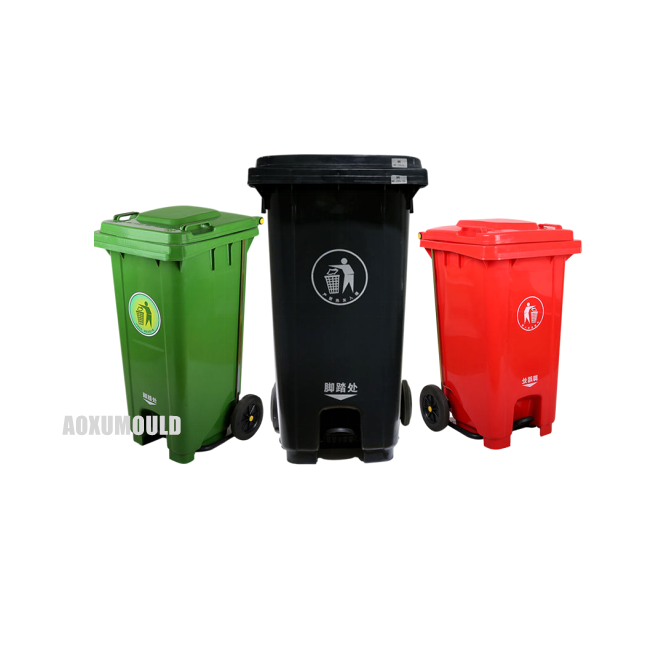
Mould Specifications
|
Mould name |
Recycling Station Mould |
|
Bin material |
PP |
|
Bin Size |
40x60x70cm(60L) |
|
Mould material for cavity &. Core |
718 |
|
Mould base |
C45 |
|
Injection system |
Cold runner |
|
Suitable injection machine |
2400T |
|
Mould size |
1385X955X990mm |
|
Mould lifetime |
more than 500,000pcs |
Why Is Garbage Classification Important?
Garbage classification is crucial for several reasons:
1. Environmental Protection: Proper sorting reduces pollution by preventing harmful substances from contaminating soil and water.
2. Resource Recycling: It enables efficient reuse of recyclable materials (e.g., plastics, paper, metals), reducing the need for raw material extraction.
3. Waste Reduction: Separating organic waste (like food scraps) allows for composting or energy production, minimizing landfill use.
4. Public Awareness: It educates communities about sustainable habits and responsibility toward the planet.
Why are different-colored plastic bins used?
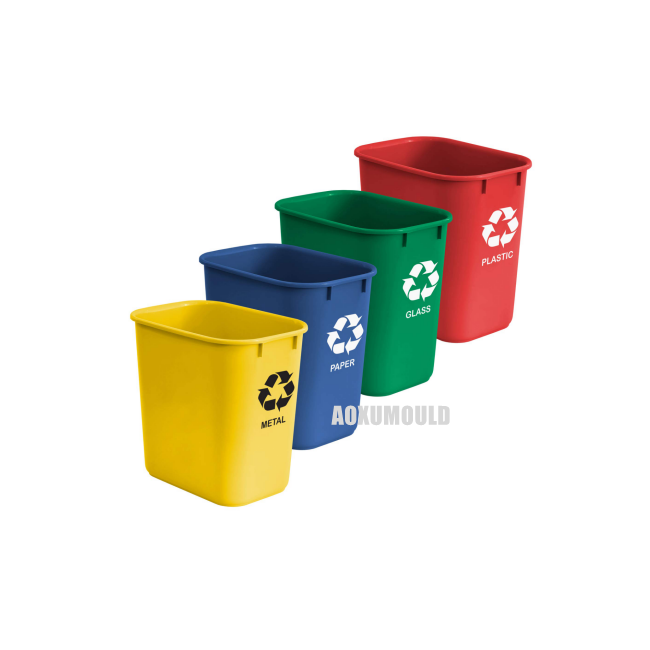
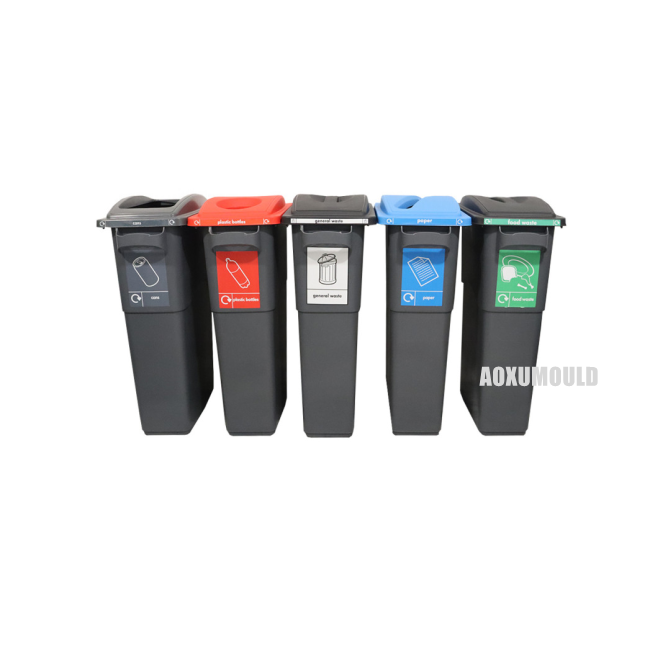
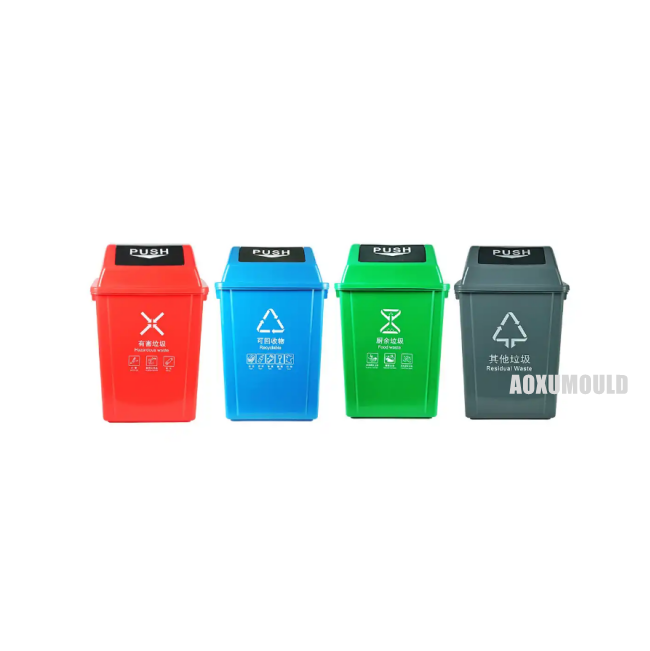
Different-colored plastic Recycling Stations help people quickly identify categories of waste:
- Blue: Recyclables (plastic bottles, paper, glass).
- Red: Hazardous waste (batteries, chemicals, expired medicines).
- Green: Organic waste (food scraps, garden waste).
- Gray/Black: Non-recyclable general waste.
How To Make Plastic Recycling Station Mould?

To design and manufacture a plastic recycling station mould, the process involves integrating material science, engineering design, and sustainability considerations. Below is a structured guide based on technical principles and innovations from the search results:
1. Material Selection and Preparation
- Choose Recyclable Thermoplastics: Opt for materials like HDPE, PP, or ABS, which are commonly recycled and compatible with injection molding or extrusion processes. For closed-loop recycling, consider chemically recyclable polymers like the polyethylene-like polycarbonate developed by Stefan Mecking's team, which allows 96% monomer recovery under mild conditions .
- Account for Shrinkage: Use CAD software to scale the part design based on the material's shrinkage rate.
2. Mould Design Process
- 3D Modeling:
- Use CAD tools to create the part geometry, incorporating features like sorting compartments or modular connections for a recycling station.
- Generate mould inserts by offsetting the part's surfaces to replicate internal/external contours .
- Feed and Ejection Systems:
- Design sprue, runners, and gates to ensure even material flow. For recycled plastics, wider gates may reduce shear stress and accommodate potential impurities .
- Include ejector pins and cooling channels to minimize cycle time and warping .
3. Manufacturing the Mould
- CNC Machining or 3D Printing:
- Use high-precision CNC tools to mill mould cavities from steel or aluminum. For prototypes, 3D printing with durable resins can expedite testing .
- Surface Treatment: Apply coatings to enhance wear resistance, especially for abrasive recycled materials .
4. Testing and Optimization
- Trial Runs:
- Adjust parameters like melt temperature (e.g., 180–220°C for HDPE) and injection pressure to account for recycled material variability .
- Monitor for defects like sink marks or voids caused by inconsistent material flow .
- Sustainability Validation:
- Ensure the mould supports closed-loop recycling by testing compatibility with chemically recyclable plastics .
- Optimize design for disassembly, enabling easy separation of mixed plastics during recycling .
5. Advanced Considerations
- Modular Design: Implement interchangeable inserts to adapt the mould for different recycling station components (e.g., bins, lids) .
- Community-Driven Features: Integrate open-source design principles to allow public participation in mould customization, as seen in the "Future Plan" research project .
- Material Hybridization: Explore adding bio-based additives or fillers to improve strength while maintaining recyclability .
Package &. Delivery

Mould Components
Mould Steel

Hot Runner System

Standard Parts

Customers' Feedback


