
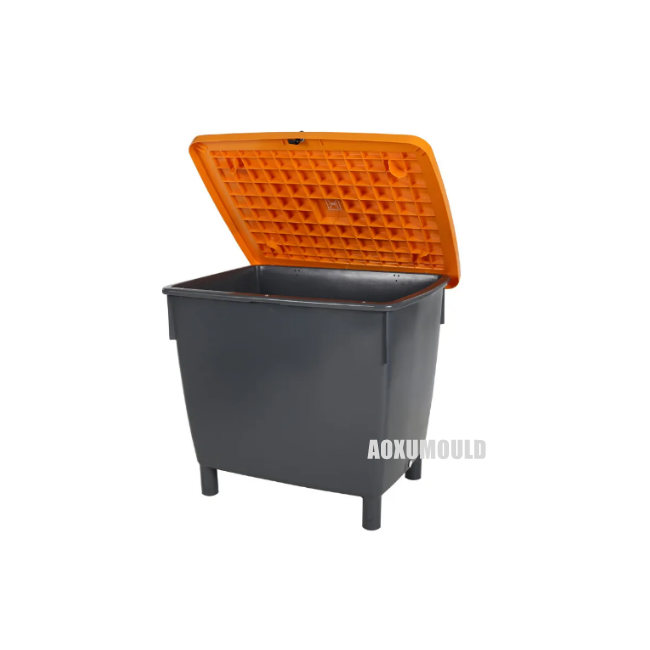
Mould Specifications
|
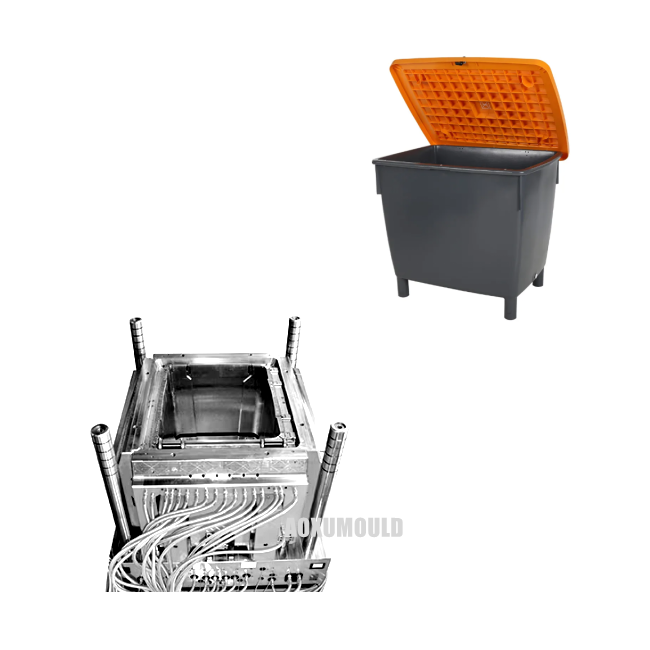
Mould name |
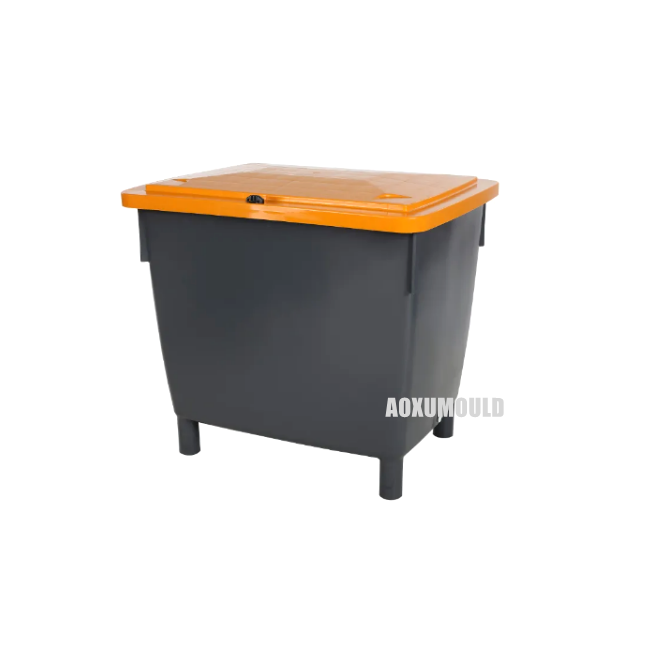
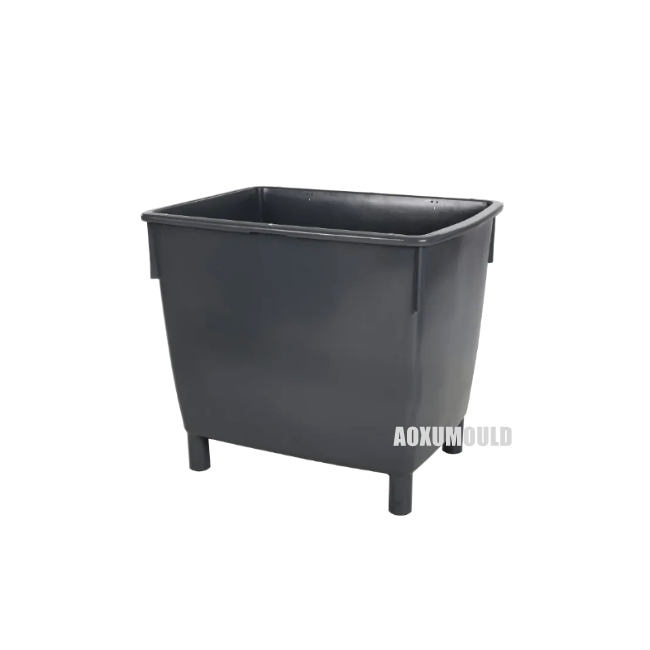
Grit Bin Mould |
|
Product material |
HDPE, plastic |
|
Product Size |
968 x 776 x H 930mm |
|
Product capacity |
400 liters |
| Product Weight | 21KG |
|
Mould material for cavity &. Core |
P20, 718, 2738 |
|
NOs of cavity |
1 cavity |
|
Injection system |
Hot runner molding system |
|
Suitable injection machine |
4000T |
|
Mould size |
1650X1500X1250mm |
| Mould weight | 22000T |
|
Mould lifetime |
more than 500,000pcs |
|
T1 Time |
After design is finalized, 65 days |
What Is Plastic Grit Bin?

A Plastic Grit Bin is a durable, weather-resistant container made of high-density plastic, designed to store and dispense grit-a mixture typically composed of salt (to melt ice) and sand or small gravel (to improve traction). These bins are strategically placed in public areas, such as roadsides, pavements, car parks, or pedestrian zones, to help combat icy and slippery conditions during winter months.
1. Purpose:
- Provides easy public access to grit for spreading on icy surfaces, enhancing safety by reducing slips and accidents.
- Often deployed by local authorities, businesses, or communities as part of winter maintenance programs.
2. Construction:
- Made of robust, corrosion-resistant plastic (e.g., polyethylene), which is lightweight, rust-proof, and long-lasting compared to traditional metal bins.
- Often features a secure lid to protect grit from moisture and debris.
- May include a scoop or shovel for convenient distribution.
3. Common Locations:
- Roads with steep gradients, pedestrian pathways, school zones, hospital entrances, and other high-risk icy areas.
- Frequently found in regions with cold, snowy climates.
Comparison to Metal Bins

- Plastic bins outperform metal in resisting salt-induced corrosion and are lighter for easier relocation.
- Metal bins may be sturdier in extreme conditions but require more maintenance.
Grit bins, used for storing salt or sand to de-ice roads, require durable, weather-resistant plastics. The most common materials include:
1. High-Density Polyethylene (HDPE)
- Why? High impact resistance, UV stability, and excellent chemical resistance (e.g., to road salts).
- Benefits: Lightweight, recyclable, and retains flexibility in cold temperatures (avoids brittleness).
2. Polypropylene (PP)
- Why? Good chemical resistance and temperature tolerance (-10°C to 100°C).
- Benefits: UV-stabilized variants prevent sun degradation; rigid yet tough structure.
3. Recycled Plastics
- Why? Sustainability focus. Recycled HDPE/PP reduces environmental impact.
- Benefits: Retains durability and weather resistance while supporting circular economies.
4. ABS (Acrylonitrile Butadiene Styrene)
- Why? Impact resistance and rigidity.
- Benefits: Used for smaller or specialized bins but less common due to higher costs.
HDPE and PP dominate due to their balance of cost, durability, and environmental adaptability. Recycled variants are increasingly popular for eco-friendly solutions.
Why Plastic Grit bins Require Injection Moulds?

Plastic grit bins (also known as salt bins or sand bins) require injection tooling (moulds) for several key reasons related to production efficiency, cost-effectiveness, quality, and functionality:
1. Mass Production &. Cost Efficiency:
Grit bins are typically required in large quantities by municipalities, highways agencies, and industrial sites. Injection molding is the most efficient and cost-effective process for producing large volumes of identical plastic parts.
While the initial investment in a complex injection mould is high, this cost is amortized over thousands or tens of thousands of units. The per-unit cost becomes extremely low compared to lower-volume manufacturing methods once production scales up.
2. Complex Geometry &. Structural Integrity:
Grit bins have specific functional geometries: a large, often tapered container body, a lid (sometimes hinged), mounting points, handles, drainage holes, and potentially internal features. Injection molding allows for the precise and repeatable creation of these complex shapes, including undercuts, ribs, and bosses, in a single molding cycle.
The process enables excellent control over wall thickness distribution, crucial for achieving the necessary structural strength and rigidity to hold heavy grit/salt, withstand impacts, and resist environmental stresses (wind, UV, temperature fluctuations) without warping or cracking.
3. Dimensional Consistency &. Quality:
Injection molding produces parts with very high dimensional accuracy and consistency. Every bin coming out of the mold is virtually identical. This is essential for:
A.Reliable assembly (lid fitting correctly).
B.Stacking/transport efficiency.
C.Meeting regulatory or specification requirements.
D. Maintaining brand quality and user experience.
4. Material Suitability &. Performance:

Grit bins are exposed to harsh outdoor environments (UV radiation, rain, snow, ice, salt corrosion, temperature extremes) and physical impacts. Injection molding is ideally suited for processing the robust, durable, and weather-resistant thermoplastics required for this application, primarily:
HDPE (High-Density Polyethylene): Excellent chemical resistance (especially to salts), impact strength, UV stability (with additives), and good low-temperature performance. Highly recyclable.
PP (Polypropylene): Good chemical resistance, stiffness, and processability. Often used with stabilizers for UV resistance.
The molding process allows for the incorporation of additives (UV stabilizers, colorants, flame retardants) directly into the polymer melt, ensuring homogeneous distribution throughout the part for consistent performance.
5. Surface Finish &. Functionality:
The mold surface dictates the bin's exterior finish. A high-quality mold can produce a smooth surface that resists dirt buildup or a textured surface for better grip and scratch/mar resistance.
Functional features like logos, instructional text, capacity markings, anti-slip patterns, and reinforcing ribs can be directly molded into the part during the single operation.
6. High Production Rate:
Once the mold is installed in an injection molding machine, cycle times (the time to produce one part) are relatively short (often minutes or even seconds for smaller parts, though bins are larger). This enables the very high production volumes needed to meet market demand efficiently.
Investing in an injection mould is essential for economically manufacturing robust, high-quality plastic grit bins that meet performance demands at scale.
How To Molding A Plastic Grit Bin?
To injection molding a durable plastic grit bin (used for road salt/grit storage), follow this comprehensive guide integrating material science, mould engineering, and process optimization based on industry best practices. Key considerations include weather resistance, structural integrity, and cost efficiency.
1. Injection Molding Parameters
Adjust parameters for large-part production (typical bin volume: 50–200L):
| Parameter | Recommended Setting | Impact on Product |
|--------------------|---------------------------|----------------------------|
| Melt Temperature | 200–230°C (PP), 220–260°C (HDPE) | Prevents degradation |
| Injection Pressure | 80–100 MPa | Avoids flash & stress |
| Packing Pressure | 60–80% of injection pressure | Reduces shrinkage voids |
| Cooling Time | 60–90 sec (thickness-dependent)| Minimizes warpage |
| Screw Back Pressure| 5–15 MPa | Improves melt homogeneity |
- Multi-Stage Injection:
- Stage 1: Slow fill (40% volume) to prevent jetting.
- Stage 2: High speed to complete filling.
- Stage 3: Low pressure packing for dimensional stability .
Mould Components
Mould Steel

Hot Runner System

Standard Parts

Package &. Delivery

Why Choose Us For Making Plastic Grit Bin Mould?
Here's why choosing our team for your plastic grit bin injection mould is a smart decision, focusing on key differentiators that matter for this specific product:
1. Deep Expertise in Large, Durable Outdoor Products:
Specialization: We don't just make moulds; we excel at complex, high-tonnage moulds for large, robust outdoor products like grit bins. We understand the unique structural, durability, and weather-resistance demands.
Material Knowledge: Extensive experience with engineering-grade polymers (like HDPE, PP) crucial for impact resistance, UV stability, and low-temperature performance required for grit bins.
2. Engineered for Longevity & High Volume:
Premium Tool Steel: We use high-grade, hardened steels (e.g., P20, H13, Stainless options) specifically chosen for abrasion resistance (against sand/salt grit) and long production runs, minimizing downtime and cost-per-part.
Robust Construction: Designs prioritize strength and rigidity to withstand high injection pressures needed for large parts, ensuring dimensional stability over thousands of cycles.
Corrosion Resistance: Critical for moulds handling salt/grit. We specify appropriate steels and surface treatments (e.g., nitriding, hard chrome plating) to combat corrosion and extend mould life significantly.
3. Optimized for Efficiency & Cost-Effectiveness:
Cycle Time Reduction: Our mould design focuses on efficient cooling channels, strategic gating, and easy ejection to minimize cycle times, boosting your production output and lowering part cost.
Automation Ready: Designed for seamless integration with robotics (sprue pickers, part handlers) for high-volume, lights-out manufacturing.
Low Maintenance Design: Features like easy-access wear plates, standardized components, and smart cooling layouts reduce maintenance time and costs.
4. Precision Engineering for Perfect Function:
Critical Fit & Function: Ensures perfect lid fit (preventing water ingress), smooth hinge operation (for robust lids), precise locating points for wheels/bases, and consistent wall thickness for strength and material efficiency.
Surface Finish Expertise: Delivers consistent, durable finishes (textured for grip/hiding scratches, smooth for branding areas) vital for aesthetics and usability.
5. Comprehensive Design & Development Support:
DFM (Design for Manufacturability): We don't just build your design; we collaborate upfront to optimize the grit bin design for mouldability, strength, assembly, and cost. We catch potential issues early.
Prototyping & Testing:** Offer rapid prototyping (3D printing) for design validation and pilot production runs for testing before full-scale manufacturing.
Simulation Driven: Utilize Moldflow (or similar) analysis to predict and prevent filling issues, warpage, sink marks, and optimize cooling before steel is cut.
6. Proven Track Record & Reliability:
Portfolio: Demonstrated success in designing and building high-quality moulds for similar large containers, street furniture, or demanding outdoor products. (Case studies/references available).
Quality Systems: Adherence to strict quality control protocols throughout design, machining, fitting, and testing (T1 sampling).
On-Time Delivery: Commitment to meeting critical project timelines.
7. Full-Service Partnership:
End-to-End Solution: From initial concept/design review through mould manufacturing, sampling, testing, and production support.
Technical Support: Dedicated engineering support during production ramp-up and ongoing troubleshooting.
After-Sales Service: Reliable maintenance, repair, and refurbishment services to maximize your mould's lifespan.
Choosing us means investing in a mould built to last, produce high-quality grit bins efficiently for years, and backed by specialized expertise focused on the unique challenges of your product. This translates directly to lower total cost of ownership, higher production output, consistent part quality, and reduced risk for your grit bin manufacturing.
Ready to discuss how we can optimize your specific grit bin mould project? Let us know your requirements!
Customers' Feedback


