

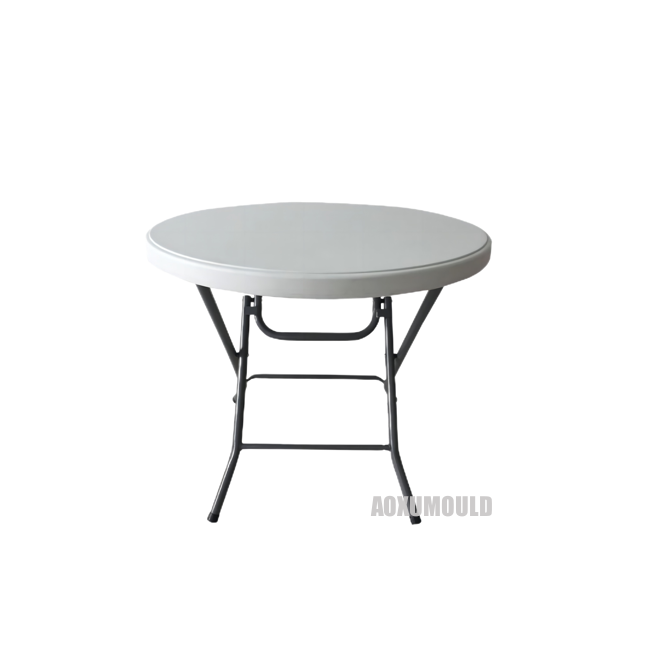
Mould Specifications
|
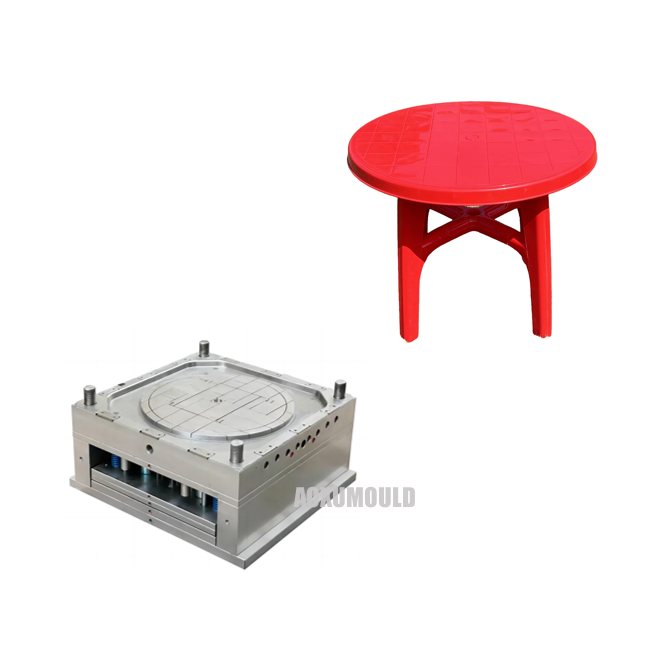
Mould name |
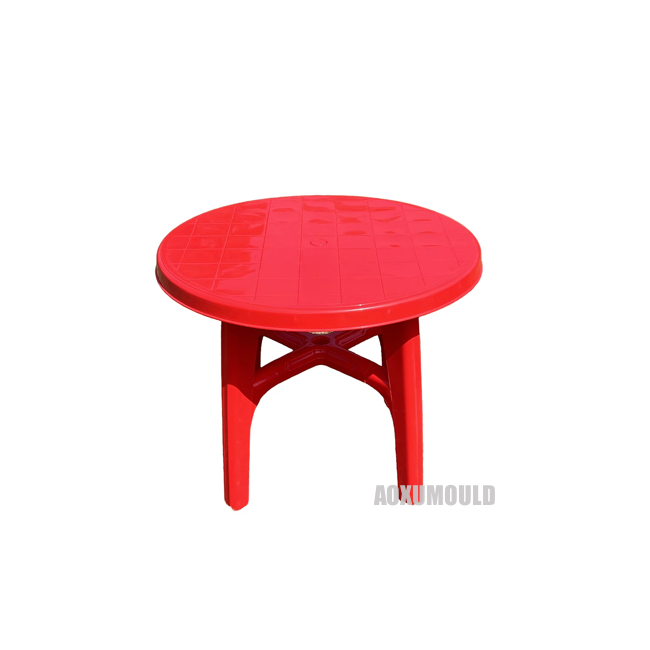
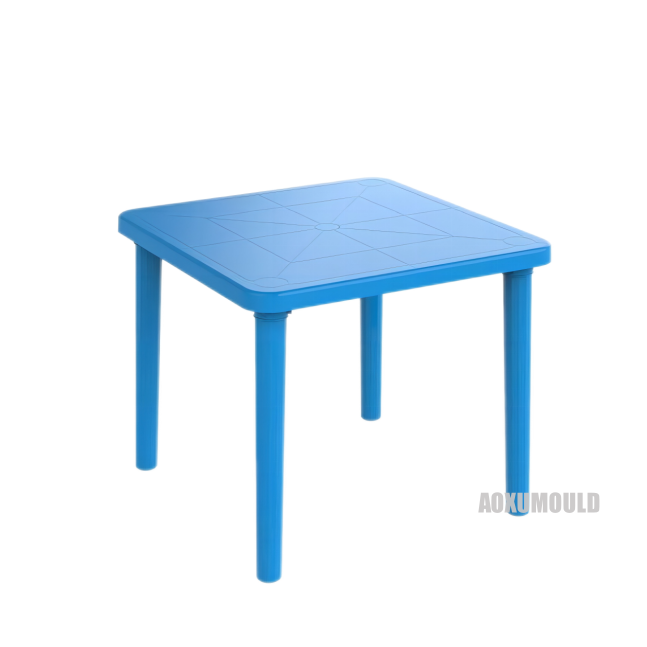
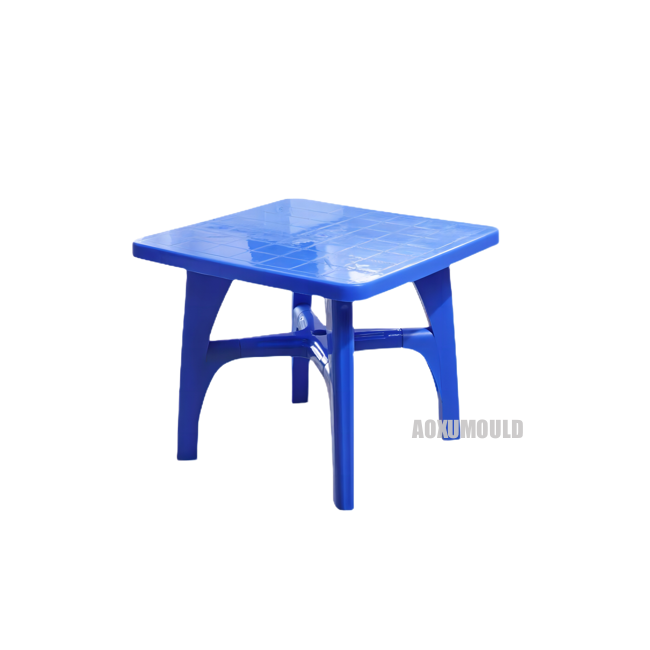
Plastic Outdoor Restaurant Tables |
|
Table material |
HDPE, plastic |
|
Product Size |
800X800X700mm |
|
Product weight |
7.5kg |
|
Mould material for cavity &. Core |
C45, P20, 718, 2738 |
|
Mould base |
C45 |
|
Injection system |
Hot runner open gates or valve gates |
|
Suitable injection machine |
1200T |
|
Mould size |
1050x1050x950mm |
|
Mould lifetime |
more than 300,000pcs |
What Are The Components of Plastic Dining Table?

Plastic dining tables, as an indispensable household item in modern life, consist of several components such as tabletop, table legs, and connectors. Plastic dining tables are not only simple and beautiful in shape, but also very convenient to use, making them popular among people.
Firstly, the desktop part is the most important component of the plastic dining table. The desktop is generally made of high-strength polypropylene plastic, which is lightweight, easy to clean, and not easily deformed. And different sizes and colors can be selected according to personal preferences and needs to meet different household uses.
Next is the leg part of the table, which serves as the foundation for supporting and stabilizing the plastic dining table. Table legs are generally made of polypropylene plastic, which has the characteristics of lightweight, durability, and moisture resistance. In addition, the table legs can be adjusted as needed to adapt to different heights and usage locations, which is very convenient and practical.
Finally, there is the connector, which is an important part for fixing the tabletop and table legs. Connectors are generally made of high-strength plastic or metal materials, which have the characteristics of durability and strong load-bearing capacity, ensuring the safe use of plastic dining tables.
How To Optimize The Design of Plastic Dining Table Mould?
Designing plastic dining table mould is an important project that requires consideration of multiple factors, from material selection to cost control, in order to achieve optimal results. Here are several ways to optimize the design of plastic dining table molds:
1.Reasonable selection of materials Choosing appropriate materials is the foundation for designing plastic dining table molds. Prioritize the selection of high-quality and high-performance materials, such as ABS and PP in plastics, to ensure that the mold has sufficient strength and wear resistance, and is not easily damaged or deformed during use.
2.Fine design structure Reasonable design of mold structure is very important, taking into account the impact of service life and product quality. When designing, attention should be paid to whether the mold structure is firm and reasonable, whether it has good processing performance, and whether it is easy to maintain. At the same time, it is necessary to choose a suitable structure based on specific needs to ensure the quality and stability of the final product.
3.Pay attention to details and accuracy The details and accuracy of the equipment determine the quality and stability of the product. When designing and making molds, pay attention to the accuracy of each component and ensure that they remain intact during the assembly process. This can help reduce the manufacturing cost of molds while improving their lifespan and stability.
4.Strengthen technical strength Improving technical expertise is a crucial step in optimizing the design of plastic dining table molds. At the same time, workers need to improve their mold manufacturing skills through training and learning, in order to better grasp every aspect of the manufacturing process and make it more perfect. In addition, it is necessary to strengthen the understanding of equipment operation, maintenance, and upkeep to further improve its service life.
The Impact of Mould Steel On Plastic Dining Table Mould?

Mould steel is one of the indispensable materials for making plastic dining table mould. Different materials of mould steel will have an impact on the production and use of moulds.
Firstly, for the production of molds, the choice of mold steel is very important. In general, high-quality mold steel has high hardness, dimensional stability, and grindability, which can ensure better cutting performance and accuracy of the mold, thus enabling more precise carving of the required shape and size during production. If inferior mold steel is used, various problems may occur during the production process due to insufficient hardness or unstable size, such as inaccurate mold shape and rapid mold wear.
Secondly, for the use of plastic dining table molds, the choice of mold steel is also very important. Good mold steel can ensure a longer service life of the mold and prevent deformation, which can greatly improve production efficiency and save costs. In addition, the material of mold steel also has a certain impact on the surface quality of the product. Good mold steel can make the surface of the product smoother, less prone to defects such as bubbles and shortening, thereby increasing the market competitiveness of the product.
Design For Product &. Mould

Polishing Requirements For Dining Table Mould
Plastic table molds are necessary tools for producing plastic tables, and polishing is a very important process in their manufacturing. The purpose of polishing is not only to make the surface of the mold smoother, but also to improve the service life of the mold. Therefore, when polishing plastic table molds, the following requirements should be noted.
Firstly, it is required that the product during the polishing process must not have any residue, such as grease, metal shavings, etc., to avoid affecting the smoothness and service life of the mold surface. In addition, appropriate grinding materials such as sandpaper, steel wire balls, polishing solution, etc. should be selected during polishing, and the selection should be based on the specific situation to avoid scratching the surface of the mold. At the same time, appropriate polishing tools such as manual polishing, mechanical polishing, etc. should be selected during polishing to better ensure the polishing effect.
Secondly, safety issues should be taken into account during the polishing process. Due to the generation of a lot of dust and noise during the polishing process, protective equipment such as masks, earplugs, goggles, etc. should be worn during polishing, and the polishing area should be isolated to reduce injury.
Finally, it is necessary to strictly follow the process requirements during the polishing process. Specifically, the polishing method, grinding materials, and polishing equipment should be selected according to the process requirements, while also mastering the appropriate polishing time and speed to achieve the best polishing effect.
Package &. Delivery

Mould Components
Mould Steel

Hot Runner System

Standard Parts

FAQ
Q: What is an injection molded dining table mould?
A: Injection molding dining table mould is a tool for producing plastic dining tables by injecting plastic into the mould cavity.
Q: What material is used to make plastic dining table injection mould?
A: The most common material used for manufacturing injection molds is high-quality steel, such as P20, 718, 2738, etc.
Q: What is the process of making plastic dining table mould?
A: The process of manufacturing moulds includes design engineering, machine programming, mold manufacturing, mold testing, and validation.
Q: Can molds be customized according to specific product requirements?
A: Yes, according to the design and specifications of the project, the mold can be customized according to specific product requirements.
Q: What factors should be considered when making plastic molds?
A: Some factors to consider when making plastic molds include product design, plastic material selection, mold material selection, injection molding machine capacity, cooling time, and mold maintenance requirements.
Q: How long does it take to make and manufacture dining table mould?
A: The time required to make a mould may vary due to the complexity and size of the mould.
However, this usually takes 6 to 8 weeks.
Q: How to ensure the quality of mould?
A: To ensure the quality of the mould, appropriate design and engineering, high-quality materials, and strict quality control procedures should be adopted throughout the entire process of making the mould.
Q: Will you provide a progress report on the processing of dining table mould?
A: Of course, when the project starts, we will provide detailed weekly progress reports with processing videos and photos.
Q: Does your mould have a price advantage?
A: To be honest, ultimately the price of the mould depends on the quality of the mold, and our mold quotation is also based on our cost.
Q: Will you send free trial dining table samples?
A: Yes, we usually send 3 samples for customer confirmation. If the customer requires a large quantity, they will need to pay a certain fee.
Mold Maintenance
Mold maintenance is more important than mold repair. The more times a mold is repaired, the shorter its lifespan; The better the maintenance of the mold, the longer its service life will be.
Necessity of mold maintenance
1. Maintain the normal operation of the mold and reduce unnecessary wear and tear on moving parts;
2. Achieve the normal service life of the mold;
3. Reduce oil pollution in production.
Contents of mold maintenance
A: Daily maintenance of mold
1. Various moving parts such as ejector pins, travel positions, guide posts, and guide sleeves need to be oiled;
2. Cleaning of the mold surface;
3. Drainage channels for water transportation;
B: Regular maintenance:
1. 2. 3. Same as above;
4. Cleaning of exhaust ducts, adding exhaust to areas where trapped gas burns black;
5. Correction of damaged and worn areas;
C Appearance maintenance:
Apply paint to the outside of the mold base to prevent rusting;
When dropping the mold, the mold cavity should be coated with anti rust oil;
3.When storing, it should be tightly closed to prevent dust from entering the mold core.
Precautions for mold maintenance
A Moving part requires refueling for daily maintenance;
B Mold surface must be clean: label paper must not be stuck on the P/L surface, and the product should continue to be packaged before the mold is removed. The P/L position has serious adhesive threads;
C If any abnormalities are found, such as abnormal ejection or loud opening and closing of the mold, they must be repaired in a timely manner;
Safety issues in the maintenance and repair of molds
When doing anything, safety issues must be given top priority. Mold maintenance and upkeep involve molds and equipment (steel), and this issue must be highly valued;
1.When using the lifting ring, it must be checked first to ensure that it is intact and undamaged;
2.When using equipment, especially when flying debris is generated, be sure to wear glasses for operation;
3.When welding, protective clothing and goggles must be worn;
4. It is strictly prohibited to work on the bottom of the mold.
Customers' Feedback


