

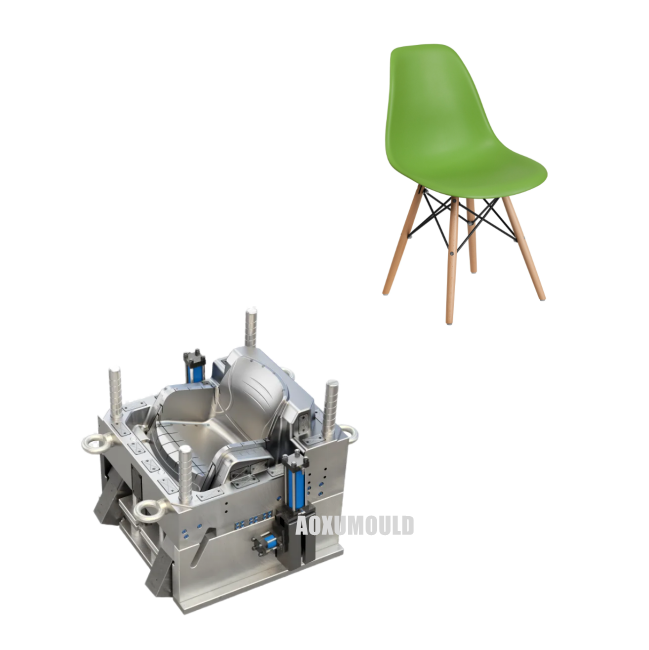
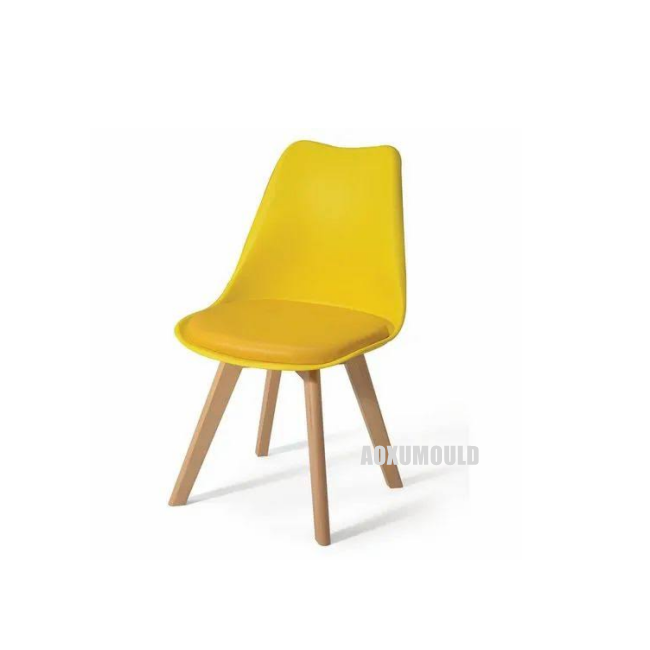
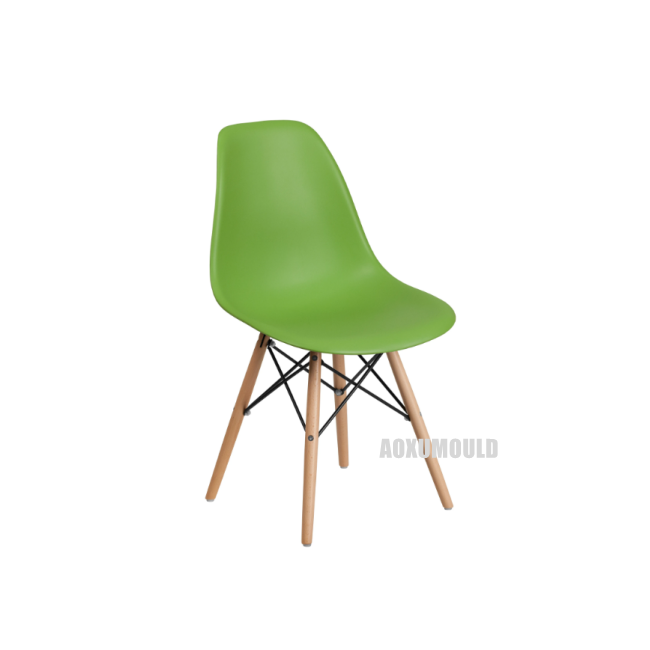
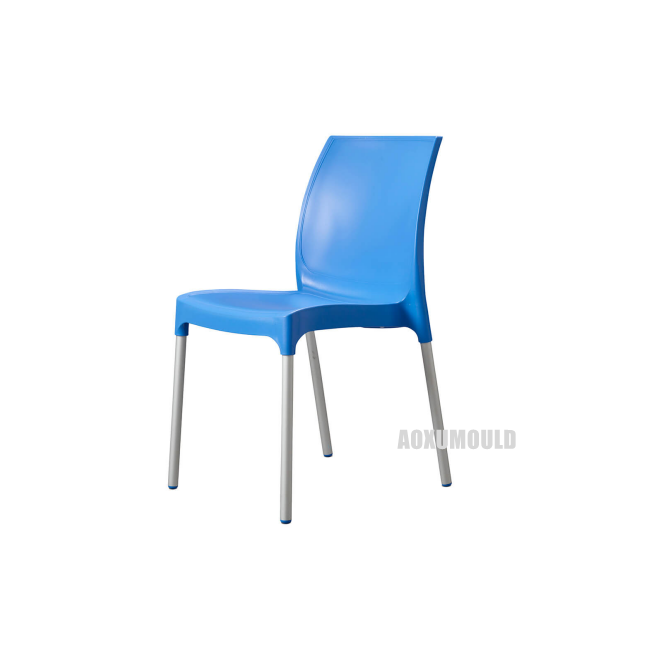
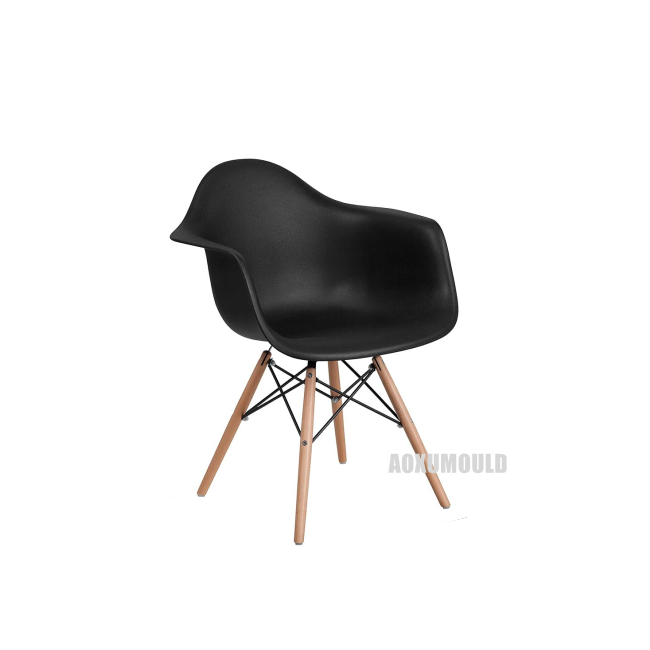
Mould Specifications
|
Mould name |
Plastic Polypropylene chair mould |
|
Product material |
Plastic, PP |
|
Product Size |
42x45x50cm |
| Product Weight |
3.5kg |
|
Mould material for cavity &. Core |
P20, 718 |
| Mould Base | C45 |
|
NOs of cavity |
1 cavity |
|
Injection system |
Cold runner |
|
Suitable injection machine |
450T |
|
Mould size |
700X685X630mm |
|
Mould lifetime |
more than 300,000pcs |
|
Delivery Time |
50 days |
How To Design Mould Structure For A Plastic Chair?
1. Product Analysis &. Material Selection
- Chair Design Requirements:
- Analyze 3D CAD models of the chair (shape, thickness, undercuts, ribs, etc.).
- Confirm material type (e.g., PP, ABS, or reinforced plastics) to determine shrinkage rates (0.5–2%) and mould requirements.
2. Parting Line (PL) &. Cavity Layout
- Parting Line Design:
- Position the parting line along the chair's edges to minimize visible seams.
- Avoid complex geometries near the PL to simplify mould opening/closing.
- Cavity Layout:
- Single or multi-cavity design based on production volume.
- Optimize gate locations (e.g., edge gates for large chairs) to ensure balanced filling.
Core &. Cavity Design

- Mould Base:
- Use hardened steel (e.g., P20 or H13) for durability.
- Split core and cavity blocks to accommodate chair geometry (e.g., curved surfaces).
- Undercut Handling:
- Add sliders, lifters, or collapsible cores for undercuts (e.g., armrests or backrest supports).
4. Cooling System
- Cooling Channels:
- Design conformal cooling channels around high-heat areas (e.g., thick sections) to reduce cycle time.
- Maintain uniform cooling to prevent warpage.
- Baffles/Bubblers:
- Use in deep sections (e.g., seat base) for efficient heat transfer.
5. Ejection System
- Ejector Pins:
- Place pins under high-stress areas (e.g., seat edges) to avoid part deformation.
- Use stripper plates for large surface areas.
- Air Vents:
- Add micro-vents (0.02–0.04mm depth) to prevent gas traps.
6. Gate &. Runner System
- Gate Type:
- Use fan gates or film gates for wide, thin sections (e.g., seat surfaces).
- Position gates near thick sections to minimize sink marks.
- Runner Design:
- Cold runner systems for multi-cavity moulds (balanced runners for uniform filling).
7. Structural Reinforcement
- Support Pillars:
- Add pillars to prevent deflection in large moulds.
- Guiding Systems:
- Use tapered interlocks and leader pins for precise alignment.
8. Mould Surface Treatment
- Texture &. Polish:
- Apply surface finishes (e.g., VDI 18–27 for matte textures) to match chair aesthetics.
- Anti-Corrosion Coating:
- Use nitriding or DLC coatings for prolonged mold life.
Simulation &. Validation

- Moldflow Analysis:
- Simulate filling, cooling, and warpage to optimize gate placement and cooling.
- Prototype Testing:
- Conduct trial runs to adjust injection parameters (pressure, temperature, time).
10. Maintenance &. Adjustments
- Ease of Disassembly:
- Design modular components (e.g., replaceable inserts for high-wear areas).
- Draft Angles:
- Ensure 1–3° draft angles on vertical walls for easy ejection.
This framework balances functionality, manufacturability, and cost-effectiveness. Collaborate with mould flow simulation tools (e.g., Autodesk Moldflow) and prototyping to refine the design.
What Is Polypropylene?

Polypropylene (PP) is a versatile thermoplastic polymer widely used in various applications due to its unique properties. Here's a structured overview:
1. Chemical Composition:
- A polymer made from propylene monomers (C₃H₆) via addition polymerization, often using Ziegler-Natta catalysts for stereospecificity.
- Exists in different structural forms: isotactic (methyl groups aligned, high crystallinity), syndiotactic, and atactic (amorphous, less common). Isotactic PP is most commercially valuable.
2. Key Properties:
- High melting point (~160–170°C), making it heat-resistant (e.g., microwave-safe containers).
- Chemically inert: Resistant to acids, bases, and solvents.
- Low moisture absorption and excellent moisture barrier.
- Durable and fatigue-resistant (e.g., "living hinges" in bottle caps).
- Lightweight, stiff, and UV-sensitive (requires additives for outdoor use).
3. Types:
- Homopolymer: Pure propylene, rigid and strong.
- Copolymer (random or block): Ethylene is added to enhance flexibility and impact resistance.
4. Production:
- Derived from petroleum refining. Propylene gas is polymerized under controlled conditions using catalysts to achieve desired chain structure.
5. Applications:
- Packaging: Food containers, films, caps.
- Automotive: Bumpers, interior trim, battery cases.
- Textiles: Carpets, ropes, thermal underwear.
- Medical: Syringes, vials (sterilizable).
- Consumer Goods: Toys, household items.
How To Make Plastic Chair Injection Mould?
Creating a plastic chair injection mould involves a detailed, multi-step process that combines design, engineering, and precision manufacturing. Here's a structured approach to guide you through the process:

1. Chair Design &. Material Considerations
-CAD Design: Use CAD software to create a detailed 3D model of the chair, incorporating ergonomic and structural considerations.
- Draft Angles: Include draft angles (1-3°) on vertical walls to facilitate easy ejection.
-Material Selection: Choose durable plastics (e.g., polypropylene, HDPE) and account for shrinkage rates (0.5-3%) in design dimensions.
2. Mould Design
- Core &. Cavity: Design two mould halves (core and cavity) to form the chair's shape.
-Gating System: Position runners and gates (edge or submarine gates) to ensure even plastic flow. Gates should be placed in non-critical areas.
-Cooling System: Integrate cooling channels following the mould contours for uniform cooling to prevent warping.
- Ejection System: Place ejector pins strategically to avoid visible marks.
- Vents: Add vents along parting lines or high points to release trapped air.
- Undercuts Handling: Use sliders or lifters if the design includes undercuts.
3. Mould Material Selection
- Steel: Opt for hardened steel (e.g., P20, H13) for high-volume production due to durability.
4. Mould Manufacturing
- Machining: Use CNC machining for precision. Electrical Discharge Machining (EDM) may be needed for complex features.
- Surface Finish: Polish for smooth surfaces or apply textures via chemical etching.
5. Mould Testing & Optimization
- Trial Runs: Conduct tests on an injection molding machine. Adjust parameters (temperature, pressure, cooling time).
- Defect Resolution: Address issues like short shots, warping, or sink marks by modifying mold design or process settings.
Package &. Delivery

Mould Components
Mould Steel

Hot Runner System

Standard Parts

Customers' Feedback

FAQ: Plastic Polypropylene Chair Mould
1. What is a plastic polypropylene chair mould?
A polypropylene (PP) chair mould is a specialized tool used in injection moulding to manufacture chairs. It shapes molten PP into durable, lightweight chairs through high-pressure injection, cooling, and ejection.
2. Why use polypropylene for chair moulds?
PP is chosen for its durability, chemical resistance, lightweight nature, and recyclability. It offers a cost-effective balance of strength and flexibility, ideal for mass-produced chairs.
3. How does the injection moulding process work for PP chairs?
PP pellets are melted and injected under high pressure into the mould. After cooling, the solidified chair is ejected. The process is efficient, with cycle times varying based on design complexity.
4. What design considerations are crucial for PP chair moulds?
Key factors include uniform wall thickness, draft angles for easy ejection, cooling channel efficiency, and robust ejection mechanisms. Design complexity depends on the chair's aesthetics and function.
5. What affects the cost of a chair mould?
Cost factors include mould size, complexity, material (steel vs. aluminum), and surface finish. PP is generally more cost-effective than alternatives like ABS but offers comparable durability.
6. How to maintain a mould?
Regular cleaning, lubrication, and inspection for wear are essential. Preventative maintenance includes checking alignment and storing in controlled environments to prevent corrosion.
7. How to troubleshoot common moulding issues?
- Warping: Optimize cooling rates and wall thickness.
- Sink marks: Adjust pressure and cooling time.
- Sticking: Refine ejection mechanisms and apply non-stick coatings.
8. Can polypropylene chair moulds be customized?
Yes. Customization options include size, shape, texture, and color. Collaborate with manufacturers to meet specific design and functional requirements.
9. What is themould lifespan?
Steel moulds last for millions of cycles. Lifespan depends on maintenance, material, and production frequency.
10. What are the environmental impacts of PP chair production?
PP is recyclable. Using recycled materials, energy-efficient processes, and designing for disassembly can reduce environmental footprint.
11. How to find a reliable mould manufacturer?
Research manufacturers in China. Request quotes to compare expertise and cost.
12. What safety standards apply to PP chairs?
Ensure compliance with ASTM, ISO, or regional standards. Chairs should undergo load, stability, and flammability testing, especially for commercial use.
13. What are typical lead times for mould production?
6–10 weeks, depending on complexity and manufacturer workload. Prototypes may be faster; clear communication with the manufacturer is key.
14. How does PP compare to ABS or polyethylene?
PP offers a balance of cost, flexibility, and durability. ABS is tougher but pricier; polyethylene is more flexible but less rigid.
15. What surface finishes can be achieved?
Options include glossy, matte, or textured finishes. Mould polishing, etching, or bead-blasting influences the final product's appearance.
16. Are there minimum order quantities (MOQs)?
MOQs vary. Some manufacturers offer low volumes for prototypes; others require large orders. Discuss requirements upfront.
17. How is quality control ensured?
Inspections, sample testing (dimensions, stress resistance), and certifications like ISO 9001 ensure consistent quality.
18. Can automation be integrated?
Yes. Automated systems handle ejection, trimming, and assembly, enhancing efficiency and reducing labor costs. Moulds must be designed for compatibility.
19. Can damaged moulds be repaired?
Minor cracks or wear can be welded or re-polished. Severe damage may require replacement. Regular maintenance minimizes repair needs.
20. What software is used in mould design?
CAD software (SolidWorks, AutoCAD) and simulation tools (Moldflow) optimize design precision and predict flow/cooling behavior.
21. How should moulds be transported/stored?
Use protective packaging (pallets/crates), control humidity, and avoid physical damage. Proper storage extends mould life.


