

Here are the key types of gates used in injection molding, derived from the provided search results and their applications:
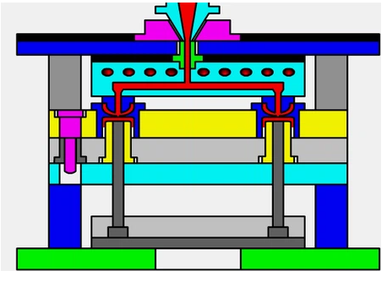
1. Valve Gates
Valve gates use pneumatic or hydraulic systems to control the opening and closing of the gate via a valve pin. They are ideal for large applications, preventing stringing and improving surface finish. Subtypes include:
- Single-Cavity Valve Gates (SVG): Designed for central in single-cavity molds, featuring double oil cylinders for enhanced force .
- Needle Valve Gates (SVDT/AVMT/NL-SVDP): Suitable for multi-cavity molds or sensitive materials like PET. They enable sequential control to address weld lines and ensure uniform filling .
- Dual-Speed Sequential Valve Gates : Patented technology that adjusts valve pin speed to prevent abrupt flow surges, reducing surface defects like stress marks and sink marks in large parts .
2. Sprue Gates (Direct Gates)
Directly connects the nozzle to the mold cavity, commonly used in single-cavity molds. While simple, it may leave visible marks and require post-processing. The sprue diameter is typically larger to minimize pressure loss .
3. Edge Gates (Side Gates)
Positioned along the part edge, these are widely used in multi-cavity molds. They allow easy trimming but may cause shear stress. Proper design ensures balanced flow across cavities .
4. Hot Runner Gates
Integrated into hot runner systems to maintain molten plastic temperature, reducing material waste. Valve gates (e.g., SVG, SVDT) are a subset of this category, offering precise control for complex geometries .
5. Sequential Gates
A specialized application of valve gates where open in a controlled sequence to manage flow front advancement. This minimizes weld lines and improves part strength, especially in automotive components like seat backs .
Key Considerations for Gate Design:
- Flow Length Ratio: Critical for ensuring uniform filling. Tools like Moldex3D's Gate Location Advisor help optimize placement by analyzing flow length-to-thickness ratios .
- Material Properties: Gates must account for viscosity, shrinkage (e.g., crystalline polymers shrink more), and thermal degradation risks .
- Defect Prevention: Poor gate design can lead to jetting, air traps, or sink marks. Valve gates and dual-speed systems mitigate these issues by controlling flow dynamics .
For further details on specific systems or suppliers, refer to the cited sources.