

Hey there! As a supplier of recycle bin moulds, I often get asked about the modulus of elasticity of these moulds. So, let's dive right into it and break down what this technical term means and why it's super important for our recycle bin moulds.
First off, what the heck is the modulus of elasticity? Well, in simple terms, it's a measure of how stiff a material is. When we talk about the modulus of elasticity of a recycle bin mould, we're looking at how much the mould will deform under a given load. You can think of it like this: if you push on a rubber ball, it'll squish a lot because rubber has a low modulus of elasticity. On the other hand, if you push on a steel rod, it'll hardly deform at all because steel has a high modulus of elasticity.
Now, why does this matter for recycle bin moulds? Well, when we're making recycle bins, the mould has to withstand a lot of pressure during the manufacturing process. If the modulus of elasticity is too low, the mould might deform or warp, which would lead to defective recycle bins. And let's face it, nobody wants a wonky-looking recycle bin! On the other hand, if the modulus of elasticity is too high, the mould might be too brittle and could crack or break under stress. So, finding the right balance is crucial.
As a recycle bin mould supplier, we use a variety of materials to make our moulds, each with its own modulus of elasticity. Some of the most common materials include steel, aluminum, and plastic. Steel is known for its high modulus of elasticity, which makes it a great choice for heavy-duty moulds that need to withstand a lot of pressure. Aluminum, on the other hand, has a lower modulus of elasticity but is lighter and more corrosion-resistant, making it a good option for smaller, less demanding moulds. And plastic? Well, plastic moulds have a wide range of moduli of elasticity depending on the type of plastic used. Some plastics are very flexible and have a low modulus of elasticity, while others are more rigid and have a high modulus of elasticity.
When we're designing a recycle bin mould, we take into account a number of factors to determine the best material and modulus of elasticity for the job. These factors include the size and shape of the recycle bin, the type of plastic being used to make the bin, and the manufacturing process. For example, if we're making a large, heavy-duty recycle bin, we might choose a steel mould with a high modulus of elasticity to ensure that it can withstand the pressure of the injection molding process. On the other hand, if we're making a small, lightweight recycle bin, we might choose an aluminum or plastic mould with a lower modulus of elasticity.
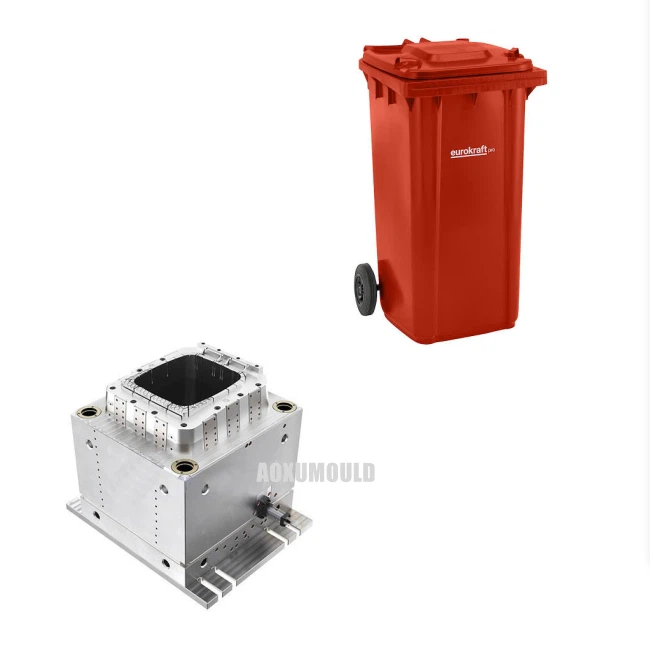

Another important factor to consider is the cost. Steel moulds are generally more expensive than aluminum or plastic moulds, but they also last longer and can produce higher-quality recycle bins. So, it's a trade-off between cost and performance. As a supplier, we work closely with our customers to understand their needs and budget and to recommend the best solution for their specific application.
Now, let's talk about some of the specific types of recycle bin moulds we offer. We have a wide range of Plastic Injection Molding Trash Can Mould available, including different sizes and shapes to meet the needs of our customers. Our 240L Plastic Bin Mould is a popular choice for municipalities and businesses that need a large, durable recycle bin. And our Plastic Rubbish Bin Mould is a great option for residential use.
Each of these moulds is designed and manufactured to the highest standards to ensure that they have the right modulus of elasticity and can produce high-quality recycle bins. We use advanced manufacturing techniques and the latest materials to ensure that our moulds are precise, durable, and reliable.
In conclusion, the modulus of elasticity of a recycle bin mould is a crucial factor that can have a big impact on the quality and performance of the recycle bins produced. As a supplier, we understand the importance of finding the right balance between stiffness and flexibility and using the best materials and manufacturing techniques to ensure that our moulds meet the needs of our customers. If you're in the market for a recycle bin mould, we'd love to hear from you. Whether you're a municipality, a business, or a homeowner, we have the expertise and experience to help you find the right solution for your specific application. So, don't hesitate to reach out and start a conversation with us. We're here to help you get the best recycle bin mould for your money.
References
- Callister, W. D., & Rethwisch, D. G. (2011). Materials Science and Engineering: An Introduction. Wiley.
- Ashby, M. F. (2011). Materials Selection in Mechanical Design. Butterworth-Heinemann.