

Hey there! As a waste bucket mould supplier, I often get asked about the weight of these moulds. It's a question that might seem simple at first glance, but it actually involves a bunch of factors. In this blog, I'll break down what affects the weight of a waste bucket mould and give you a better understanding of it.
Let's start with the basics. The weight of a waste bucket mould isn't just some random number. It's influenced by several key elements. One of the most important factors is the size of the mould. Just like you'd expect, larger moulds are generally heavier than smaller ones. If you're looking at a mould for a big industrial - sized waste bucket, it's going to be a lot bulkier and heavier compared to a mould for a small kitchen trash can.
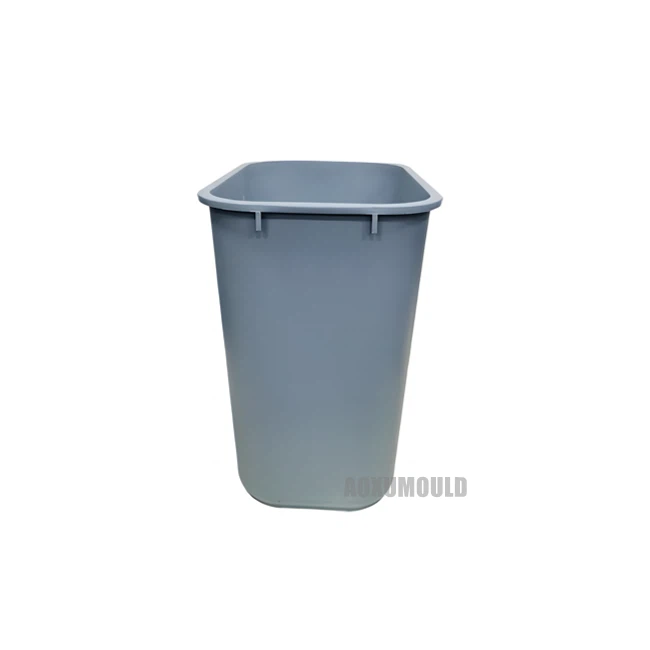
For instance, a Refuse Container Mould designed for large public areas can be quite massive. These moulds are built to produce containers that can hold a significant amount of waste, so they need to be robust and large. As a result, their weight can be in the range of several thousand kilograms. On the other hand, a Kitchen Trash Can Mould is much smaller in scale. It's meant for use in homes, so the mould itself is lighter, perhaps weighing only a few hundred kilograms.
Another factor that impacts the weight is the material used to make the mould. Most waste bucket moulds are made from metals like steel or aluminum. Steel is a popular choice because it's strong and durable. However, it's also relatively heavy. Aluminium, on the other hand, is lighter but still offers good strength and corrosion resistance. So, if a mould is made from steel, it's likely to be heavier than one made from aluminium.
The design complexity of the mould also plays a role. A simple, straight - sided waste bucket mould will be lighter than one with complex curves, ribs, or other detailed features. Complex designs require more material to be used in the manufacturing process, which in turn increases the weight. For example, a Plastic Mobile Garbage Bin Mould with wheels and handles will be heavier than a basic, plain - shaped bin mould. These additional features need to be incorporated into the mould, adding to its overall mass.
The manufacturing process can also affect the weight. Precision machining techniques are often used to create waste bucket moulds. During this process, some material might be removed to achieve the desired shape and dimensions. However, if the machining is not done efficiently, there could be excess material left, which would increase the weight of the mould. On the other hand, advanced manufacturing methods that optimize material usage can result in a lighter yet still functional mould.
Now, you might be wondering why the weight of a waste bucket mould matters. Well, there are several reasons. First of all, the weight affects transportation costs. Heavier moulds require more powerful vehicles and more fuel to transport. This can add up to a significant expense, especially if you're shipping the mould over long distances.
Secondly, the weight can impact the installation and handling of the mould. A very heavy mould might require special equipment and trained personnel to install it properly in a manufacturing facility. This can also increase the overall cost of getting the mould up and running.
When it comes to the actual weight range, it can vary widely. As I mentioned earlier, small domestic waste bucket moulds can weigh anywhere from a couple of hundred kilograms to maybe a ton. Medium - sized moulds, which are used for commercial waste containers, can weigh between one and five tons. And large industrial - scale moulds can tip the scales at over five tons, sometimes even reaching ten tons or more.
If you're in the market for a waste bucket mould, it's important to consider the weight along with other factors like cost, durability, and production capacity. You want to make sure that the mould you choose is the right fit for your specific needs.
If you're interested in learning more about our waste bucket moulds or have any questions regarding their weight, design, or other aspects, don't hesitate to reach out. We're here to help you make the best decision for your business. Whether you're a small - scale producer or a large industrial company, we have a range of moulds to suit your requirements. Contact us today to start a conversation about your waste bucket mould needs!

References
- General knowledge about waste bucket mould manufacturing and industry standards.