

Fatigue analysis is a crucial aspect in the design and production of arm chair moulds. As a reliable arm chair mould supplier, we understand the significance of ensuring the durability and performance of our products. In this blog post, we will explore the key steps and methods for conducting a fatigue analysis for an arm chair mould.
Understanding Fatigue in Arm Chair Moulds
Before delving into the analysis process, it is essential to understand what fatigue means in the context of arm chair moulds. Fatigue occurs when a material is subjected to repeated loading and unloading cycles, leading to the initiation and propagation of cracks over time. In the case of arm chair moulds, these loading cycles can result from the injection molding process, including the high-pressure injection of plastic, the opening and closing of the mould, and the ejection of the finished chair.
The consequences of fatigue failure in an arm chair mould can be severe. It can lead to production downtime, increased maintenance costs, and even compromise the quality of the finished chairs. Therefore, conducting a thorough fatigue analysis is necessary to prevent such failures and ensure the long-term reliability of the mould.
Steps for Conducting a Fatigue Analysis
1. Material Selection and Characterization
The first step in fatigue analysis is to select the appropriate material for the arm chair mould. The material should have good mechanical properties, including high strength, toughness, and fatigue resistance. Common materials used for arm chair moulds include tool steels, such as P20, H13, and S7.
Once the material is selected, it is important to characterize its fatigue properties. This can be done through laboratory testing, where specimens of the material are subjected to cyclic loading until failure. The test results can be used to determine the material's fatigue life, stress - strain behavior, and crack growth rate.
2. Load Analysis
The next step is to analyze the loads acting on the arm chair mould during the injection molding process. This involves identifying the different types of loads, such as the injection pressure, clamping force, and ejection force, and determining their magnitudes and directions.
Finite element analysis (FEA) is a powerful tool for load analysis. By creating a detailed 3D model of the arm chair mould and applying the appropriate boundary conditions and loads, FEA can predict the stress and strain distribution within the mould. This information is crucial for identifying the critical areas where fatigue is most likely to occur.
3. Stress and Strain Calculation
Based on the load analysis results, the stress and strain at critical points in the arm chair mould can be calculated. This can be done using analytical methods or FEA software. The calculated stress and strain values are then compared with the material's fatigue properties to determine the safety factor against fatigue failure.
In addition to the static stress and strain analysis, it is also important to consider the dynamic effects of the loading cycles. This can be achieved by performing a dynamic analysis using FEA, which takes into account the inertia forces and the time - dependent nature of the loads.
4. Fatigue Life Prediction
Once the stress and strain values are calculated, the fatigue life of the arm chair mould can be predicted. There are several methods for fatigue life prediction, including the stress - life (S - N) approach, the strain - life (ε - N) approach, and the fracture mechanics approach.

The S - N approach is based on the relationship between the applied stress amplitude and the number of cycles to failure. This method is suitable for high - cycle fatigue, where the stress levels are relatively low. The ε - N approach, on the other hand, is more appropriate for low - cycle fatigue, where the stress levels are high and plastic deformation occurs. The fracture mechanics approach is used to predict the crack growth rate and the remaining life of the mould once a crack has initiated.

5. Verification and Validation
After the fatigue life prediction, it is important to verify and validate the results. This can be done through experimental testing, where a prototype of the arm chair mould is subjected to actual loading cycles and monitored for crack initiation and growth. The experimental results are then compared with the predicted values to ensure the accuracy of the analysis.
If there are significant discrepancies between the predicted and experimental results, the analysis model may need to be refined. This may involve adjusting the material properties, the load assumptions, or the analysis methods.
Importance of Fatigue Analysis for Arm Chair Mould Suppliers
As an arm chair mould supplier, conducting a fatigue analysis offers several benefits. Firstly, it helps us to design and manufacture high - quality moulds that can withstand the rigors of the injection molding process. By predicting the fatigue life of the mould, we can ensure that it meets the customer's requirements and expectations in terms of durability and performance.
Secondly, fatigue analysis can help us to optimize the design of the arm chair mould. By identifying the critical areas where fatigue is most likely to occur, we can make design modifications to reduce the stress concentrations and improve the fatigue resistance of the mould. This can lead to cost savings in terms of material usage and manufacturing time.
Finally, fatigue analysis can enhance our reputation as a reliable and professional arm chair mould supplier. By providing our customers with high - quality moulds that are less likely to fail due to fatigue, we can build long - term relationships and increase customer satisfaction.
Related Products
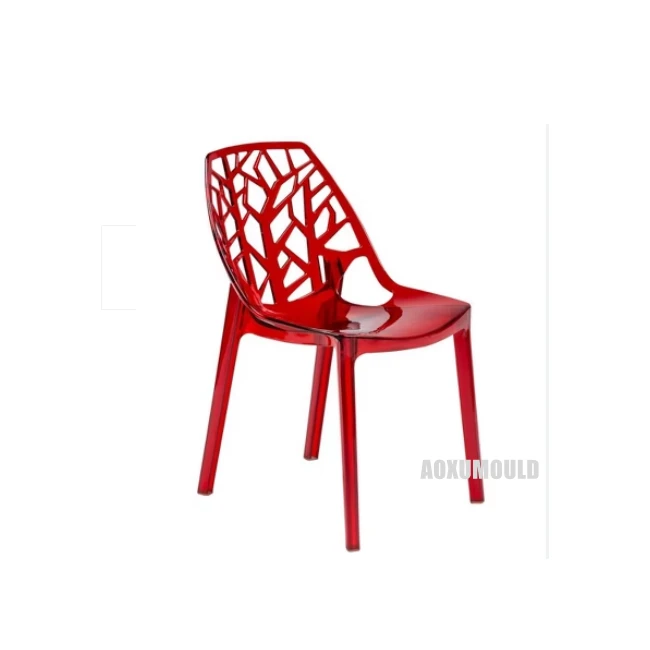
We also offer a wide range of other chair moulds, such as Tree Chair Mould, Plastic Transparent Chair Mould, and Crystal Chair Mould. These moulds are designed and manufactured with the same high - standards and undergo rigorous fatigue analysis to ensure their quality and performance.
Conclusion
Conducting a fatigue analysis for an arm chair mould is a complex but essential process. By following the steps outlined in this blog post, arm chair mould suppliers can ensure the durability and performance of their products. If you are interested in our arm chair moulds or other related products, please feel free to contact us for more information and to discuss your specific requirements. We look forward to working with you to provide the best solutions for your chair manufacturing needs.
References
- Dowling, N. E. (2012). Mechanical Behavior of Materials: Engineering Methods for Deformation, Fracture, and Fatigue. Pearson.
- Shigley, J. E., Mischke, C. R., & Budynas, R. G. (2004). Mechanical Engineering Design. McGraw - Hill.
- Society of Plastics Engineers. (2007). Injection Molding Handbook. Hanser.