

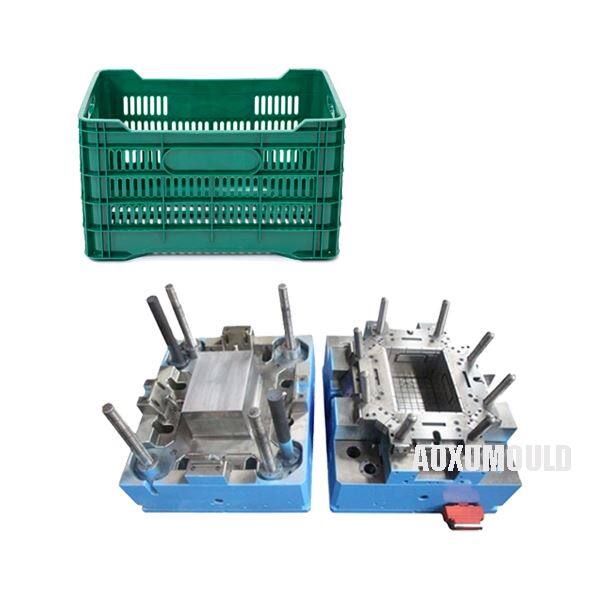
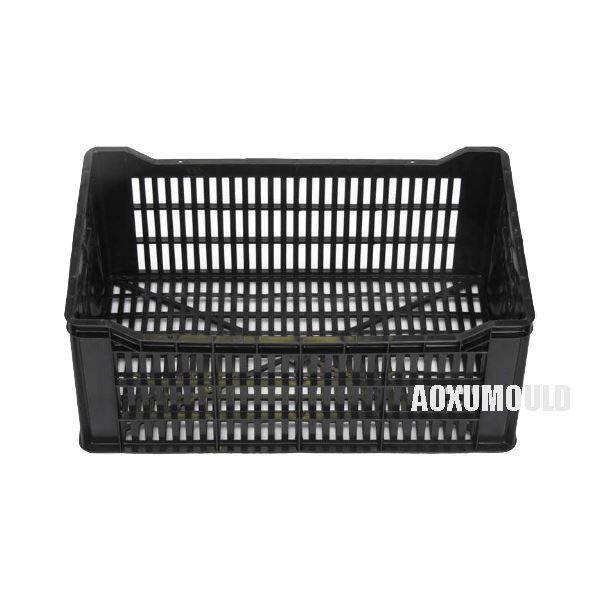
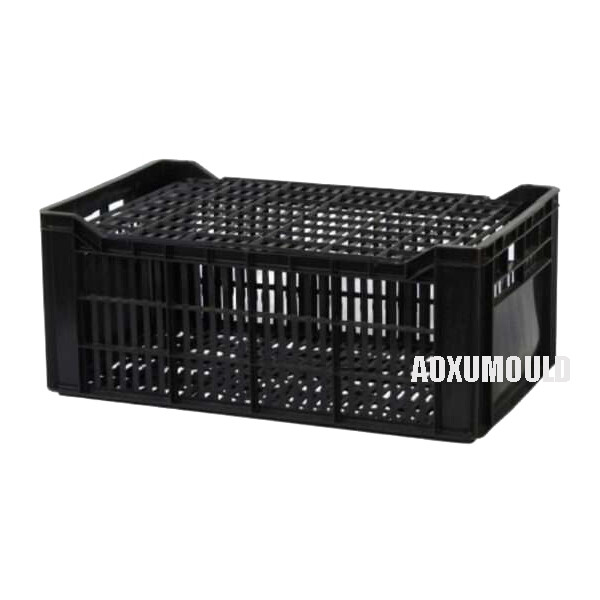
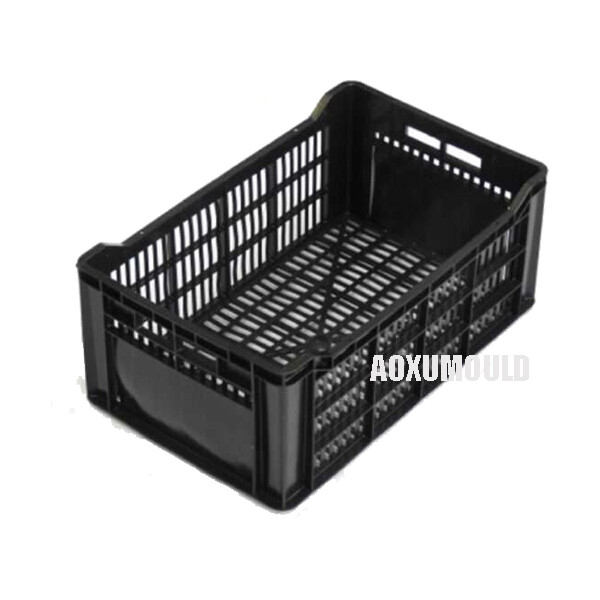
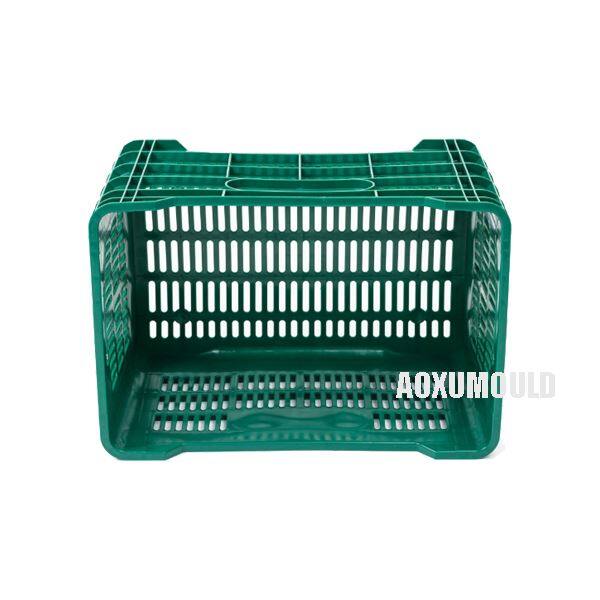
Mould Specifications
|
Mould name |
Fresh Pack Crate Mould |
|
Product material |
PP, plastic |
|
Product Size |
600X400X300mm |
| Product Weight | 2.5KG |
|
Mould material for cavity &. Core |
P20, 718, 2738 |
|
NOs of cavity |
1 cavity |
|
Injection system |
Hot runner |
|
Suitable injection machine |
650T |
|
Mould size |
950X780X660mm |
|
Mould lifetime |
more than 500,000pcs |
What Industries Use Fresh Pack Crates?
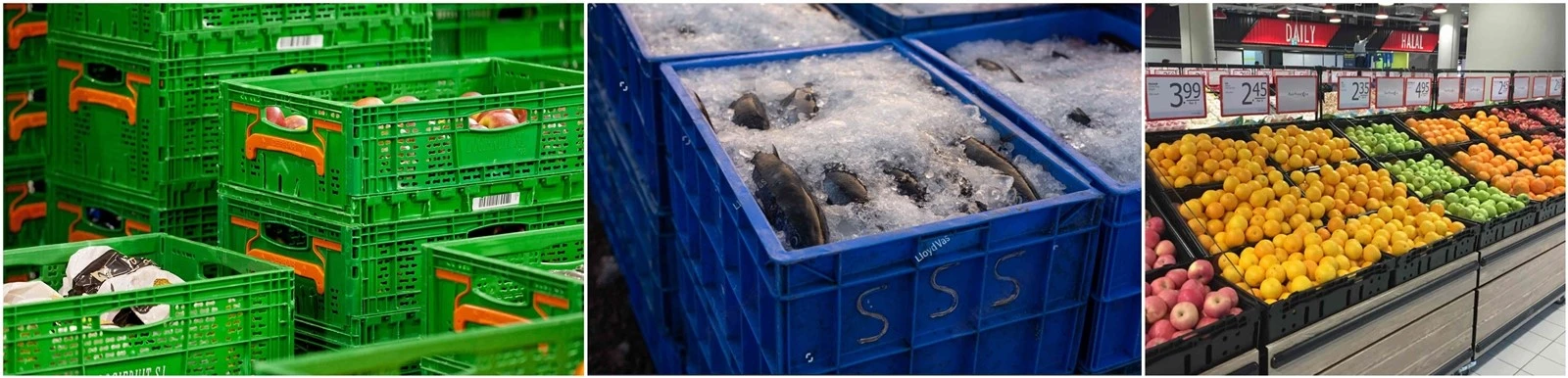
1. Agriculture & Horticulture
Fruits & Vegetables – Used for harvesting, storing, and transporting produce (e.g., tomatoes, apples, leafy greens).
Floriculture – Carrying flowers and plants while ensuring ventilation.
Post-Harvest Handling – Stackable design aids in warehouse storage and supermarket supply chains.
2. Fisheries & Seafood
Fish & Shrimp Transport – Ventilated crates keep seafood fresh and allow ice drainage.
Aquaculture – Used in fish farms for handling live seafood.
Processing Plants – Corrosion-resistant crates withstand wet environments.
3. Food Processing & Logistics
Meat & Poultry – Sanitary, easy-to-clean crates for raw and processed meat.
Dairy & Eggs – Stackable crates secure fragile items like egg trays.
Bakery & Frozen Foods – Withstand cold storage and transport.
4. Retail & Supermarkets
Produce Display – Uniform crates for organized supermarket shelving.
Reusable Packaging – Reduces waste compared to single-use boxes.
5. Logistics & Supply Chain
Cold Chain Transport – Used in refrigerated trucks for perishable goods.
Cross-Border Shipping – Durable crates protect goods during long hauls.
Poultry & Livestock
Egg Collection – Stackable, shock-absorbent crates prevent breakage.
Animal Feed Storage – Heavy-duty crates for bulk feed handling.
7. Beverage Industry
Bottle & Can Transport – Nestable crates optimize space when empty.
8. Recycling & Waste Management
Sorting & Collection – Used for recyclable materials in waste facilities.
How To Make A QualityFresh Pack Crate Mould
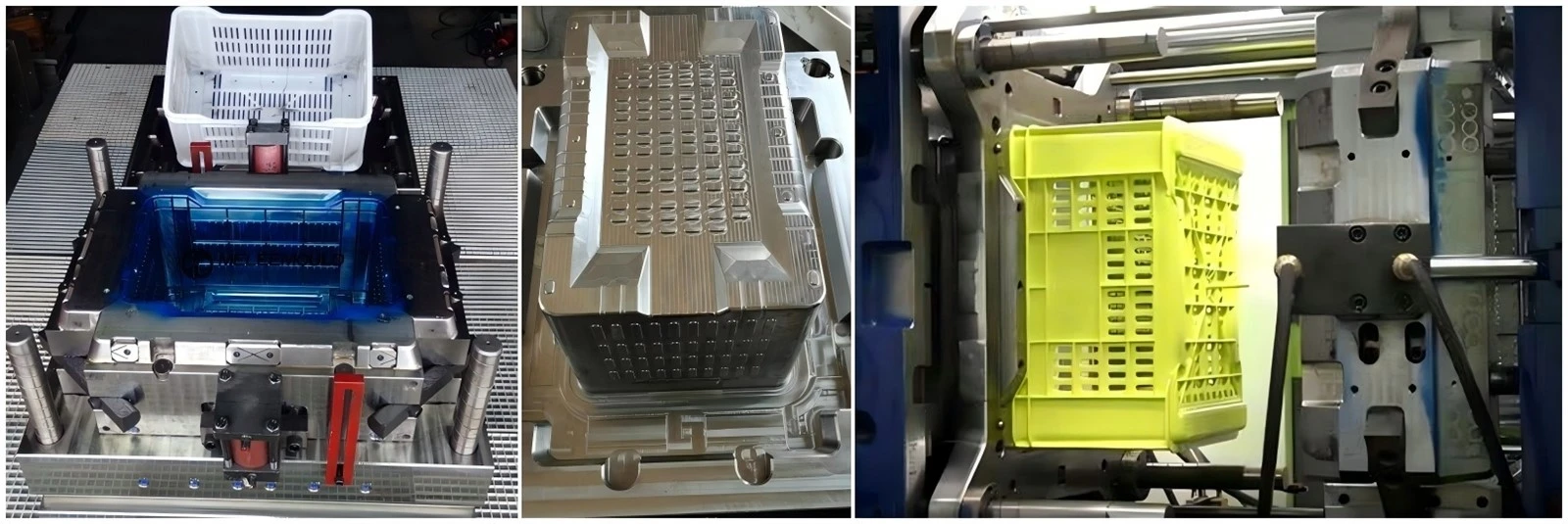
1. Design & Engineering
3D CAD Modeling – Precise digital design for optimal crate functionality (ventilation, stackability, ergonomics).
Draft Angles (1-3°) – Ensures easy ejection and prevents damage.
Wall Thickness (2-4mm) – Uniform thickness avoids warping and sink marks.
Mold Flow Analysis – Simulates plastic flow to prevent defects like air traps or weak spots.
2. Material Selection
Mould Steel:
P20 Steel – Cost-effective for medium production runs (~200k cycles).
H13 / 718 Steel – High durability (500k-1M+ cycles), ideal for mass production.
Stainless Steel (S136) – For corrosive environments (e.g., seafood processing).
Plastic Resin (For Crates):
PP (Polypropylene) – Lightweight, chemical-resistant, food-safe.
HDPE (High-Density Polyethylene) – Tougher, impact-resistant, UV-stable.
3. Mould Manufacturing Process
CNC Machining – High-precision milling of cavities and cores.
EDM (Electrical Discharge Machining) – For intricate details and sharp edges.
Polishing & Texture – Smooth finish (SPI-A1) to prevent sticking.
Heat Treatment – Hardens steel for extended lifespan.
4. Cooling & Ejection System
Conformal Cooling Channels – Follows the mould shape for faster, even cooling.
Ejector Pins / Stripper Plate – Ensures clean part release without damage.
Sliders & Lifters – For complex undercuts (e.g., handles).
5. Production Efficiency
Multi-Cavity Moulds (2-64 cavities) – Increases output for large orders.
Cycle Time Optimization – Target: 30-90 seconds per crate (depends on size & cooling).
Automation Compatibility – Robots for demolding, stacking, and packing.
6. Testing & Quality Control
Dimensional Accuracy – Checks for consistency in crate size (±0.1mm tolerance).
Surface Inspection – No scratches, burrs, or defects.
Trial Runs – Verifies ejection, cooling, and plastic flow before mass production.
7. Maintenance & Longevity
Regular Cleaning – Prevents residue buildup.
Lubrication – Keeps ejector pins and sliders smooth.
Wear Inspection – Replaces worn components before failure.
Designs For Product &. Mould
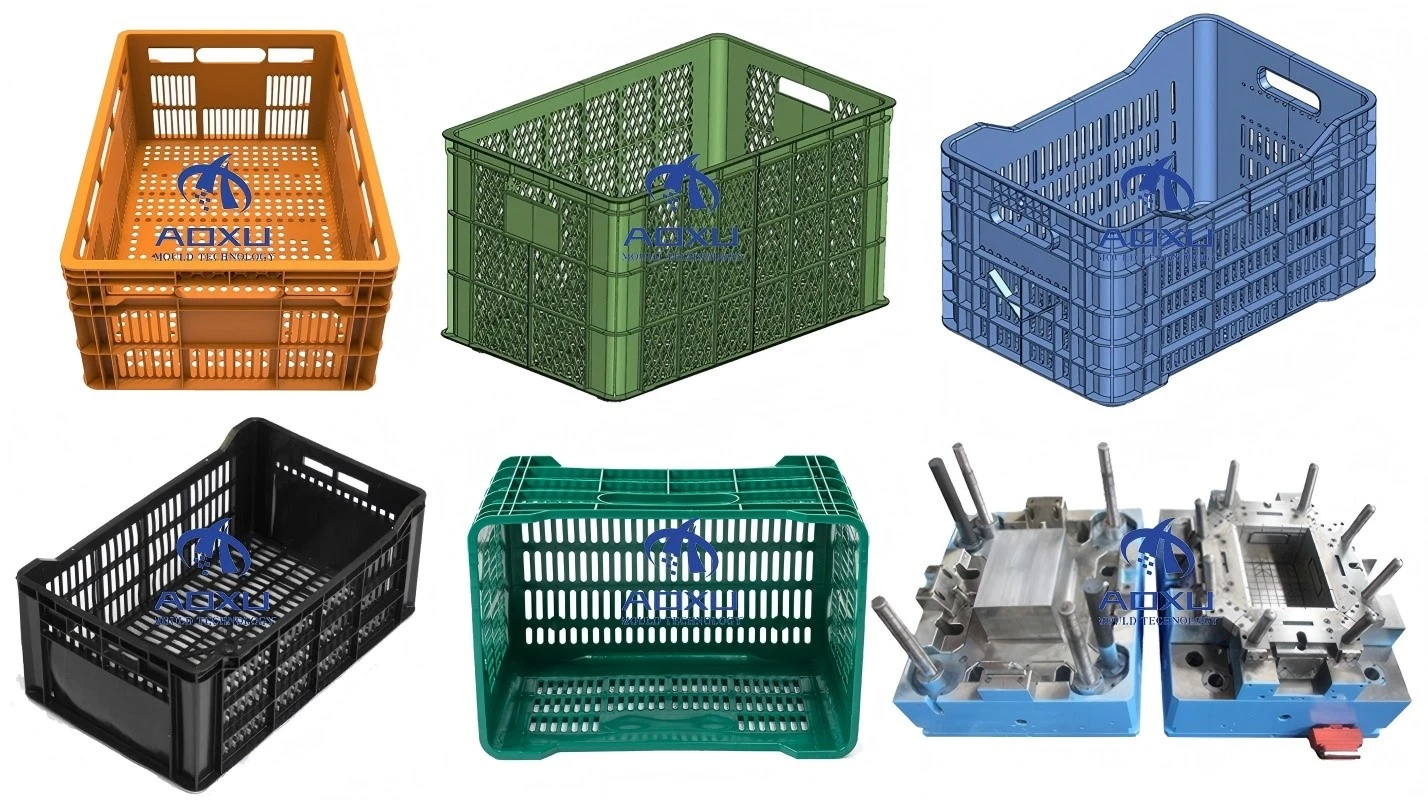
Key Features of Fresh Pack Crates:
Ventilation Holes – Allows airflow to keep produce fresh.
Stackability – Designed to nest securely when empty and stack when full.
Durability – Made from high-impact PP (Polypropylene) or HDPE (High-Density Polyethylene) for long-lasting use.
Lightweight Yet Strong – Balances weight and load-bearing capacity.
How Do We Ensure Your Mould Quality?
1. Advanced Design & Engineering
3D CAD & Moldflow Analysis–Simulates plastic flow to prevent defects (warping, air traps).
Precision Draft Angles & Wall Thickness–Ensures smooth ejection and structural integrity.
Customization Support–Adjustable ventilation, stackability, and branding options.
2. Premium Materials & Construction
High-Grade Steel (H13, P20, S136)–For durability (500,000 to 1M+ cycles).
Hardened & Polished Cavities–Prevents wear and ensures smooth surface finish.
Corrosion-Resistant Coatings–Essential for seafood/food-grade applications.
3. Precision Manufacturing Process
CNC Machining (±0.01mm Tolerance)–For accurate cavity/core dimensions.
EDM (Electrical Discharge Machining)–Sharp details and complex geometries.
Heat Treatment–Enhances steel hardness and longevity.
4. Strict Quality Control (QC) Checks
Dimensional Inspection (CMM Machine)–Verifies critical measurements (±0.05mm).
Surface Finish Testing–SPI-A1 polish standard to prevent sticking.
Trial Shots & Sample Approval–Tests mould with actual plastic before mass production.
5. Efficient Cooling & Ejection Systems
Conformal Cooling Channel –Reduces cycle time and warpage.
Robust Ejector Pins/Stripper Plates–Ensures clean, damage-free demolding.
6. Production Monitoring & Testing
First-Article Inspection (FAI)–Validates initial samples against design specs.
Batch Testing–Random crate samples checked for weight, strength, and dimensions.
Load & Stack Testing–Ensures crates meet weight-bearing requirements.
7. Long-Term Reliability & Support
Mould Maintenance Guidance–Extends lifespan with proper cleaning/lubrication.
Warranty & After-Sales Service–Covers defects in materials/workmanship.
Mould Components
Mould Steel

Hot Runner System

Standard Parts

Package &. Delivery

What Do You Need to Give A Quote For Fresh Pack Crate Mould?
1. Crate Design Specifications
3D CAD File (STEP/IGES) or Technical Drawings (with dimensions)
Crate Dimensions (Length× Width×Height)
Wall Thickness (Standard: 2-4mm)
Ventilation Design (Hole size, pattern, airflow requirements)
Stacking/Nesting Features (Interlocking design, weight capacity)
Special Features (Handles, logos, embossing, RFID tags)
2. Material Requirements
Plastic Type (PP, HDPE, recycled material?)
Food-Grade Certification Needed? (FDA/EU compliance)
Color Requirements (Natural, custom pigment?)
3. Mould Specifications
Number of Cavities (1, 2, 4, 8, 16, etc.)
Mould Steel Grade (P20, H13, S136 stainless?)
Surface Finish (SPI-A1 polish, texture?)
Lifespan Expectation (200K, 500K, 1M+ cycles?)
4. Production Details
Estimated Annual Usage (e.g., 50,000 crates/year)
Injection Machine Tonnage (If already known)
Automation Needs (Robotic ejection, conveyor systems?)
5. Additional Requirements
Lead Time (Standard 45-60 days or urgent?)
Certifications Needed (ISO, SGS, etc.)
Packaging & Shipping Preferences
FAQ
>1. What is a Fresh Pack Crate Mould?
A Fresh Pack Crate Mould is a precision-engineered tool used in plastic injection molding to manufacture durable, ventilated, and stackable crates for storing and transporting fresh produce, seafood, and other perishable goods.
2. What materials are used for Fresh Pack Crates?
Common plastics include:
PP (Polypropylene)–Lightweight, chemical-resistant, and durable.
HDPE (High-Density Polyethylene)–Stronger, impact-resistant, and food-safe.
>3. Can the crate design be customized?
Yes! Customizations include:
Size & Capacity (e.g., 10kg–50kg crates).
Ventilation Patterns (more/less airflow).
Branding (logos, text embossing).
Color (using plastic pigments).
>4. How do I place an order with your company?
To place an order, simply contact our sales team through our website or give us a call. Our team will be happy to assist you with your order and provide you with all the information you need.
>5. What is the lead time for orders placed with Fresh Pack Crate Mould Company?
The lead time for orders varies depending on the complexity of the design and the quantity ordered. Our team will provide you with an estimated lead time when you place your order.
>6. Does your Company offer shipping services?
Yes, we offer shipping services for our products to ensure they reach you in a timely manner. Our team will coordinate the shipping process and keep you updated on the status of your order.
>7. What kind of materials are used for crate mould?
We use high-quality, durable steel such as P20, 718, S136, etc., in our crate moulds to ensure they are long-lasting and reliable. Our products are designed to withstand heavy use and harsh conditions.
>8. How Do I Maintain the Mould?
Regular cleaning to prevent residue buildup.
Lubricate moving parts (ejector pins, sliders).
Inspect for wear & corrosion.
Store in a dry, temperature-controlled environment.
Customers' Feedback


